---
title: "2026 Supply Chain Trends: AI, Automation, and the Power of Dynamic Storage"
description: Explore 2026's supply chain trends, from AI-driven optimization and automation to dynamic storage solutions, reshaping warehouse efficiency and resilience.
image: https://blog.unex.com/hubfs/dynamic%20warehouse%20storage%20solutions.jpg
---
[Skip to content](https://blog.unex.com/2026-supply-chain-trends-ai-automation-and-the-power-of-dynamic-storage#main-content)
[](https://www.unex.com/)
- [Applications](https://www.unex.com/applications)
- Storage
- [Warehouse Storage](https://www.unex.com/applications/storage/warehouse-storage)
- [Storage for 3PLs](https://www.unex.com/applications/storage/storage-3pls)
- [Retail Storage Solutions](https://www.unex.com/applications/storage/retail-storage)
- [Lineside Storage](https://www.unex.com/applications/packing-assembly/lineside-storage)
- [Beverage Storage](https://www.unex.com/applications/storage/beverage-storage)
- [Keg Storage](https://www.unex.com/applications/storage/keg-storage)
- Picking
- [Order Picking](https://www.unex.com/applications/picking/order-picking)
- [Case Picking](https://www.unex.com/applications/picking/case-picking)
- [Each Picking](https://www.unex.com/applications/picking/each-picking)
- [Picking Carts](https://www.unex.com/applications/picking/picking-carts)
- [Pick Module](https://www.unex.com/applications/picking/pick-module)
- Packing & Assembly
- [Industrial Carts](https://www.unex.com/applications/packing-assembly/industrial-carts)
- [Packing Stations](https://www.unex.com/applications/packing-assembly/packing-station)
- [Industrial Workstations](https://www.unex.com/applications/packing-assembly/industrial-workstations)
- [Manufacturing Supermarkets](https://www.unex.com/applications/packing-assembly/manufacturing-supermarkets)
- [Solutions](https://www.unex.com/solutions)
- [Carton Flow](https://www.unex.com/solutions/carton-flow)
- [SpanTrack Lane](https://www.unex.com/solutions/carton-flow/spantrack-lane)
- [SpanTrack Wheel Bed](https://www.unex.com/solutions/carton-flow/spantrack-wheel-bed)
- [SpanTrack Keg Flow](https://www.unex.com/solutions/carton-flow/spantrack-keg-flow)
- [Shelf Track](https://www.unex.com/solutions/carton-flow/shelf-track)
- [Flow Racks](https://www.unex.com/solutions/flow-racks)
- [FlowCell](https://www.unex.com/solutions/flow-racks/flowcell)
- [Roller Rack](https://www.unex.com/solutions/flow-racks/roller-rack)
- [High-Density Storage](https://www.unex.com/solutions/high-density-storage)
- [SpeedCell](https://www.unex.com/solutions/high-density-storage/speedcell)
- [SpeedCartt](https://www.unex.com/solutions/high-density-storage/speedcartt)
- [Pick Shelves](https://www.unex.com/solutions/high-density-storage/pick-shelves)
- [Conveyors](https://www.unex.com/solutions/conveyors)
- [Gravity Conveyor](https://www.unex.com/solutions/conveyors/gravity-conveyors)
- [Pallet Track](https://www.unex.com/solutions/conveyors/pallet-track)
- [About](https://www.unex.com/about)
- [Resources](https://www.unex.com/resources)
- [Blog](https://blog.unex.com)
- [Press Releases](https://blog.unex.com/press-releases)
- [Guides](https://www.unex.com/resources/guides)
- [Product Brochures](https://www.unex.com/resources/product-brochures)
- [Installation Guides](https://www.unex.com/resources/installation-guides)
- [Case Studies](https://www.unex.com/resources/case-studies)
- [FAQs](https://go.unex.com/faq)
[Contact Us](https://www.unex.com/contact) [Build a Solution](https://www.unex.com/configurator)
- [Applications](https://www.unex.com/applications)
- Storage
- [Warehouse Storage](https://www.unex.com/applications/storage/warehouse-storage)
- [Storage for 3PLs](https://www.unex.com/applications/storage/storage-3pls)
- [Retail Storage Solutions](https://www.unex.com/applications/storage/retail-storage)
- [Lineside Storage](https://www.unex.com/applications/packing-assembly/lineside-storage)
- [Beverage Storage](https://www.unex.com/applications/storage/beverage-storage)
- [Keg Storage](https://www.unex.com/applications/storage/keg-storage)
- Picking
- [Order Picking](https://www.unex.com/applications/picking/order-picking)
- [Case Picking](https://www.unex.com/applications/picking/case-picking)
- [Each Picking](https://www.unex.com/applications/picking/each-picking)
- [Picking Carts](https://www.unex.com/applications/picking/picking-carts)
- [Pick Module](https://www.unex.com/applications/picking/pick-module)
- Packing & Assembly
- [Industrial Carts](https://www.unex.com/applications/packing-assembly/industrial-carts)
- [Packing Stations](https://www.unex.com/applications/packing-assembly/packing-station)
- [Industrial Workstations](https://www.unex.com/applications/packing-assembly/industrial-workstations)
- [Manufacturing Supermarkets](https://www.unex.com/applications/packing-assembly/manufacturing-supermarkets)
- [Solutions](https://www.unex.com/solutions)
- [Carton Flow](https://www.unex.com/solutions/carton-flow)
- [SpanTrack Lane](https://www.unex.com/solutions/carton-flow/spantrack-lane)
- [SpanTrack Wheel Bed](https://www.unex.com/solutions/carton-flow/spantrack-wheel-bed)
- [SpanTrack Keg Flow](https://www.unex.com/solutions/carton-flow/spantrack-keg-flow)
- [Shelf Track](https://www.unex.com/solutions/carton-flow/shelf-track)
- [Flow Racks](https://www.unex.com/solutions/flow-racks)
- [FlowCell](https://www.unex.com/solutions/flow-racks/flowcell)
- [Roller Rack](https://www.unex.com/solutions/flow-racks/roller-rack)
- [High-Density Storage](https://www.unex.com/solutions/high-density-storage)
- [SpeedCell](https://www.unex.com/solutions/high-density-storage/speedcell)
- [SpeedCartt](https://www.unex.com/solutions/high-density-storage/speedcartt)
- [Pick Shelves](https://www.unex.com/solutions/high-density-storage/pick-shelves)
- [Conveyors](https://www.unex.com/solutions/conveyors)
- [Gravity Conveyor](https://www.unex.com/solutions/conveyors/gravity-conveyors)
- [Pallet Track](https://www.unex.com/solutions/conveyors/pallet-track)
- [About](https://www.unex.com/about)
- [Resources](https://www.unex.com/resources)
- [Blog](https://blog.unex.com)
- [Press Releases](https://blog.unex.com/press-releases)
- [Guides](https://www.unex.com/resources/guides)
- [Product Brochures](https://www.unex.com/resources/product-brochures)
- [Installation Guides](https://www.unex.com/resources/installation-guides)
- [Case Studies](https://www.unex.com/resources/case-studies)
- [FAQs](https://go.unex.com/faq)
[Contact Us](https://www.unex.com/contact) [Build a Solution](https://www.unex.com/configurator)
# 2026 Supply Chain Trends: AI, Automation, and the Power of Dynamic Storage
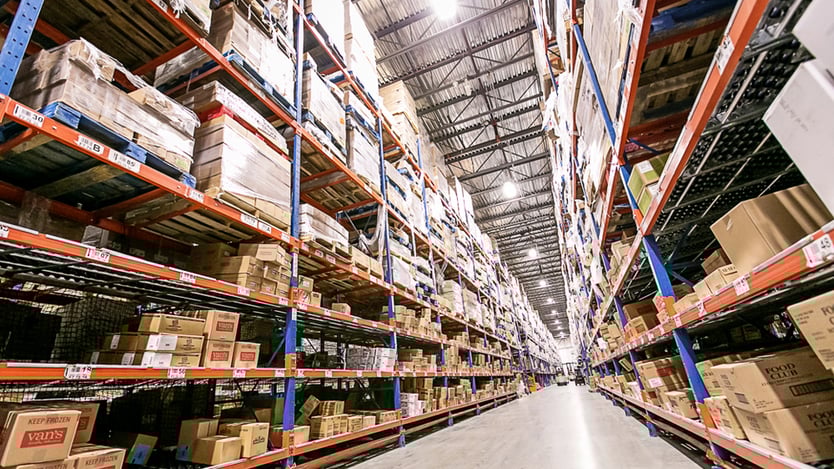
Stability is fleeting in the modern supply chain. According to Capgemini’s latest [New-Generation Supply Chain](https://www.capgemini.com/wp-content/uploads/2025/08/Final-Web-Version-Report-Supply-Chain.pdf) report, 72% of executives said their supply chains have undergone significant changes in just the past three years. Meanwhile, 70% identified the “new-gen supply chain” as one of the top three current tech trends.
Behind those numbers is a deeper transformation. Supply chains are no longer simply digitizing or automating. Where they once aimed for simple efficiency gains, they now seek greater resilience, agility, and intelligence. The warehouse of the future is an adaptive system that can respond instantly to new data, shifting trade dynamics, and [a changing workforce](https://blog.unex.com/maximizing-labor-efficiency-a-smarter-approach-to-warehouse-productivity). And that future is quickly becoming the present.
As 2026 begins, factors like artificial intelligence, modular automation, and geopolitical disruption are converging to redefine warehouse efficiency. Here’s a look at the five supply chain trends that will dominate the year ahead, and how they’ll influence the next era of smart, flexible warehouse operations.
## Recapping the Top Supply Chain Trends of 2025
We can’t look ahead to 2026 without glancing back at what led to the trends we’re seeing today. Many of the forces [that defined last year](https://blog.unex.com/2025-supply-chain-trends-and-predictions-how-warehouses-can-stay-ahead) are still echoing through today’s supply chains.
Over the course of 2025:
- **eCommerce and omnichannel growth** continued to strain fulfillment networks, [sharpening the focus on speed](https://blog.unex.com/optimizing-ecommerce-fulfillment-with-dynamic-storage-solutions), accuracy, and inventory visibility.
- **Labor shortages** showed little sign of easing, prompting more warehouses to adopt leaner operations and selective automation to [get the most out of a limited staff](https://blog.unex.com/maximizing-labor-efficiency-a-smarter-approach-to-warehouse-productivity).
- **Sustainability initiatives** matured from brand goals into operational mandates, with more companies tracking emissions and material efficiency inside their facilities.
- **Space optimization** remained a top concern as warehouse rent and construction costs stayed high, calling for creative [warehouse storage and layout solutions](https://blog.unex.com/warehouse-optimization-tips-to-modernize-your-space).
- **Data-driven decision-making** became a baseline capability. Warehouses that could assess and act on their data made bigger performance strides.
Each of [these 2025 priorities](https://blog.unex.com/2025-supply-chain-trends-and-predictions-how-warehouses-can-stay-ahead) laid the groundwork for what we’re seeing today, a 2026 supply chain defined by intelligence, flexibility, and resilience.
## 1. AI-Driven Optimization Takes Center Stage
[Artificial intelligence](https://blog.unex.com/ai-changing-holiday-shopping-what-it-means-for-your-warehouse) is quickly moving from a supporting role to a central player in the supply chain. In October 2025, [Amazon announced about 14,000 corporate job cuts](https://apnews.com/article/amazon-layoff-ai-14000-artificial-intelligence-cb64af47ebb794541fbdfa8fd264932c), or roughly 4% of its white-collar workforce, as part of a broader restructuring tied to ramped-up AI investment and deployment. Executives said the move reflects automation of routine tasks and real-time optimization in operations.
Sweeping changes like these reflect the rapid evolution of this technology. In warehouses, AI is maturing from forecasting to prescriptive logistics. It can now dynamically adjust slotting, pick flows, staffing, and replenishment based on live data streams. Yet, the rise of computer-controlled systems doesn’t make physical infrastructure any less relevant. [Warehouse storage solutions](https://blog.unex.com/understanding-supply-chain-warehouse-storage-systems-static-dynamic-and-automated-solutions) that can reconfigure, adapt to changing SKU behavior, and support faster pick cycles will separate the leaders from the laggards, even in an AI-first era of fulfillment.
## 2. Phased Automation and Modular Flexibility
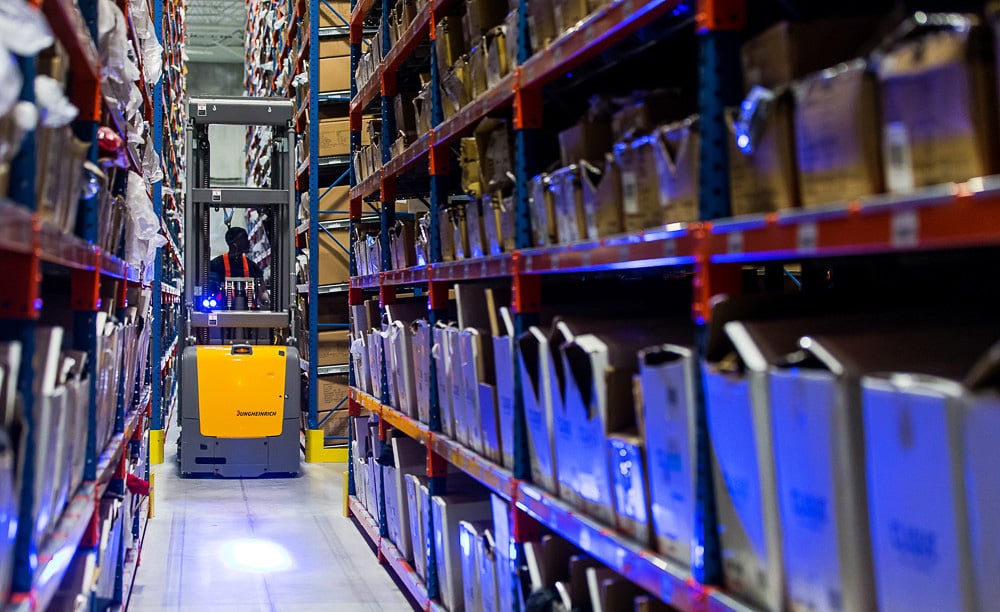
The global warehouse automation market is projected to grow from about [$29.9 billion in 2025 to $63.4 billion by 2030](https://www.mordorintelligence.com/industry-reports/warehouse-automation-market), a CAGR of roughly 16.2%. That growth is significant but not necessarily representative of a wholesale embrace. Rather than a full commitment to robotics, many warehouse operators are [implementing phased automation](https://blog.unex.com/implementing-dynamic-storage-in-an-automated-facility), incrementally layering digital tools, robotics, and storage flexibility.
Much of that integration is built around [modular warehouse automation solutions](https://blog.unex.com/implementing-dynamic-storage-in-an-automated-facility): plug-and-play robots, mobile conveyor sections, and automated picking modules. This flexibility enables facilities to automate what makes sense today without being locked into a rigid design.
The most effective automation strategies pair robotics with dynamic storage, using [gravity-fed racks](https://www.unex.com/solutions/flow-racks), [carton flow lanes](https://www.unex.com/solutions/carton-flow), or [high-density shelving](https://www.unex.com/solutions/high-density-storage) that keep goods organized and within reach of both people and robots. Together with automated storage, these adaptable tools create a hybrid environment that’s much easier to scale or pivot as order volumes, product mixes, or labor needs change.
## 3. Geopolitics and Supply Chain Agility
Disruptions, now the norm in supply chain management, only look to continue. Amid growing global instability, [more than 55% of companies](https://www.automatedwarehouseonline.com/interact-analysis-warehouse-automation-starts-2025-strong-but-faces-uncertainty/) point to geopolitical factors as a major supply-chain risk, up from 35% in 2023. Amid persistent trade tensions and shifting alliances, many manufacturers are diversifying production through [“China + 1” and regional sourcing models](https://arxiv.org/abs/2508.06828).
On the warehouse side of the chain, this makes flexibility and agility more important than ever. Facilities must be able to rebalance inventory quickly when suppliers shift, tariffs change, or routes are disrupted. Dynamic, [modular warehouse storage](https://blog.unex.com/how-dynamic-storage-systems-enhance-warehouse-efficiency) makes that possible, allowing operators to expand backstock capacity or reconfigure layouts to avoid downtime.
Solutions like [SpeedCell high-density storage](https://www.unex.com/solutions/high-density-storage/speedcell) or [SpanTrack carton flow](https://www.unex.com/solutions/carton-flow/spantrack-lane) can be easily scaled or relocated to support new fulfillment nodes. That gives operations the agility to weather global uncertainty without disrupting business.
## 4. Shrinking Labor Pools and the Expanding Skills Gap
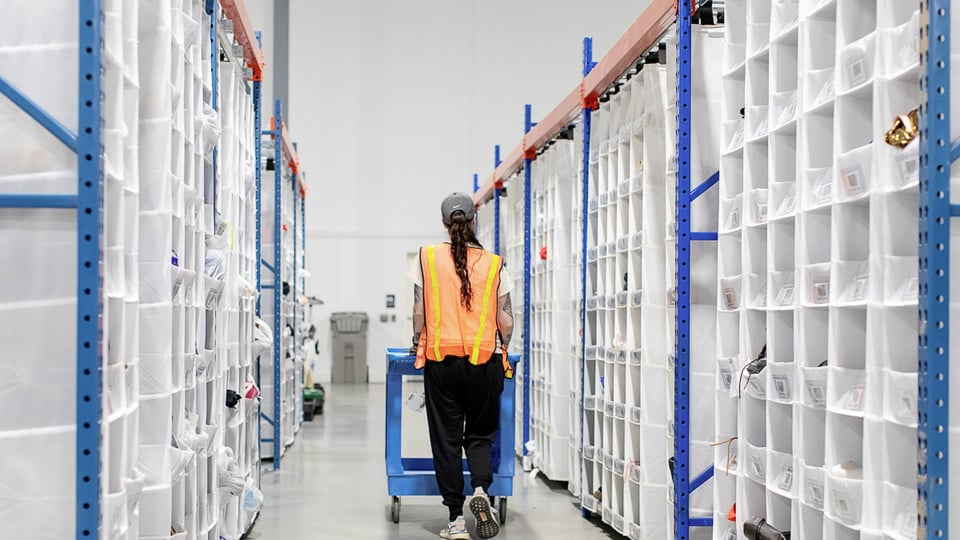
Labor shortages are an ongoing battle for warehouse operators. Despite employing [nearly 1.9 million workers](https://www.speedcommerce.com/insights/warehouse-statistics-comprehensive-industry-data/) in the U.S. warehousing sector, turnover rates regularly exceed 40%. Nearly two-thirds (59%) of warehouse operators report struggling to find and retain qualified talent. Making matters worse, 90% of supply-chain leaders say their workforce [lacks the talent and skills needed](https://procurementtactics.com/supply-chain-statistics/) to hit their digital transformation targets.
With a [smaller workforce](https://blog.unex.com/maximizing-labor-efficiency-a-smarter-approach-to-warehouse-productivity) and higher consumer expectations for speed and accuracy, ergonomics and usability are top priorities. Many are redesigning workflows to support greater ergonomics and warehouse efficiency. [Dynamic warehouse storage systems](https://www.unex.com/dynamic-storage-solutions), for instance, reduce walking, reaching, and lifting while supporting faster training for new hires.
As labor demand continues to outpace supply, one thing is clear: The most successful warehouses will be those that use smart design, not just smart tech, to [close the skills gap](https://blog.unex.com/maximizing-labor-efficiency-a-smarter-approach-to-warehouse-productivity) and keep productivity high.
## 5. Cybersecurity and Digital-Physical Integration
In 2026, cyber risk in the supply chain isn’t a fringe concern. According to recent data, [30% of data breaches](https://nordlayer.com/blog/cybersecurity-statistics-of-2025/) now involve third-party or vendor systems, double the rate from just a year prior. One report found [79 supply-chain attacks](https://www.helpnetsecurity.com/2025/07/24/itrc-data-breaches-h1-2025) in the first half of 2025, impacting 690 organizations and over 78 million individuals.
The threat only grows stronger as warehouse systems become more connected. A system breach can corrupt data, disable automated equipment, and bring fulfillment to a halt. Building resilience starts with the digital layer, and that means protecting endpoints and adopting zero-trust security frameworks to monitor every device and data exchange.
But true resilience in the modern supply chain is both digital and physical. [Warehouse layouts and storage systems](https://www.unex.com/dynamic-storage-solutions) should keep operations running, even if digital networks or automation platforms go offline further up the chain. Strong cybersecurity must be paired with adaptable physical systems, so operations can continue even in the face of digital disruption.
#### Download The Guide To Optimizing Warehouse Space Utilization
## How Warehouses Can Build Resilience
Preparing for the next year’s supply chain realities doesn’t require an overhaul, just focused, flexible action. Here are a few steps that will set you up for stability and success in 2026:
- **Audit workflows:** Identify bottlenecks and slow spots where AI, analytics, or modular automation can boost efficiency.
- **Strengthen digital defenses:** Segment networks, secure connected systems, and adopt zero-trust principles to limit vulnerabilities.
- **Prioritize ergonomics:** Redesign storage and workstations to reduce walking, lifting, and strain while enhancing speed and safety.
- **Invest in flexible infrastructure:** Choose [storage systems](https://www.unex.com/dynamic-storage-solutions) that can reconfigure easily as product lines, order volumes, or tech tools evolve.
- **Plan for adaptability:** Review operations quarterly to ensure your space, systems, and teams are nimble enough to adjust when conditions change.
## Dynamic Storage Solutions for a Smarter 2026 Supply Chain
As warehouses evolve to meet the challenges of AI-driven operations, automation, and ongoing labor and space constraints, adaptable infrastructure is the key to sustaining performance. [Dynamic storage solutions](https://blog.unex.com/how-dynamic-storage-systems-enhance-warehouse-efficiency) empower facilities to optimize space, streamline processes, and stay agile as technology and demand shift.
Here’s how [UNEX solutions](https://www.unex.com/dynamic-storage-solutions) play a role in the next-generation supply chain.
### SpanTrack Carton Flow
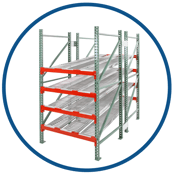AI-driven slotting and forecasting can only deliver results if the physical flow of goods keeps up. The drop-in design of [SpanTrack carton flow lanes](https://www.unex.com/solutions/carton-flow/spantrack-lane) and wheel beds transforms static racks into high-performance, FIFO storage. By keeping inventory organized and always within reach, [SpanTrack](https://www.unex.com/solutions/carton-flow/spantrack-lane) ensures that every algorithmic insight translates into faster, smarter fulfillment and better ergonomics for the workforce.
**Key Benefits**
- Increases throughput and picking speed by up to 150%
- Enables seamless [FIFO rotation](https://blog.unex.com/how-to-implement-an-effective-fifo-strategy-in-your-operation) for accuracy and freshness
- Improves ergonomics and reduces picker strain
### SpeedCell High-Density Storage
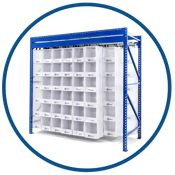As [eCommerce growth](https://blog.unex.com/optimizing-ecommerce-fulfillment-with-dynamic-storage-solutions) and data-driven forecasting push SKU counts higher, [SpeedCell](https://www.unex.com/solutions/high-density-storage/speedcell) maximizes space and accessibility within existing racking. Its high-density shelving compresses up to 200 feet of static shelving into just 40 feet of dynamic storage. With faster pick rates, reduced travel time, and lower labor demands, [SpeedCell](https://www.unex.com/solutions/high-density-storage/speedcell) gives warehouses the flexibility to scale capacity without expanding their footprint.
**Key Benefits**
- Increases storage density by 40–60% within existing racks
- Reduces labor costs by up to 40% through faster each picking
- Adapts to [seasonal or SKU fluctuations](https://blog.unex.com/mastering-peak-season-year-round-strategies-streamlined-operations) without reconfiguration
### FlowCell Modular Workstations
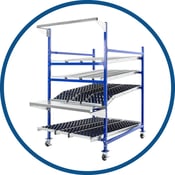While automation takes on repetitive tasks, human workers remain essential to precision assembly, sub-assembly, and packaging. [FlowCell modular flow racks](https://www.unex.com/solutions/flow-racks/flowcell) support these activities with ergonomic, reconfigurable workstations that keep parts organized and within reach. As labor markets tighten and production models evolve, [FlowCell](https://www.unex.com/solutions/flow-racks/flowcell) gives facilities the ability to adjust layouts, workflows, and capacity in hours, not weeks, aligning perfectly with the trend toward phased automation and workforce adaptability.
**Key Benefits**
- Boosts productivity by up to 30% through [ergonomic part presentation](https://blog.unex.com/building-ergonomic-industrial-workstations-reduce-worker-stress-fatigue)
- Reconfigures quickly to support evolving workflows or product lines
- Reduces wasted motion and travel time for operators
##### SpanTrack Lane Carton Flow Rollers
Efficient, durable, and dependable, SpanTrack Lane carton flow rollers drop into existing structures to create the ultimate carton flow rack system for manufacturing facilities and order picking operations.
[EXPLORE SPANTRACK LANE](https://www.unex.com/solutions/carton-flow/spantrack-lane)
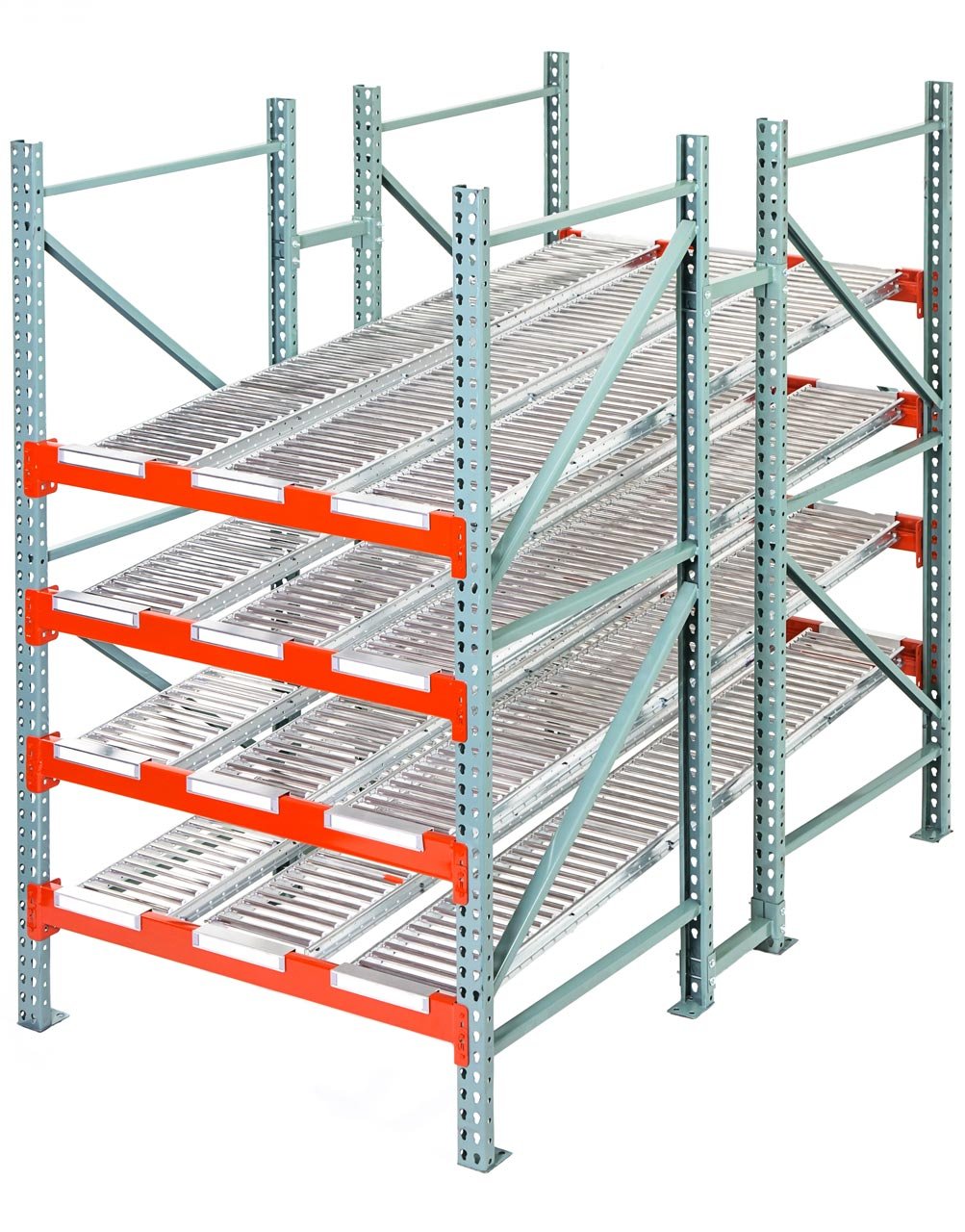
##### SpanTrack Carton Flow Beds
SpanTrack wheel beds are flexible carton flow beds that drop into existing structures to create the ultimate flow rack system for order picking operations, manufacturing facilities, and more.
[EXPLORE SPANTRACK WHEEL BED](https://www.unex.com/solutions/carton-flow/spantrack-wheel-bed)
##### FlowCell Modular Flow Racks
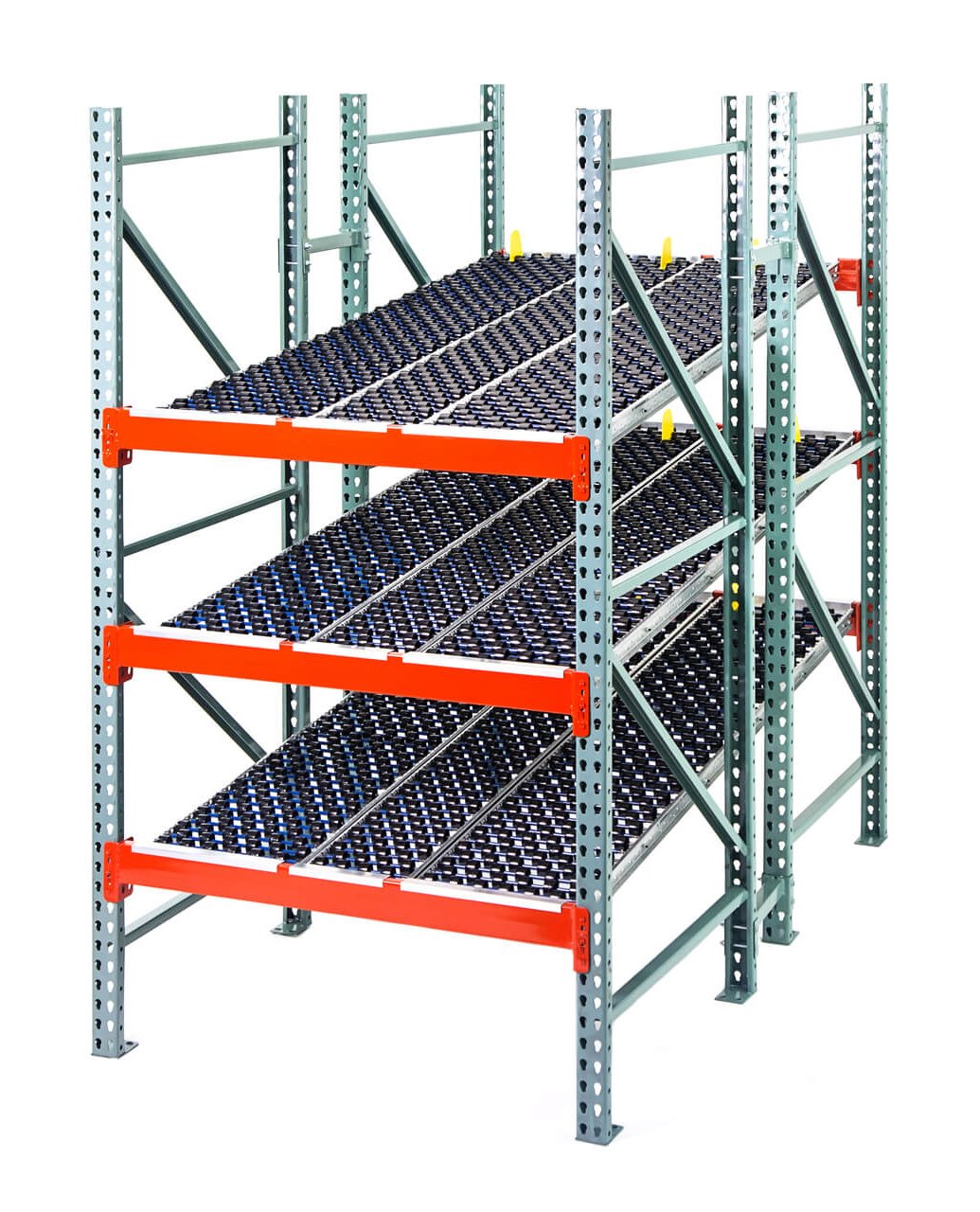
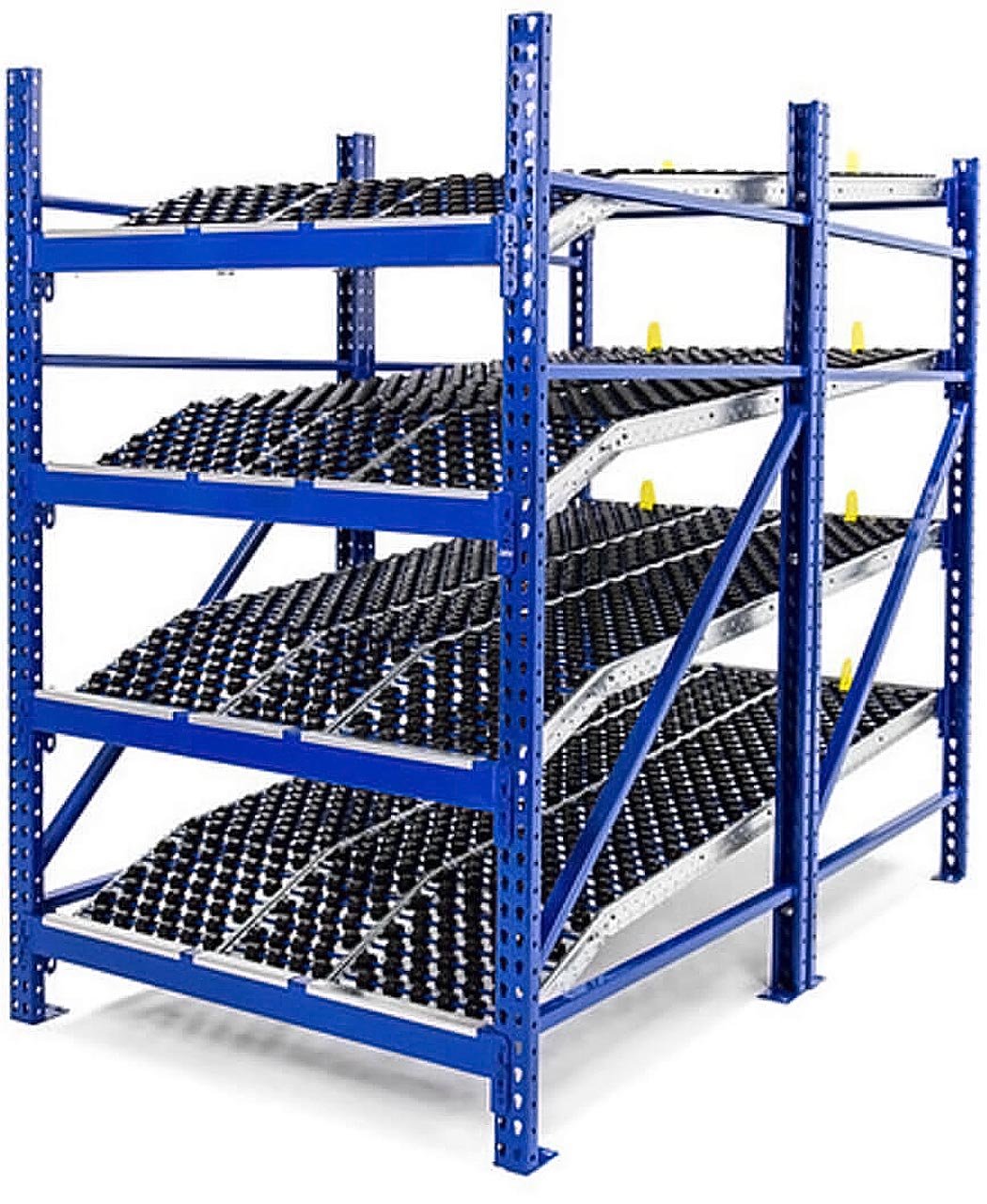
FlowCell modular flow racks are storage units and workstations designed for a facility’s unique operation. Our durable, portable flow racks maximize pick efficiency and space for lineside storage, sub-assembly stations, supermarket racks, modular mobile carts, and more.
[EXPLORE FLOWCELL](https://www.unex.com/solutions/flow-racks/flowcell)
##### Roller Rack Gravity Flow Racks
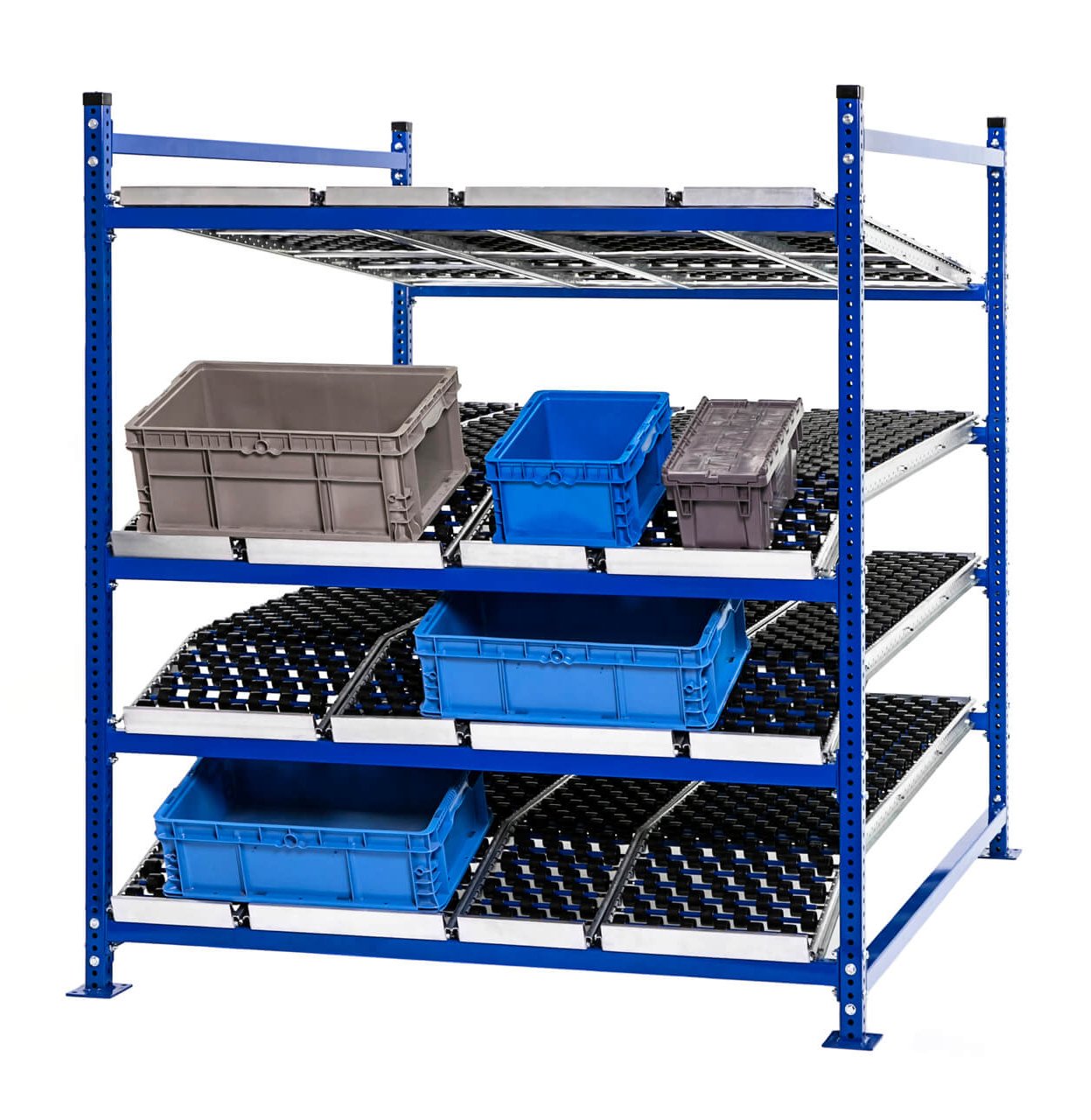
Our pre-engineered gravity flow racks provide seamless carton flow to maximize efficiency in order fulfillment, manufacturing, and retail operations.
[EXPLORE ROLLER RACK](https://www.unex.com/solutions/flow-racks/roller-rack)
##### SpeedCell Dynamic High-Density Shelving
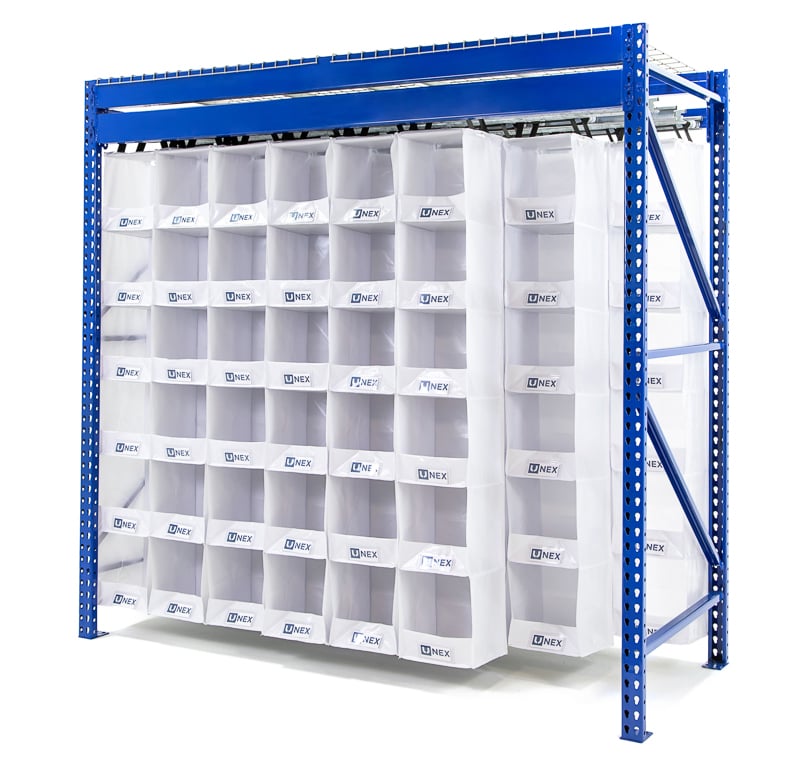
SpeedCell is a dynamic high-density shelving solution that maximizes space utilization within standard pallet racking, helping warehouse and backroom operations improve pick speed and accuracy for valuable time and cost savings.
[EXPLORE SPEEDCELL](https://www.unex.com/solutions/high-density-storage/speedcell)
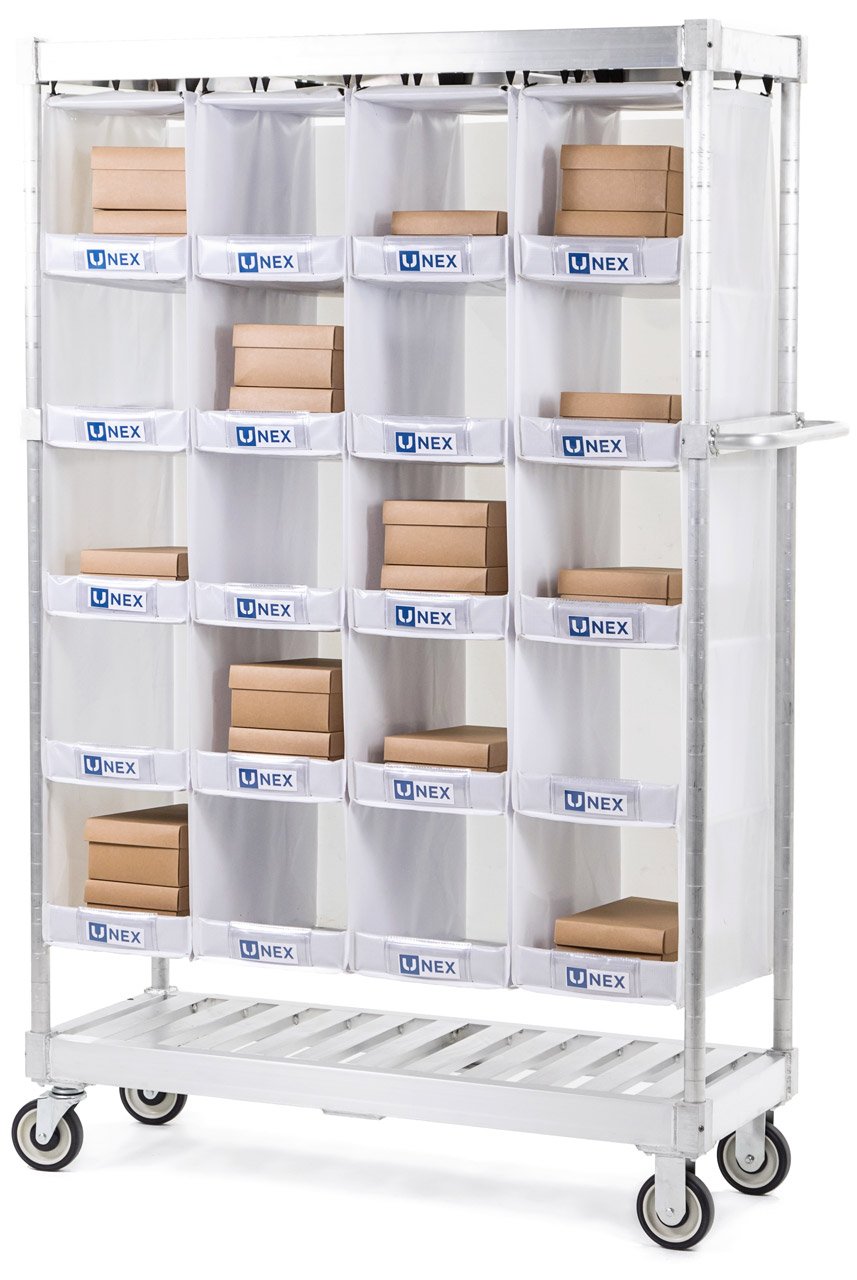
##### SpeedCartt
Mobilize order picking processes with a flexible, fast solution. Suitable for organizing restocking, order fulfillment, seasonal demands, and more, SpeedCartt is reliable even in the most demanding warehouse environments.
[EXPLORE SPEEDCARTT](https://www.unex.com/solutions/high-density-storage/speedcartt)
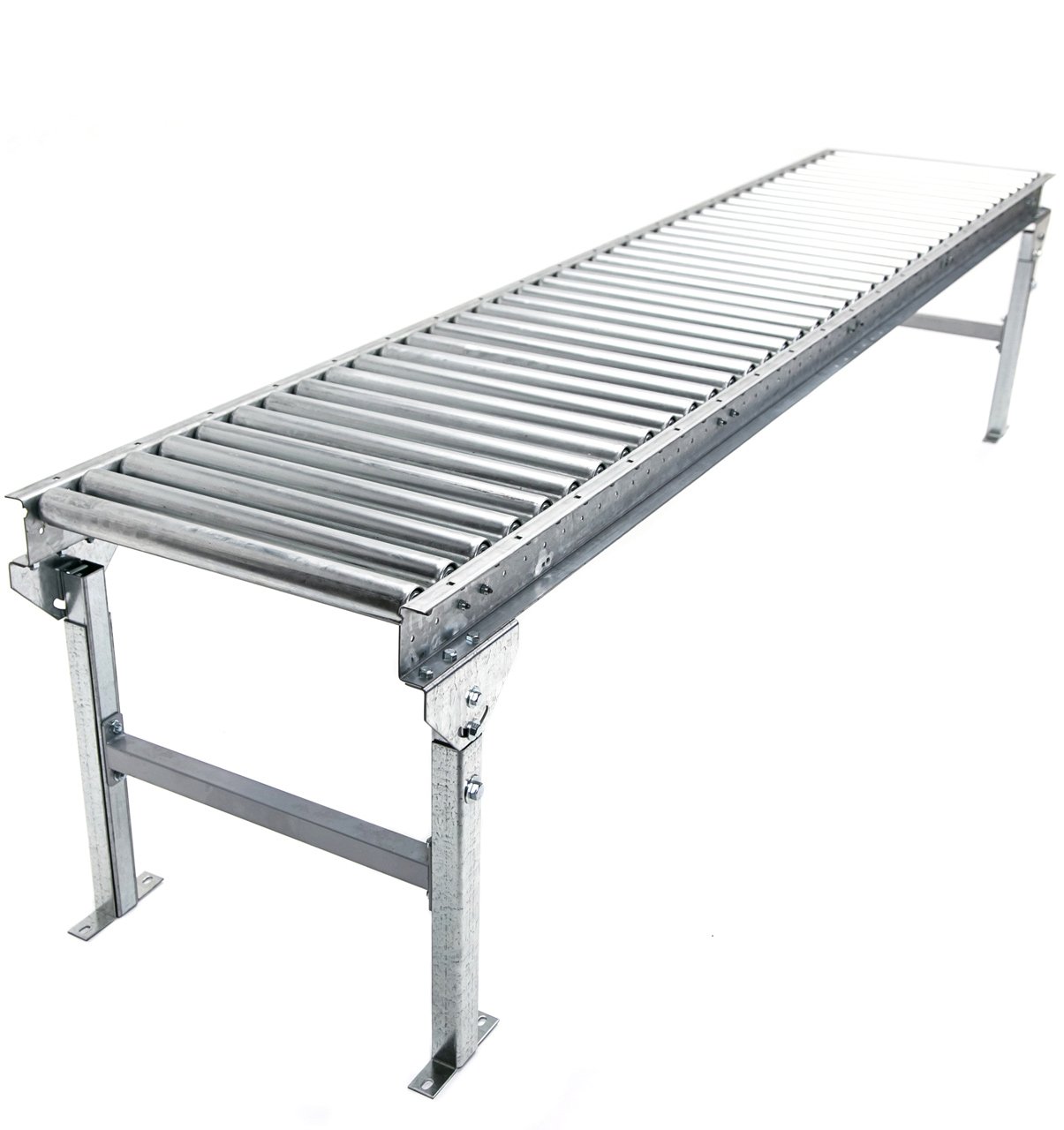
##### Gravity Conveyor
Durable, efficient gravity conveyors move loads through a facility. Our extensive line of roller and wheel conveyor solutions are easy to install, made to order, and proven to increase warehouse efficiency and throughput significantly.
[EXPLORE GRAVITY CONVEYOR](https://www.unex.com/solutions/conveyors/gravity-conveyors)
## 2026: The Year of Supply Chain Agility
The year ahead will demand greater agility at every point in the supply chain. As global networks become more fluid, warehouses are the critical link between production and delivery, the point where that adaptability must come to life. Facilities that can expand capacity, pivot quickly, and act on real-time data will be the ones that stay ahead.
That level of responsiveness starts with adopting trends like AI and phased automation, but it also comes through creating smarter, more adaptable infrastructure. True resilience demands a balance of advanced technology *and* the physical systems that support it. Dynamic storage solutions like [UNEX SpanTrack](https://www.unex.com/solutions/carton-flow/spantrack-lane), [SpeedCell](https://www.unex.com/solutions/high-density-storage/speedcell), and [FlowCell](https://www.unex.com/solutions/flow-racks/flowcell) give facilities the flexibility to evolve with shifting demand, workforce changes, and new technologies.
[Contact UNEX today](https://www.unex.com/contact) to learn how dynamic storage solutions can help your warehouse stay flexible, efficient, and ready for whatever 2026 brings.
[](https://cta-redirect.hubspot.com/cta/redirect/4747213/8c7949f2-eab9-4b99-990b-21877fe9c4ef)
[Order Fulfillment & Warehousing](https://blog.unex.com/tag/order-fulfillment-warehousing)
## Related Blogs
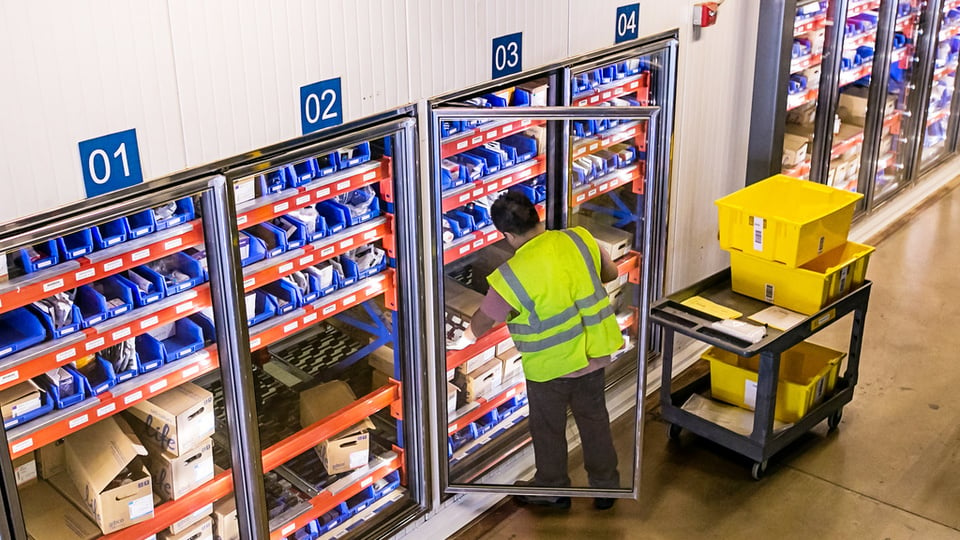
### Why Temperature-Controlled Operations Are Turning to SpanTrack Carton Flow
[Read More](https://blog.unex.com/why-temperature-controlled-operations-are-turning-to-spantrack-carton-flow)
### How to Select the Right Warehouse Storage Solutions to Maximize Space
[Read More](https://blog.unex.com/how-to-select-the-right-warehouse-storage-solutions-to-maximize-space)
[](https://blog.unex.com/)
- - [Applications](https://www.unex.com/applications)
- [Storage](https://blog.unex.com/applications#storage)
- [Order Picking](https://blog.unex.com/applications#picking)
- [Packing & Assembly](https://blog.unex.com/applications#packing)
- [Solutions](https://www.unex.com/solutions)
- [Carton Flow](https://www.unex.com/solutions/carton-flow)
- [Flow Racks](https://www.unex.com/solutions/flow-racks)
- [High-Density Storage](https://www.unex.com/solutions/high-density-storage)
- [Conveyors](https://www.unex.com/solutions/conveyors)
- - Industries
- [Manufacturing](https://www.unex.com/industries/manufacturing)
- [Order Fulfillment & Warehousing](https://www.unex.com/industries/order-fulfillment-warehousing)
- [Retail](https://www.unex.com/industries/retail)
- [Logistics](https://www.unex.com/industries/logistics)
- [About](https://www.unex.com/about)
- [Find a Distributor](https://go.unex.com/find-material-handling-distributor)
- [Distributor Portal](https://go.unex.com/distributors)
- [Careers](https://go.unex.com/careers)
- - [Build a Solution](https://www.unex.com/configurator)
- [Contact Us](https://www.unex.com/contact)
- [Resources](https://www.unex.com/resources)
[800-334-8639](tel:8003348639)
691 New Hampshire Ave Lakewood, NJ 08701
[Privacy Policy](https://www.unex.com/legal/privacy-policy)|[Terms of Service](https://www.unex.com/legal/terms-service)
[Sitemap](https://www.unex.com/sitemap)|[Warranty](https://www.unex.com/legal/warranty)
© UNEX Manufacturing. 2026 All Rights Reserved.
```json
{
"@context" : "https://schema.org",
"@type" : "BlogPosting",
"author" : {
"@type" : "Person",
"name" : "UNEX",
"url" : "https://blog.unex.com/author/unex"
},
"dateModified" : "2025-11-24T12:00:00.278Z",
"datePublished" : "2025-11-24T12:00:00.000Z",
"headline" : "2026 Supply Chain Trends: AI, Automation, and the Power of Dynamic Storage",
"image" : [ "https://blog.unex.com/hubfs/dynamic%20warehouse%20storage%20solutions.jpg" ],
"mainEntityOfPage" : {
"@id" : "https://blog.unex.com/2026-supply-chain-trends-ai-automation-and-the-power-of-dynamic-storage",
"@type" : "WebPage"
},
"publisher" : {
"@type" : "Organization",
"logo" : {
"@type" : "ImageObject",
"url" : "https://blog.unex.com/hubfs/unex_logo_061013_RGB_Medium-1.jpg"
},
"name" : "UNEX Manufacturing Inc"
}
}
```