
In a fast-paced manufacturing landscape, efficiency is everything. Automation, digitalization, and lean production initiatives continue to redefine operations, yet behind every machine and process improvement stands the human worker. As facilities push to increase throughput and maintain tight production schedules, worker fatigue and ergonomic strain remain hidden barriers to performance.
Ergonomic design isn’t simply about comfort; it’s a crucial driver of operational success. Poorly designed industrial workstations lead to repetitive stress injuries, inefficiency, and costly turnover. By contrast, well-engineered ergonomic workstations not only reduce worker stress and fatigue but also create measurable gains in productivity, accuracy, and morale.
The Role of Ergonomics in Modern Manufacturing
Ergonomics is the science of designing work environments that fit the worker, not the other way around. In industrial manufacturing and assembly settings, that means optimizing workstations so that tools, parts, and materials are arranged to support natural human movement and posture.
When employees spend hours each day bending, stretching, twisting, or reaching awkwardly to access parts, fatigue and strain accumulate quickly. Over time, this leads to musculoskeletal disorders that can sideline skilled workers, drive up medical costs, and hurt overall output. But when workstations are built to minimize unnecessary motion and allow for fluid, comfortable movement, both safety and efficiency improve simultaneously.
This alignment between ergonomics and efficiency directly reflects lean manufacturing principles, particularly the elimination of wasted motion. In a well-designed ergonomic workstation, every movement has purpose, every reach is within a natural range, and every second contributes to value creation.

How Ergonomic Workstations Reduce Stress and Fatigue
Designing industrial workstations with the worker in mind doesn’t just enhance comfort, it transforms how efficiently and safely people perform their jobs. By reducing strain, improving visibility, and minimizing unnecessary movement, ergonomic workstations help employees stay focused, energized, and productive throughout the day. Below are three key ways ergonomic design principles reduce stress and fatigue while supporting long-term performance on the manufacturing floor.
1. Optimizing Reach and Posture
The first step toward reducing fatigue is to keep materials and tools within the operator’s “golden zone," roughly between shoulder and waist height. This range allows workers to maintain a neutral posture, minimizing the need for bending, stretching, or overreaching.
Workstations that position components too high or too low can cause strain on the neck, shoulders, and lower back. By contrast, ergonomic setups bring frequently used items closer to the worker and move less critical materials farther away. This thoughtful organization reduces repetitive strain, minimizes awkward motion, and enables faster, more natural picking or assembly.

2. Angled and Adjustable Shelving
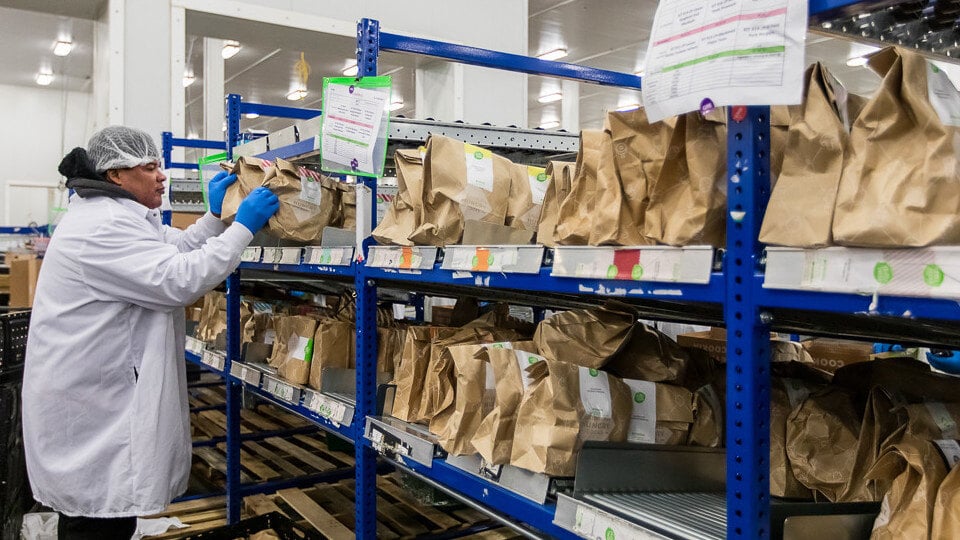
Visibility and accessibility are equally important for ergonomic success. Angled shelves and pick trays make products easier to see and reach without forcing the operator to crane their neck or bend deeply into storage areas. Adjustable components allow teams to fine-tune workstation height and angles for different workers, accommodating a variety of tasks or shift preferences.
By ensuring each pick point is clearly visible and comfortably within reach, these design elements help prevent the neck, shoulder, and wrist strain that so often contributes to fatigue and long-term injury. Over time, the improvement in comfort translates into better focus, higher accuracy, and sustained productivity throughout the shift.
3. Encouraging Movement Variety and Organization
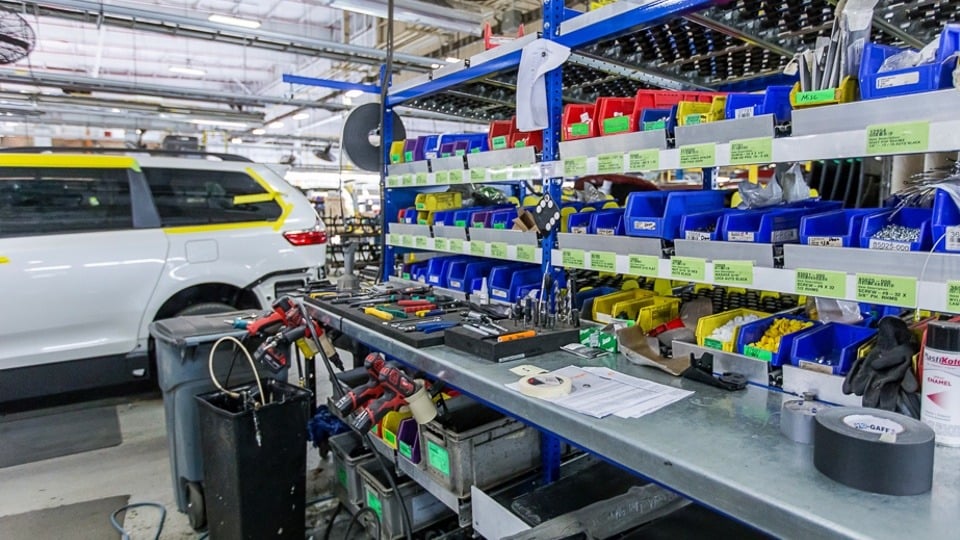
Repetition is one of the leading causes of workplace fatigue. Ergonomic workstations that incorporate multiple shelf levels and varied hand positions reduce repetitive motion and distribute the workload across different muscle groups. This not only lessens strain but also helps keep workers more alert and engaged.
Equally important is organization. A clutter-free, logically arranged workstation reduces the cognitive load and physical effort of searching for tools or parts. Workers can focus more energy on their tasks, while managers benefit from improved accuracy, faster completion times, and fewer errors.
The ROI of Ergonomic Design
While the immediate benefits of ergonomics are physical comfort and safety, the broader impact reaches deep into operational performance. Facilities that implement ergonomic workstation design often see measurable gains in efficiency, quality, and employee satisfaction.
Fatigue is one of the most underestimated sources of inefficiency. A worker who spends extra seconds bending, searching, or repositioning parts across hundreds of repetitions a day loses valuable time, and that lost time compounds across shifts and departments. By eliminating wasted motion, ergonomic setups streamline processes, improve consistency, and ultimately boost throughput.
The financial case is equally strong. Fewer injuries mean fewer workers’ compensation claims and less unplanned downtime. Reduced turnover keeps experienced employees on the floor longer, while improved productivity enhances the return on labor investment.
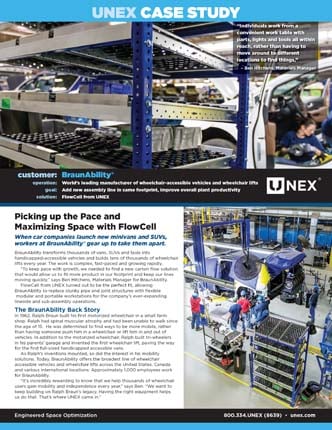
Learn how BraunAbility used FlowCell to fit more product in their existing footprint. Download the Case Study.
UNEX Solutions for Ergonomic Workstations
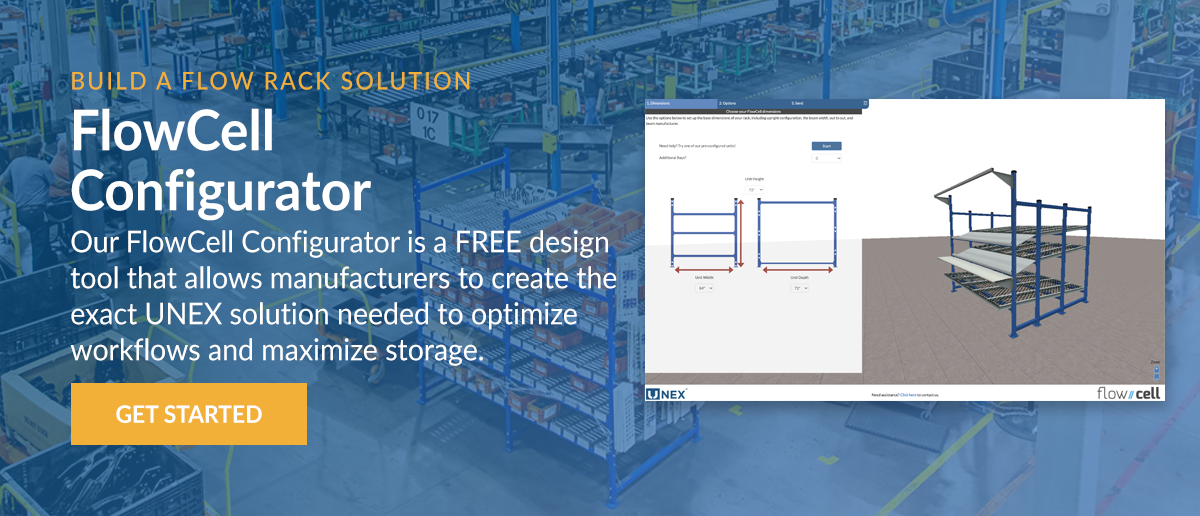
 At UNEX, we understand that ergonomics and productivity go hand in hand. FlowCell modular workstations are engineered to support the principles of lean manufacturing by creating safer, more efficient environments for lineside assembly, kitting, packing, and sub-assembly operations.
FlowCell workstations are designed to bring materials to the worker, not the other way around. Gravity-fed SpanTrack carton flow systems move products to the front of the cell automatically, eliminating the need to reach into deep shelves or lift heavy totes from awkward angles. Angled shelves present items at the ideal pick point, improving visibility and reducing unnecessary strain.
Each FlowCell unit can be configured to meet the unique demands of your operation, with durable construction and modular flexibility that evolve as your production needs change.
Key Features:
- Heavy-gauge steel construction with adjustable levels on 1" centers
- Supports up to 1,000 lbs per level and 3,000 lbs per unit with casters
- Gravity-fed SpanTrack lanes keep materials within easy reach
- Configurable accessories like pick trays, workbenches, casters, and overhead toolbars
- Fully modular design that reconfigures easily for line or process changes
Operational Benefits:
- Improves ergonomics by reducing reaching, bending, and lifting
- Increases space utilization by up to 50%
- Boosts production efficiency by up to 30%
- Keeps workstations organized and clutter-free
- Enhances worker comfort and consistency throughout each shift
The result is a cleaner, safer, and more productive manufacturing floor where workers can perform their best, shift after shift.
Building a Safer, Smarter Manufacturing Future
The most advanced technology in the world can’t replace the human element at the heart of every manufacturing operation. By prioritizing ergonomics, manufacturers not only safeguard their workforce but also strengthen the foundation of their productivity.
Ergonomic industrial workstations are an investment in both people and performance, a way to reduce fatigue, prevent injury, and enhance output all at once. With UNEX FlowCell modular workstations, manufacturers can design environments that work in harmony with their employees, improving comfort, consistency, and efficiency across the board.
To learn how UNEX can help your facility build ergonomic industrial workstations tailored to your needs, contact our team today. Together, we can create spaces that empower your people and keep your operations flowing.