If you’ve ever walked through a busy warehouse, you’ve probably seen the controlled chaos of boxes, tape, labels, and packers racing the clock to get orders out the door. Every second counts, and even small inefficiencies add up fast.
While many fulfillment operations invest heavily in automation or robotics to stay competitive, the real key to improving speed and accuracy might be something much simpler: the manual packing station.
These workspaces are often treated as an afterthought, but when designed strategically, they can dramatically improve productivity, flow, and worker well-being.
Why Packing Stations Deserve More Attention
In every fulfillment center, the packing station is where the real magic happens; it’s the final touchpoint before an order leaves the building. But for many operations, these critical spaces haven’t evolved much over time.
Packing stations are often treated as a static part of the process: a few tables, some tape guns, and a stack of boxes. Operators make do, even if they’re constantly bending, reaching, or wasting valuable seconds searching for materials. Over time, those inefficiencies add up, eating into productivity, increasing fatigue, and slowing down throughput.
The truth is, manual packing stations are far more than just tables and tape. When designed to support your workflow, product mix, and people, they can become one of the most powerful productivity tools in your facility. And as Amazon’s early story proves, even the simplest operational improvements can deliver outsized results.
“We were so inefficient with our operations and logistics when there were just 10 of us,” Jeff Bezos recalled in an interview. “I told one of the engineers, ‘We should get knee pads because packing on the floor is killing me!’ He said, ‘Jeff… we should get packing tables.’ The next day, I bought packing tables — and it doubled our productivity.”
From a few tables in a garage to today’s global fulfillment powerhouse, that story illustrates an essential truth: smart packing station design can instantly elevate efficiency, ergonomics, and output.
 What is a Manual Packing Station?
A manual packing station is a dedicated workspace where final prep and packaging take place before shipping. Unlike automated systems, these stations don’t rely on electrical components or robotics to deliver efficiency. Instead, they’re designed around people, using modular, ergonomic layouts that make it easy to store, access, and organize essential packing materials like boxes, tape, packing paper, envelopes, and labels.
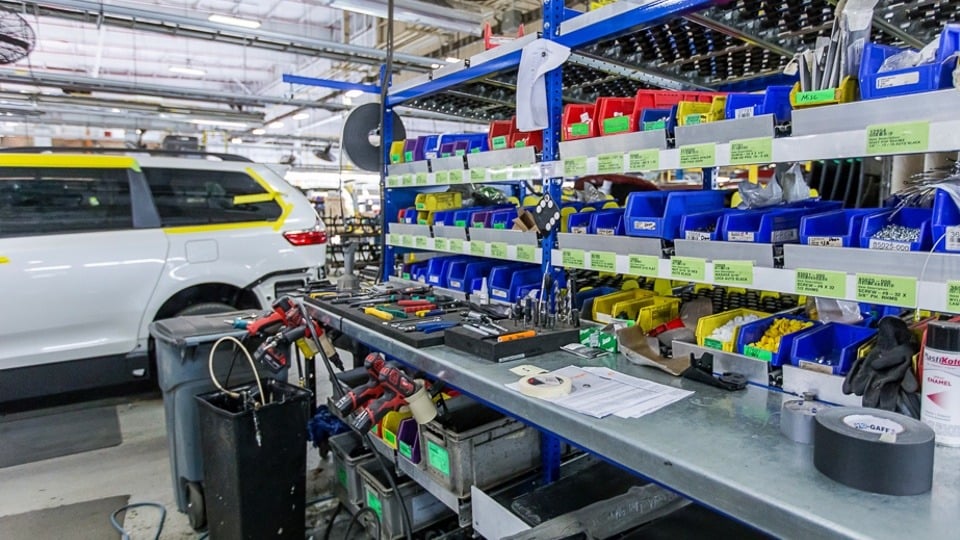
A well-designed packing station puts every tool an operator needs, including scanners, tape guns, utility knives, and shipping supplies, within easy reach. This simple shift can have an outsized impact, reducing travel and handling time, improving ergonomics, and creating a smoother, faster packing process.
When integrated strategically into your fulfillment workflow, manual packing stations help eliminate wasted motion, improve order accuracy, and support steady material flow from picking through shipping, all while helping operators stay comfortable and productive throughout their shifts.
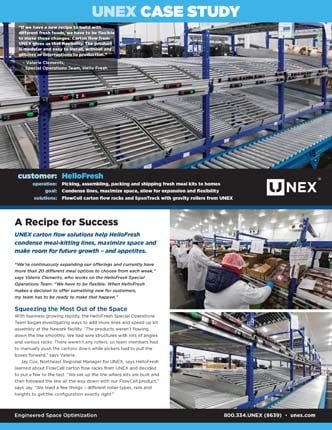
Learn how UNEX carton flow racks allow companies like HelloFresh to keep growing. Download the Case Study.
How Manual Packing Stations Move the Needle
Manual packing stations provide numerous benefits to the organizations and operators that use them. Let’s break down three of the most significant benefits: customization, flow support, and operator efficiency and experience.
1. Manual Packing Stations Are Modular, Customizable Solutions
It’s no secret that small improvements in workflow can lead to big gains in productivity. Even Amazon discovered this during its earliest days. While fulfillment centers may not see a full 100% jump in efficiency, well-designed manual packing stations consistently deliver measurable improvements across industries.
The secret lies in customization. Packing workstations are designed to be modular, allowing you to create layouts tailored to your unique products, fulfillment flow, and operator needs.
For instance, eCommerce operations can adapt their stations to handle a wide range of product shapes, sizes, and weights. Meanwhile, high-volume fulfillment centers can configure stations to reduce unnecessary movement, shorten reach distances, and keep every tool and material within easy access.
Ultimately, optimizing your packing setup is about creating a workstation that fits your people and process, not the other way around. Think of it like building a puzzle: every shelf, tray, and work surface needs to be in the right place at the right time to keep your operation running at peak efficiency.
2. Manual Pack Stations Support Steady Material Flow
When material moves efficiently, everything else in your warehouse does too. Manual packing stations play a crucial role in maintaining that steady, predictable flow, connecting your picking, packing, and shipping processes into one continuous line of motion.
By enhancing your workstations with carton flow and gravity conveyor systems, you can create a fully integrated, flow-through environment where every operator stays focused on value-added tasks.
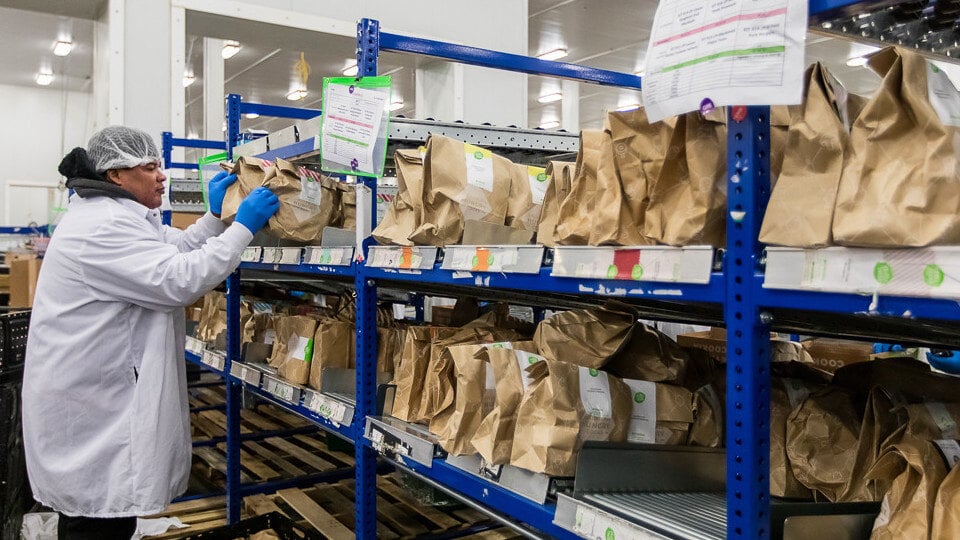
Carton systems like UNEX SpanTrack bring products or components directly to the operator at the point of pick. This reduces unnecessary walking, lifting, or reaching, keeping the pace consistent and the process ergonomic.
Adding gravity conveyors to the front of your packing stations allows materials to move smoothly from pickers to packers, then on to shipping with no pauses or no bottlenecks. The result is a warehouse that flows naturally, improving throughput, order accuracy, and overall productivity.
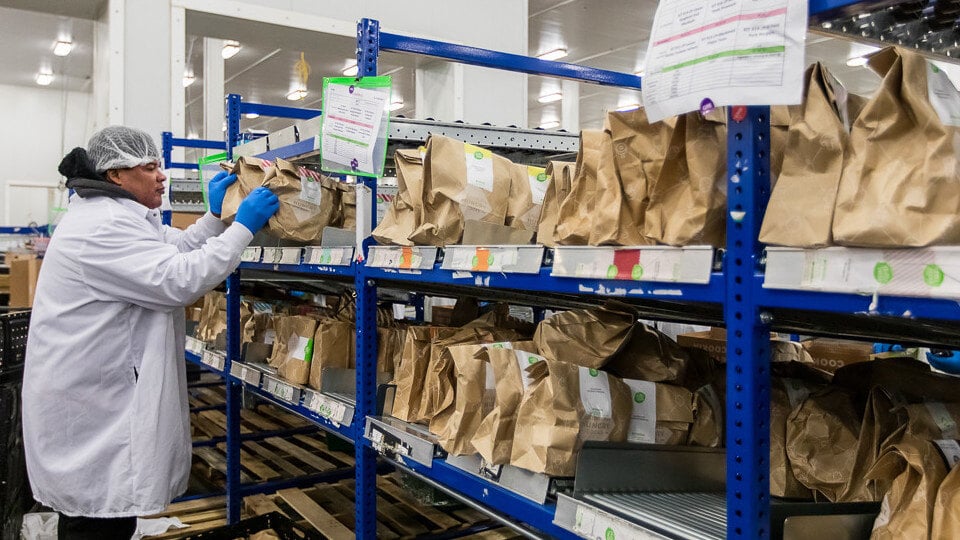
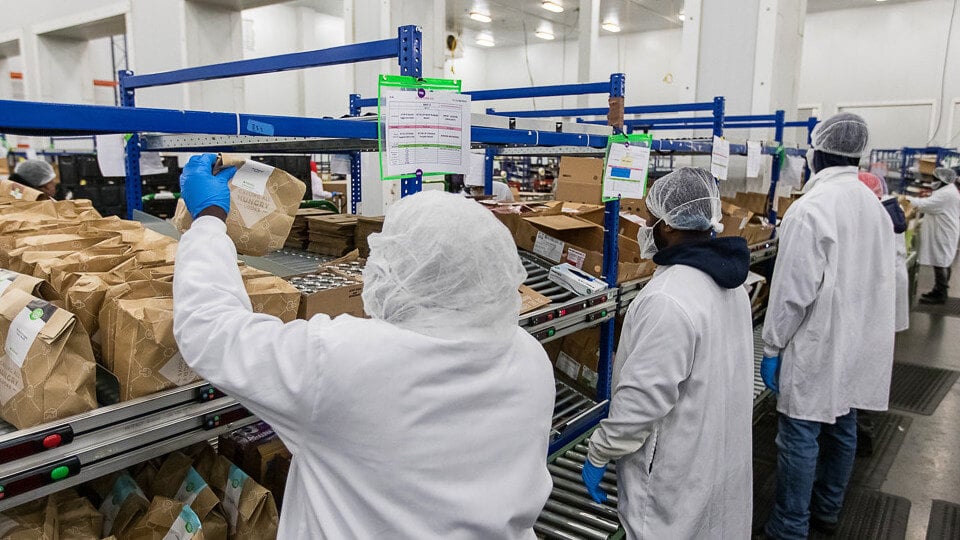
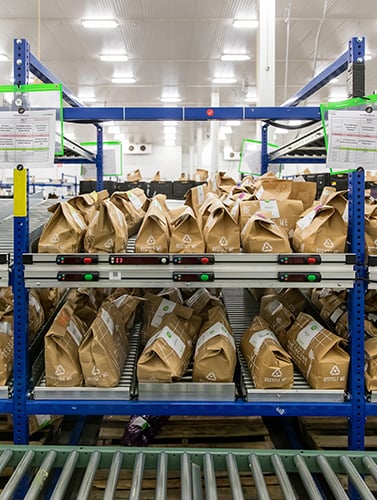
Take HelloFresh, for example. The meal-kit company transformed its fulfillment operation into a highly efficient, flow-based process using FlowCell workstations outfitted with SpanTrack Lane carton flow and Gravity Conveyor systems. At the first set of stations, workers assemble small components like spice packets and minor ingredients. These kits then move seamlessly down the line to final packing, where full meal boxes are completed and sent directly to shipping, all without wasted motion or downtime.
3. Manual Pack Stations Enhance Worker Safety and Ergonomics
Manual pack stations that are designed to streamline operator activities are excellent assets for ensuring every employee will be able to operate at peak efficiency, regardless of height, weight, or mobility.
The best manual packing stations are designed with the operator’s daily activities in mind and include features that aim to reduce the bending, twisting, turning, and reaching that so often lead to operator injuries, delays, and inefficiency.
FlowCell Modular Flow Racks: A Versatile Packing Station Solution
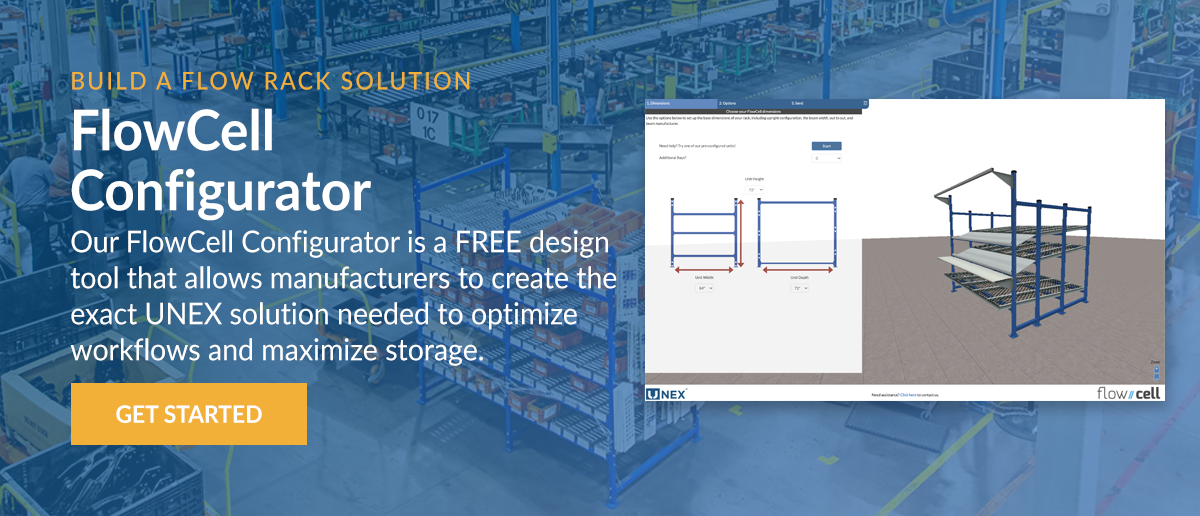
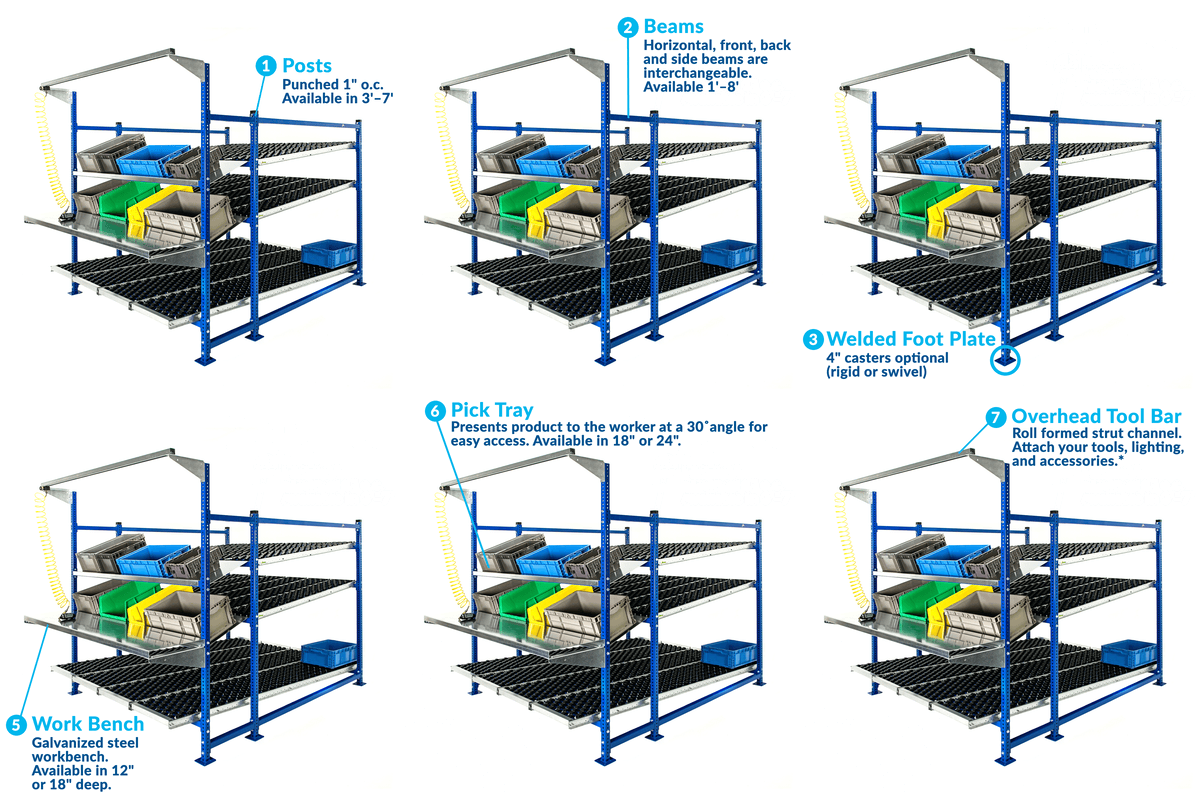 FlowCell modular workstations take the most valuable aspects of traditional packing stations, including organization, accessibility, and efficiency, and elevate them with modern engineering and ergonomic design. Built for flexibility, FlowCell units solve common warehouse challenges like wasted space, inconsistent productivity, and operator fatigue.
Every FlowCell workstation is designed to keep materials flowing and operators focused. With durable steel construction and modular components, FlowCell can be configured to match your unique fulfillment process, whether that’s kitting, assembly, or order packing. The result is a cleaner, safer, and more efficient packing environment that can evolve with your operation.
How FlowCell Flow Racks Change the Game
FlowCell is proven to transform packing operations by improving space, speed, and safety across the floor:
- Increase space utilization by up to 50%: inventory stays organized and properly stored
- Boost production efficiency by up to 30%: angled flow racks position parts directly toward the picker for faster, easier access
- Improve ergonomics and reduce strain: minimizes bending, reaching, and fatigue for operators
- Stay flexible and future-ready: easily reconfigurable layouts adapt to new lines, products, or process changes
- Ensure FIFO rotation: back-loaded replenishment keeps materials flowing without disrupting front-line work
- Maintain a clean, organized workspace: return lanes store empty totes and boxes off the floor
The modular design of FlowCell doesn’t just optimize your space, it transforms the way your team works. From lean assembly lines to high-volume fulfillment centers, FlowCell helps you do more with less while keeping your most valuable asset safe and productive.
Start Building a Smarter, More Productive Fulfillment Operation
Optimizing your packing process doesn’t have to mean rethinking your entire warehouse; it starts with empowering the people at the center of it. By implementing manual packing stations built with UNEX FlowCell, you can eliminate wasted motion, increase throughput, and create a safer, more efficient environment for every operator on the floor.
From small assembly areas to high-volume fulfillment centers, UNEX solutions are engineered to adapt, helping you make the most of your space, your people, and your process.
Contact UNEX today to learn how FlowCell workstations, SpanTrack carton flow, and Gravity Conveyor systems can work together to keep your materials moving forward.