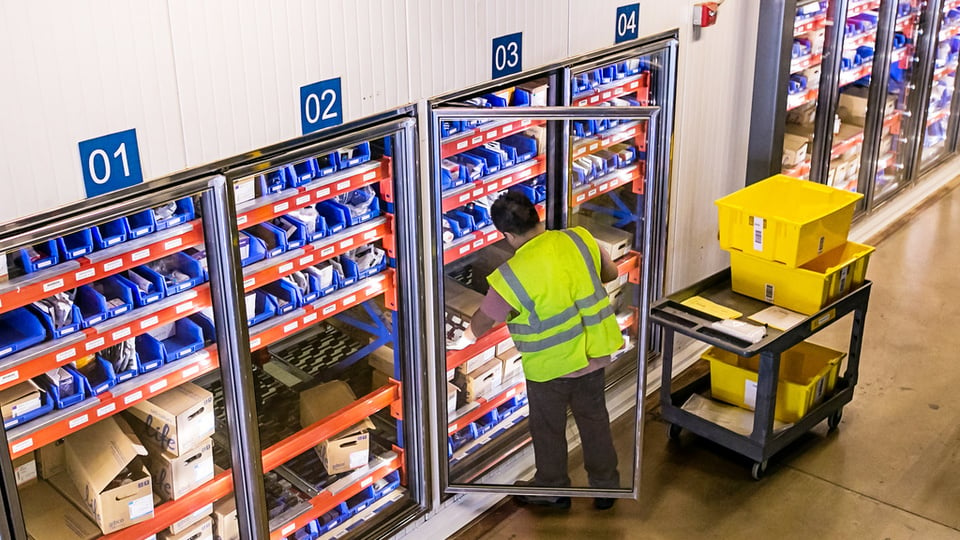

As retailers gear up for the holiday season, the spotlight often falls on front-of-house displays, fast eCommerce fulfillment, and creative promotions. But the true test of readiness is happening behind the scenes, in a space most shoppers will never see: the retail back room.
Out-of-stocks continue to plague the industry, costing retailers nearly $1 trillion in lost sales annually, according to recent analysis. More than three-quarters of shoppers say they’ve experienced stockouts in the past year, and most either buy elsewhere or abandon the purchase altogether. These missed opportunities don’t just hurt sales, they erode trust and push even loyal customers toward online alternatives.
To protect profits and customer loyalty, retailers need back rooms that can keep pace with fluctuating demand, complex inventory mixes, and the accelerated expectations of omnichannel fulfillment. That’s why optimizing your back room storage isn’t just a facilities project, it’s a revenue strategy.
Retail Backrooms: Doing More with Less Space
Retail operations are evolving. Stores no longer serve purely as retail fronts. Today, they are part showroom, part fulfilment hub, part hybrid between “sell here” and “supply here.” According to the 2025 outlook by Deloitte, the industry is moving from a mass-inventory mindset to “mass to micro," meaning more SKUs, faster turns, and greater omnichannel expectation.
For back rooms this means:
- A limited footprint facing a growing SKU count, especially during holiday surge and increased e-commerce fulfilment.
- Static shelving layouts that struggle under speed and accessibility demands.
- A labour and workflow strain, as replenishment becomes faster and more critical.
- Pressure to reduce lead-time dependency on central distribution centers and rely more on in-store or near-store inventory.
And previous research from the MIT Center for Transportation & Logistics shows that constrained back room space disproportionately affects store profit and fulfillment efficiency. In short, your back room isn’t just inventory storage. It’s a performance bottleneck or a performance lever.
Learn how to set up micro-fulfillment in a matter of weeks! Download the Quickstart Guide to Micro-fulfillment.
From Static to Dynamic: Why Retailers Are Moving to Flow-Based Storage
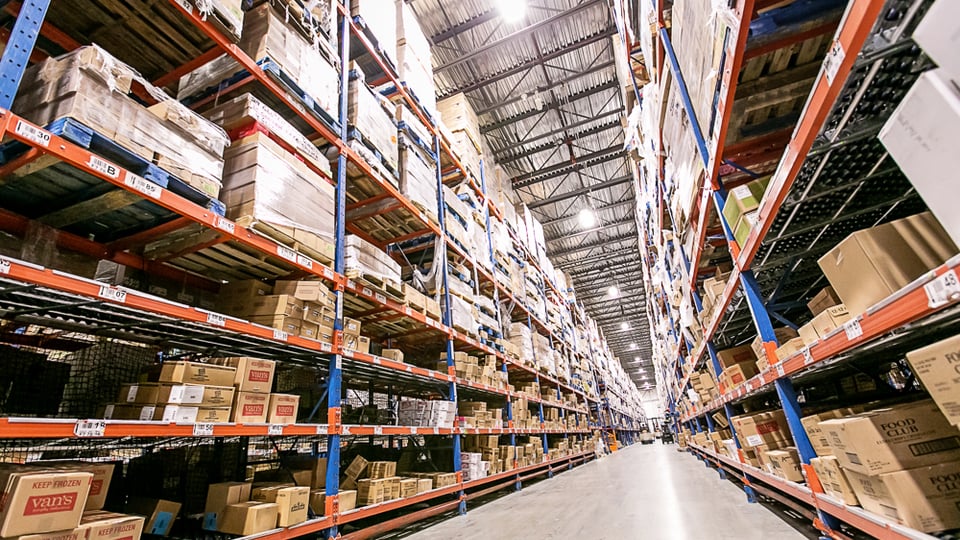
Traditional static shelving and pallet racks served a time when longer lead times, fewer SKUs, and slower turns were the norm. But in today’s retail reality, dynamic storage systems are gaining traction. Why? Because they help stores become more agile and responsive.
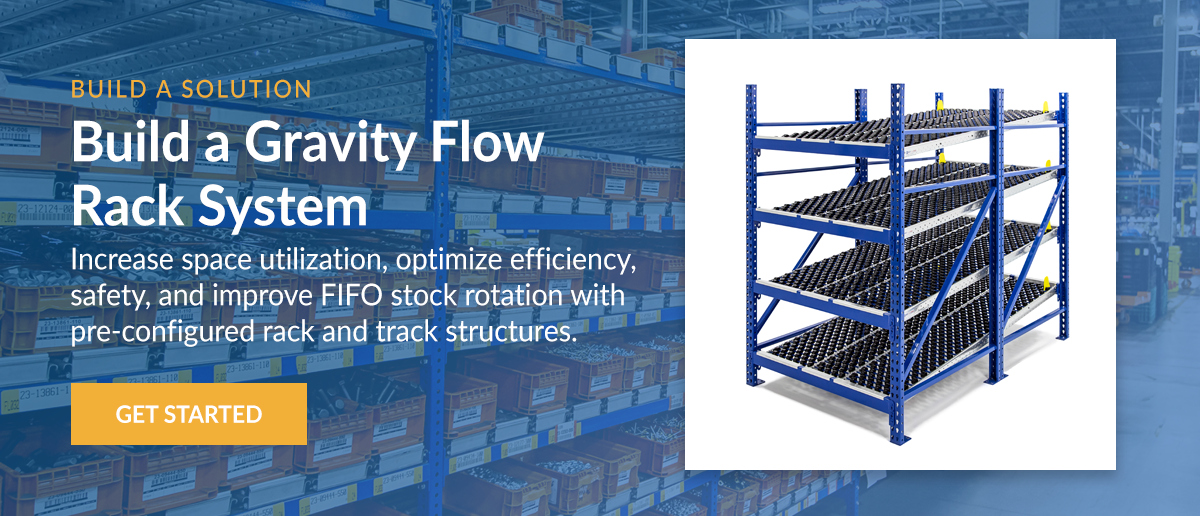
Static shelving is designed for storage. Dynamic storage is designed for movement. And in modern retail, that distinction matters. Dynamic storage systems use gravity flow tracks and engineered layouts to move inventory seamlessly to the point of pick. Rather than forcing employees to dig through deep racks, products roll forward automatically, ready for restocking or fulfillment.
This simple shift has major implications. It increases SKU density, improves accessibility, reduces picker travel time, and ensures first-in, first-out (FIFO) rotation for perishables or time-sensitive goods. The result? Less wasted time, fewer stockouts, and faster, more reliable replenishment.
UNEX Roller Rack, along with dynamic storage solutions like SpanTrack and SpeedCell, represents a fluid, modular storage platform designed for these demands. The shift to dynamic storage is not just a trend, it's a structural requirement for retailers who want to win in fulfillment and front-of-house availability.
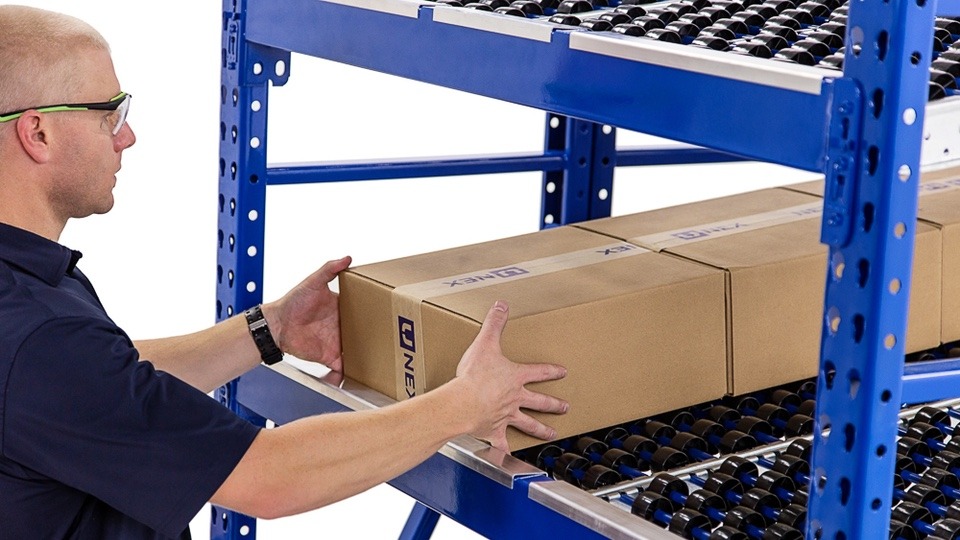
Roller Rack: The Retail Backroom Powerhouse
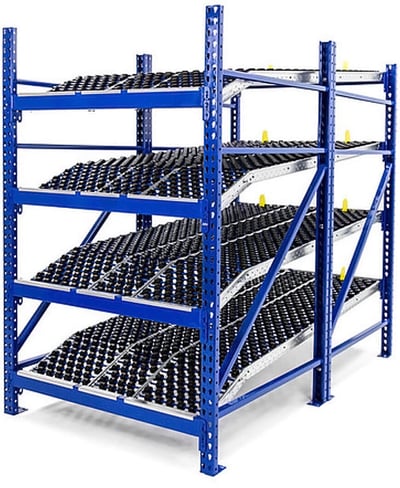 At its core, Roller Rack is a pre-engineered, modular system that pairs UNEX SpanTrack carton flow with heavy-duty steel uprights and beams. It’s built for retailers who handle high SKU variety but lack space for full pallets, a common scenario in grocery, apparel, convenience, and specialty retail.
With Roller Rack, products are loaded from the rear of the rack and flow effortlessly toward the pick face, ensuring FIFO inventory management and eliminating downtime between picks. When front-of-house shelves empty, staff can quickly restock from clearly visible, well-organized lanes without the chaos of digging through shelves. What sets Roller Rack apart is its efficiency and flexibility. It can store up to seven times more SKUs than static shelving, dramatically increasing capacity within the same footprint. Retailers typically see up to 80% less picker travel time, faster replenishment, and greater order accuracy.
Every Roller Rack ships ready to assemble, with a knock-down modular design that makes installation and reconfiguration simple. Whether you need a single bay to expand holiday storage or multiple rows for year-round fulfillment, the system adapts easily to your layout, and it’s built to last.
Here's why retailers love Roller Rack:
- SKU density: Compared to standard steel shelving, Roller Rack allows up to 7 times more SKUs, meaning more inventory held on-site rather than relying on shipments from the distribution center.
- Pick speed & efficiency: Because product is always at the pick face, replenishment is faster and there’s less motion waste.
- Single-source supplier: UNEX supplies both rack and track, which means compatibility is assured and lead times are shorter compared to sourcing frames and third-party tracks separately.
- Knock-down, modular design: After peak season you can reconfigure or break down the system, giving retailers flexibility for seasonal surges and off-peak storage needs.
- Scalable layout: From a single bay for a small format store to multiple rows in a large chain operation, Roller Rack supports flexible footprints and layouts.
Together, these features mean the back room becomes a strategic asset: storing ahead of peak, feeding replenishment fast, and reducing out-of-stocks.
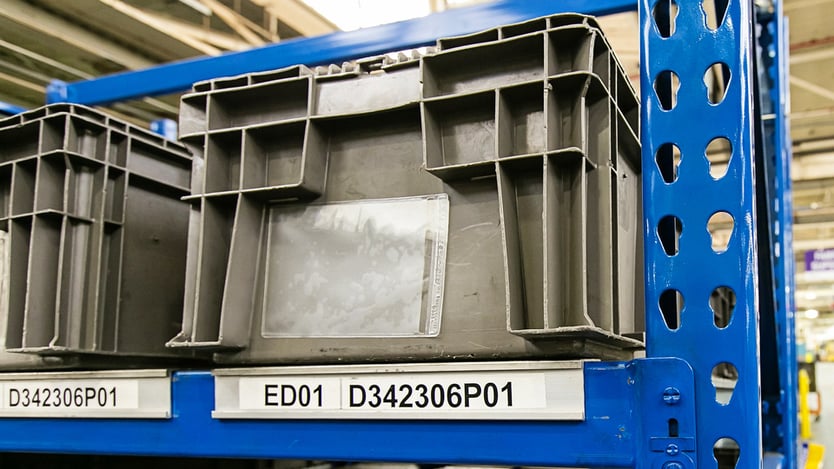
Flexibility for Every Retail Footprint
One of the biggest challenges in retail storage is change itself. Demand fluctuates, product assortments expand, and promotions come and go. Roller Rack gives retailers the flexibility to adjust with the seasons, without major capital investment or disruption.
Small-format stores can deploy one or two units to double their SKU capacity for peak seasons, while big-box retailers can line entire back rooms with multiple rows to maintain buffer inventory and keep store shelves stocked. When the rush ends, the racks can be knocked down, relocated, or reconfigured in hours.
Studies on retail back room storage design have shown that when retailers rethink how inventory is organized and accessed, the results are immediate: faster replenishment, less wasted motion, and fewer out-of-stocks. Research points out that layout and flow matter as much as capacity, the best-performing retailers use systems that make inventory easy to find, move, and restock.
These efficiency gains also pay off where it counts most: customer experience. When products are always in stock and staff spend less time searching and restocking, shoppers notice. The back room becomes the silent partner of sales, driving front-of-house success by ensuring that every product is ready when it's needed.
Here’s a practical roadmap to get your retail back room ready:
- Analyse your SKU volume and surge demands: quantify how many extra SKUs you’ll add during your upcoming holiday period, promotions, or eCommerce fulfillment shift.
- Map your current footprint and workflows: how much floor/ceiling/back room space you have, where replenishment happens, travel distance, picker motion.
- Define the target performance gains: fewer out-of-stocks, faster replenishment, fewer picker movements, higher inventory buffer on-site.
- Plan for installation and transition: Because the system is knock-down/modular, you can schedule installation off-peak or gradually, minimizing disruption.
- Track results & optimize: Post-implementation, monitor metrics like pick time, replenishment time, out-of‐stock occurrences, front-shelf availability, and labour time savings.
By following this, your back room becomes a tactical tool for peak readiness rather than a liability.
Reclaim Your Share of Lost Retail Revenue
In an era where consumers expect immediate availability, seamless service and omnichannel flexibility, the back room is far more than storage, it's central to your operational performance. With shoppers encountering in-store stock-outs and many choosing alternatives when their item isn’t available, the cost of inactivity is real.
UNEX Roller Rack offers more than shelving: it offers speed, density, flexibility, and strategic advantage. It empowers you to hold more inventory in-store, reduce pick and replenishment time, and convert your backroom into a revenue engine rather than a backlog zone.
In a retail world defined by omnichannel speed and consumer expectation, make your back room work for you. With Roller Rack, you can turn your back room into a key competitive differentiator and reclaim your share of lost retail revenue. Contact the UNEX team today to speak with one of our experts and start designing a Roller Rack solution tailored to your retail back room.