In today’s warehouses, distribution centers, and manufacturing facilities, productivity and employee well-being are tightly connected. While companies often focus on automation or process changes to improve throughput, one of the most overlooked aspects of efficiency is ergonomics.
Ergonomics in material handling isn’t just about keeping employees safe, it’s about designing operations that eliminate wasted motion, reduce fatigue, and enable workers to perform at their best. Companies that fail to address ergonomics risk higher turnover, rising workers’ compensation claims, and declining throughput, all of which eat away at profitability. Meanwhile, companies that embrace ergonomic principles often see significant improvements in both output and workforce retention.
Why Ergonomics Matters in Material Handling
According to OSHA, musculoskeletal disorders are among the most common workplace injuries in manufacturing and warehousing. These injuries often stem from repetitive motions, awkward postures, heavy lifting, or long periods of standing and walking. Even when workers don’t sustain recordable injuries, fatigue and discomfort can quietly chip away at productivity.
The impact is significant. When employees are forced to reach too far, bend too often, or walk unnecessary distances, every pick or assembly task takes longer than it should. Over the course of a shift, or an entire year, those seconds add up to hours of wasted time. For companies facing labor shortages and struggling to fill positions, lost efficiency from poor ergonomics becomes a direct threat to meeting customer expectations.
Ergonomics is also a cultural signal. Facilities that prioritize the well-being of their employees are more likely to retain workers in a competitive labor market. At the same time, ergonomically optimized operations align with lean manufacturing principles by eliminating wasted motion and ensuring every step adds value.
The Hidden Costs of Inefficient Workflows
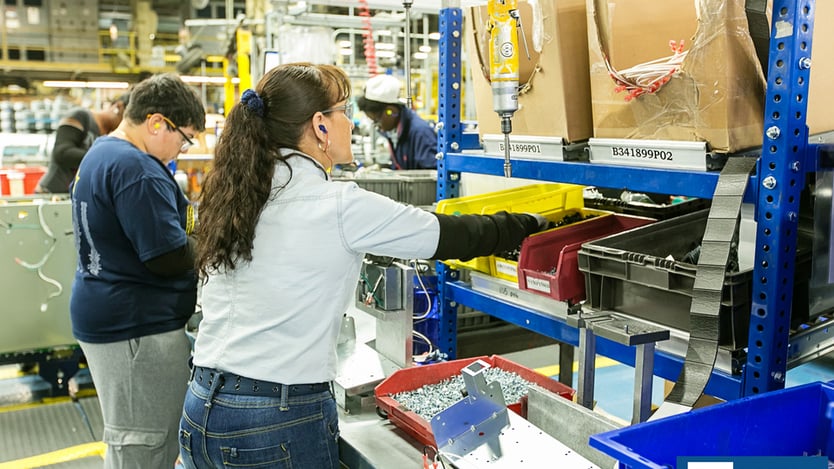
Consider a typical warehouse picker who spends a shift bending into deep racks, lifting heavy cartons, and walking hundreds of yards between SKUs. Each motion introduces strain and creates opportunities for fatigue or error. Poor workstation design in assembly and packing environments adds to the problem, forcing employees to twist or overreach to access parts and tools.
Across industries, we see the same recurring issues:
- Excessive bending and lifting: Poor workstation design forces workers into awkward and repetitive movements.
- Reaching into deep storage: Unoptimized shelving or racking makes picking inefficient and unsafe.
- Long travel paths: Workers waste time walking to retrieve inventory scattered across the facility.
- Rigid systems: Storage that can’t adapt to SKU changes, new products, or demand shifts leads to inefficiencies.
These inefficiencies don’t just slow down the work. They create ripple effects: replenishment takes longer, training new staff becomes more difficult, and managers must account for higher rates of absenteeism. Even a small injury can sideline a trained employee for weeks, leaving the rest of the team to absorb the workload.
The good news is that these challenges are avoidable. By applying ergonomic design principles and leveraging the right material handling solutions, companies can remove unnecessary strain from their workflows, creating safer and more productive environments.
Learn to optimize warehouse space for increased speed and accuracy. Download the Guide to Understanding Throughput for Fulfillment!

Best Practices for Ergonomic Material Handling
Improving ergonomics starts with looking closely at how employees move through their day: how they pick, lift, reach, and travel across the floor. Even small inefficiencies such as an extra few feet of walking, a poorly placed SKU, or a workstation that forces bending can add up to thousands of hours lost over the course of a year. The most productive facilities follow a set of proven strategies to optimize both safety and efficiency.
1. Ergonomic Workstation Design
The foundation of ergonomic material handling lies in workstations that are designed around the worker. When parts, cartons, or tools are presented at the right height and angle, employees spend less time bending, twisting, and stretching. Angled shelving, flow racks, or height-adjustable platforms keep products within a comfortable reach zone, reducing fatigue and speeding up each pick or assembly step.
2. Optimizing Warehouse Layout to Reduce Travel
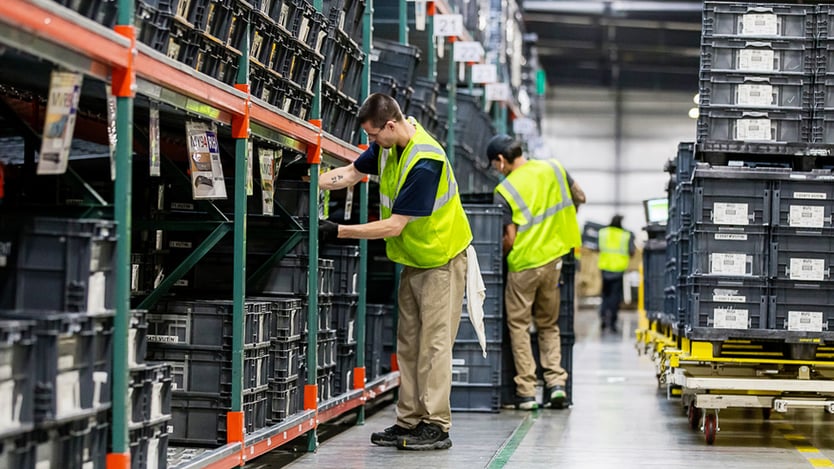
Unnecessary walking is one of the largest hidden costs in warehouses and assembly environments. By organizing SKUs logically and designing storage systems that minimize travel, companies can shave minutes off every order. High-density solutions bring more product into less space, ensuring that workers can access what they need without long trips across the facility.
3. Strategic SKU Placement for Efficiency
Beyond layout, the placement of SKUs has a major impact on productivity and ergonomics. Frequently picked items should be stored in the “golden zone," between waist and shoulder height, so they can be retrieved quickly and safely. Slower-moving SKUs can be placed higher or lower, where they are still accessible but don’t force constant bending or climbing. This simple adjustment reduces strain while making fast-moving items easier to reach.
4. Flexibility for Seasonal Spikes and Change
Business is never static. Fulfillment centers must prepare for holiday surges, manufacturers adapt to new product introductions, and retailers face shifting consumer demands. Facilities that rely on rigid storage systems often find themselves scrambling to keep up. Modular and reconfigurable equipment allows operations to adapt quickly—whether it’s adding pick faces, reorganizing storage zones, or reconfiguring a workstation to support a new process. This flexibility keeps ergonomics intact even as workflows change.
Investing in ergonomic material handling solutions delivers returns far beyond injury prevention. Facilities that implement these strategies consistently report:
- Faster picking and assembly operations
- Improved accuracy through better visibility and organization
- Lower labor costs as workers accomplish more in less time
- Reduced downtime from injuries or fatigue
- Higher employee satisfaction and retention
When viewed through the lens of long-term profitability, ergonomics is not an optional upgrade but a strategic necessity. Facilities that optimize for both people and processes are better positioned to meet rising customer demands, adapt to change, and remain competitive.
UNEX Solutions for Ergonomic Material Handling
At UNEX, ergonomics and productivity are inseparable. Every solution we engineer is designed to optimize space while reducing wasted motion and physical strain on the people who keep operations running. FlowCell, SpeedCell, and SpanTrack demonstrate how the right equipment can transform everyday workflows into safer, more efficient processes.
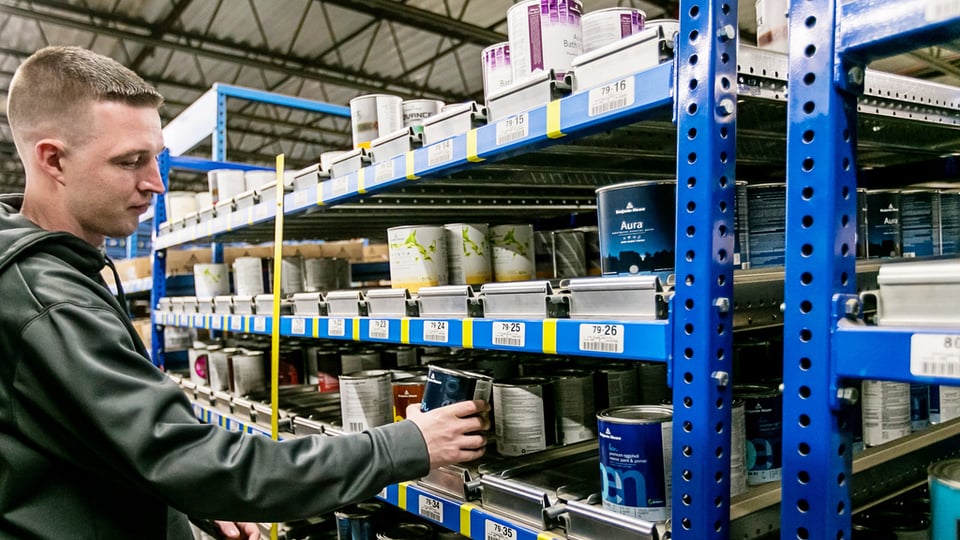
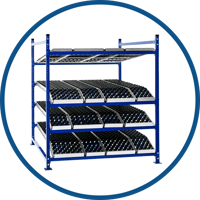 FlowCell modular workstations are built to bring products within easy reach, angling parts and components toward the worker. This eliminates excessive bending, stretching, or twisting, allowing employees to maintain a natural posture throughout their shift. In assembly and packing environments, that ergonomic design translates directly into faster picks and fewer injuries. Facilities using FlowCell often see production efficiency increase by as much as 30%, a clear example of how ergonomics can drive measurable gains.
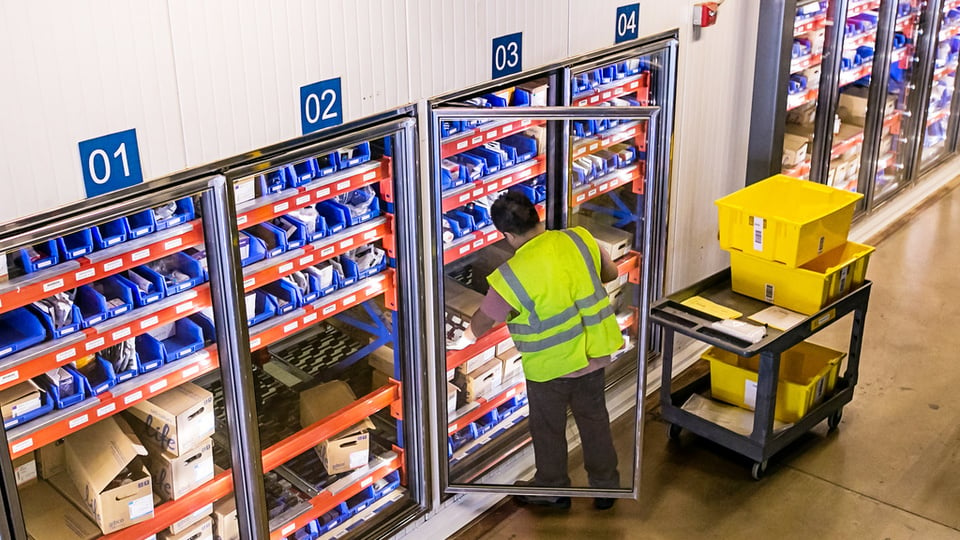
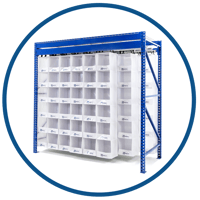 In fulfillment and warehouse operations, one of the largest drains on productivity is the time workers spend walking to find SKUs. SpeedCell high-density storage addresses this by compressing up to 200 feet of static racking into just 40 feet of organized, high-density storage. The result is fewer steps per order, less fatigue, and faster picks. By placing more SKUs within easy reach, SpeedCell not only optimizes space but also minimizes the physical strain and wasted motion that come with long travel paths.
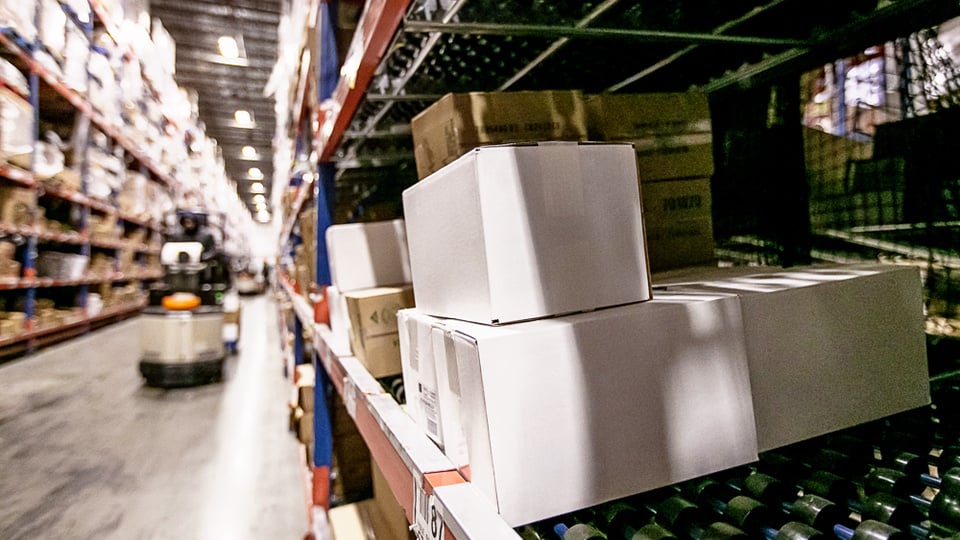
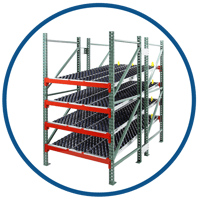 SpanTrack carton flow racks transform static racks into dynamic, first-in-first-out storage systems. With products always presented at the pick face, workers no longer need to reach deep into shelves or move other items out of the way. This design not only improves ergonomics, reducing repetitive reaching and awkward lifting, but also ensures faster, more accurate picks. By turning every bay into an ergonomic pick zone, SpanTrack helps companies move more product with less effort.
Together, these solutions embody the approach to engineered space optimization, creating environments where workers can move comfortably and efficiently while facilities maximize throughput and space utilization.
Building a Safer, More Productive Operation
The future of material handling belongs to organizations that see ergonomics as a driver of both safety and efficiency. By designing environments where employees can work comfortably and effectively, companies unlock higher productivity, reduce costs, and strengthen their workforce.
UNEX is proud to partner with organizations across industries to engineer solutions that keep products and people moving. From FlowCell to SpanTrack, SpeedCell and beyond, our solutions are built to help you create a workplace that flows as smoothly as your supply chain.
Ready to see how ergonomic material handling can transform your operation? Contact UNEX today to explore the right solution for your facility.