---
title: "2026 Manufacturing Outlook: Changing Landscape"
description: Discover how manufacturers are embracing smart operations, flexible production, human-tech collaboration, and innovative inventory strategies.
image: https://blog.unex.com/hubfs/manufacturing%20assembly%20with%20flows%20racks%20and%20workstations.jpg
---
[Skip to content](https://blog.unex.com/2026-manufacturing-outlook-how-facilities-are-adapting-to-a-changing-landscape#main-content)
[](https://www.unex.com/)
- [Applications](https://www.unex.com/applications)
- Storage
- [Warehouse Storage](https://www.unex.com/applications/storage/warehouse-storage)
- [Storage for 3PLs](https://www.unex.com/applications/storage/storage-3pls)
- [Retail Storage Solutions](https://www.unex.com/applications/storage/retail-storage)
- [Lineside Storage](https://www.unex.com/applications/packing-assembly/lineside-storage)
- [Beverage Storage](https://www.unex.com/applications/storage/beverage-storage)
- [Keg Storage](https://www.unex.com/applications/storage/keg-storage)
- Picking
- [Order Picking](https://www.unex.com/applications/picking/order-picking)
- [Case Picking](https://www.unex.com/applications/picking/case-picking)
- [Each Picking](https://www.unex.com/applications/picking/each-picking)
- [Picking Carts](https://www.unex.com/applications/picking/picking-carts)
- [Pick Module](https://www.unex.com/applications/picking/pick-module)
- Packing & Assembly
- [Industrial Carts](https://www.unex.com/applications/packing-assembly/industrial-carts)
- [Packing Stations](https://www.unex.com/applications/packing-assembly/packing-station)
- [Industrial Workstations](https://www.unex.com/applications/packing-assembly/industrial-workstations)
- [Manufacturing Supermarkets](https://www.unex.com/applications/packing-assembly/manufacturing-supermarkets)
- [Solutions](https://www.unex.com/solutions)
- [Carton Flow](https://www.unex.com/solutions/carton-flow)
- [SpanTrack Lane](https://www.unex.com/solutions/carton-flow/spantrack-lane)
- [SpanTrack Wheel Bed](https://www.unex.com/solutions/carton-flow/spantrack-wheel-bed)
- [SpanTrack Keg Flow](https://www.unex.com/solutions/carton-flow/spantrack-keg-flow)
- [Shelf Track](https://www.unex.com/solutions/carton-flow/shelf-track)
- [Flow Racks](https://www.unex.com/solutions/flow-racks)
- [FlowCell](https://www.unex.com/solutions/flow-racks/flowcell)
- [Roller Rack](https://www.unex.com/solutions/flow-racks/roller-rack)
- [High-Density Storage](https://www.unex.com/solutions/high-density-storage)
- [SpeedCell](https://www.unex.com/solutions/high-density-storage/speedcell)
- [SpeedCartt](https://www.unex.com/solutions/high-density-storage/speedcartt)
- [Pick Shelves](https://www.unex.com/solutions/high-density-storage/pick-shelves)
- [Conveyors](https://www.unex.com/solutions/conveyors)
- [Gravity Conveyor](https://www.unex.com/solutions/conveyors/gravity-conveyors)
- [Pallet Track](https://www.unex.com/solutions/conveyors/pallet-track)
- [About](https://www.unex.com/about)
- [Resources](https://www.unex.com/resources)
- [Blog](https://blog.unex.com)
- [Press Releases](https://blog.unex.com/press-releases)
- [Guides](https://www.unex.com/resources/guides)
- [Product Brochures](https://www.unex.com/resources/product-brochures)
- [Installation Guides](https://www.unex.com/resources/installation-guides)
- [Case Studies](https://www.unex.com/resources/case-studies)
- [FAQs](https://go.unex.com/faq)
[Contact Us](https://www.unex.com/contact) [Build a Solution](https://www.unex.com/configurator)
- [Applications](https://www.unex.com/applications)
- Storage
- [Warehouse Storage](https://www.unex.com/applications/storage/warehouse-storage)
- [Storage for 3PLs](https://www.unex.com/applications/storage/storage-3pls)
- [Retail Storage Solutions](https://www.unex.com/applications/storage/retail-storage)
- [Lineside Storage](https://www.unex.com/applications/packing-assembly/lineside-storage)
- [Beverage Storage](https://www.unex.com/applications/storage/beverage-storage)
- [Keg Storage](https://www.unex.com/applications/storage/keg-storage)
- Picking
- [Order Picking](https://www.unex.com/applications/picking/order-picking)
- [Case Picking](https://www.unex.com/applications/picking/case-picking)
- [Each Picking](https://www.unex.com/applications/picking/each-picking)
- [Picking Carts](https://www.unex.com/applications/picking/picking-carts)
- [Pick Module](https://www.unex.com/applications/picking/pick-module)
- Packing & Assembly
- [Industrial Carts](https://www.unex.com/applications/packing-assembly/industrial-carts)
- [Packing Stations](https://www.unex.com/applications/packing-assembly/packing-station)
- [Industrial Workstations](https://www.unex.com/applications/packing-assembly/industrial-workstations)
- [Manufacturing Supermarkets](https://www.unex.com/applications/packing-assembly/manufacturing-supermarkets)
- [Solutions](https://www.unex.com/solutions)
- [Carton Flow](https://www.unex.com/solutions/carton-flow)
- [SpanTrack Lane](https://www.unex.com/solutions/carton-flow/spantrack-lane)
- [SpanTrack Wheel Bed](https://www.unex.com/solutions/carton-flow/spantrack-wheel-bed)
- [SpanTrack Keg Flow](https://www.unex.com/solutions/carton-flow/spantrack-keg-flow)
- [Shelf Track](https://www.unex.com/solutions/carton-flow/shelf-track)
- [Flow Racks](https://www.unex.com/solutions/flow-racks)
- [FlowCell](https://www.unex.com/solutions/flow-racks/flowcell)
- [Roller Rack](https://www.unex.com/solutions/flow-racks/roller-rack)
- [High-Density Storage](https://www.unex.com/solutions/high-density-storage)
- [SpeedCell](https://www.unex.com/solutions/high-density-storage/speedcell)
- [SpeedCartt](https://www.unex.com/solutions/high-density-storage/speedcartt)
- [Pick Shelves](https://www.unex.com/solutions/high-density-storage/pick-shelves)
- [Conveyors](https://www.unex.com/solutions/conveyors)
- [Gravity Conveyor](https://www.unex.com/solutions/conveyors/gravity-conveyors)
- [Pallet Track](https://www.unex.com/solutions/conveyors/pallet-track)
- [About](https://www.unex.com/about)
- [Resources](https://www.unex.com/resources)
- [Blog](https://blog.unex.com)
- [Press Releases](https://blog.unex.com/press-releases)
- [Guides](https://www.unex.com/resources/guides)
- [Product Brochures](https://www.unex.com/resources/product-brochures)
- [Installation Guides](https://www.unex.com/resources/installation-guides)
- [Case Studies](https://www.unex.com/resources/case-studies)
- [FAQs](https://go.unex.com/faq)
[Contact Us](https://www.unex.com/contact) [Build a Solution](https://www.unex.com/configurator)
# 2026 Manufacturing Outlook: How Facilities Are Adapting to a Changing Landscape
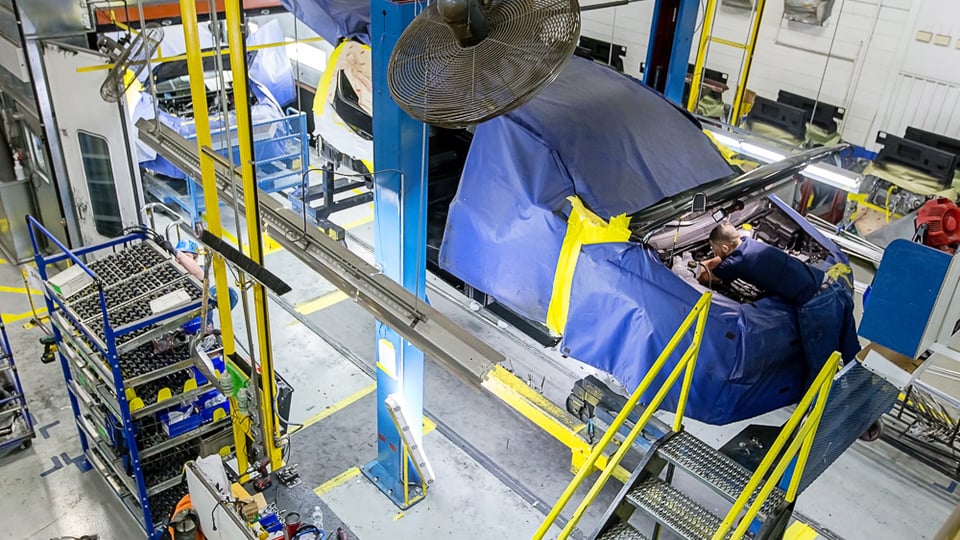
Manufacturers are heading into 2026 at a pivotal moment. After extended periods of contraction and persistent uncertainty around trade and global demand, the sector is searching for stability. At the same time, there is an unmistakable momentum around new technologies. Deloitte’s [2026 Manufacturing Industry Outlook](https://www.deloitte.com/us/en/insights/industry/manufacturing-industrial-products/manufacturing-industry-outlook.html) describes an environment where economic headwinds coexist with rapid innovation, from AI-enabled planning to more flexible production systems.
That tension is redefining how manufacturing leaders think about their operations for the coming year and beyond. And while [new software and AI-powered robots](https://blog.unex.com/implementing-dynamic-storage-in-an-automated-facility) will clearly play a significant role in the next era of this industry, many manufacturers are also revisiting the fundamentals: how materials move, how teams work, and how physical space can support faster fulfillment.
As producers face ongoing global uncertainty and grapple with a world where humans and machines collaborate more closely than ever, the factory floor becomes just as important as the technologies transforming it. In the year ahead, [manufacturing storage solutions](https://www.unex.com/industries/manufacturing), material-flow systems, and [adaptable workstations](https://www.unex.com/applications/packing-assembly/industrial-workstations) will play a critical role in moving operations forward. To understand why, let’s look at four industry-defining manufacturing trends for 2026.
## What We Predicted for 2025 (And What Still Matters)
Before we turn the corner to 2026, a [look back at last year’s trends](https://blog.unex.com/manufacturing-in-2025-key-trends-and-predictions-for-streamlined-operations) may provide some context for what lies ahead. In 2025, several themes influenced manufacturers, including:
- **Smart manufacturing adoption**, with early investments in automation and connected systems.
- **Labor shortages and workforce efficiency**, driving demand for [ergonomic workstations](https://www.unex.com/applications/packing-assembly/industrial-workstations) and simpler workflows.
- **Space optimization**, where rising real estate costs pushed teams to make better use of existing footprints.
- **Flexible, customizable production setups** that could adjust as demand changes.
- **A continued emphasis on reducing waste** and improving material handling efficiency.
The [story of the past year](https://blog.unex.com/manufacturing-in-2025-key-trends-and-predictions-for-streamlined-operations) was one of an industry learning to balance long-term vision with near-term operational pressures. And while those fundamentals are still relevant, 2026 brings a shift in scale and urgency across four persistent trends.
## 1. Smarter Manufacturing Operations
Manufacturers have talked about “smart” operations for years, but 2026 may be the turning point. As systems get better at analyzing data, predicting issues, and synchronizing processes, manufacturers are turning to tools that can sense conditions on the floor and adjust in real time. The appeal? Better visibility, fewer surprises, and more confident decision-making. [Deloitte’s research](https://www.deloitte.com/us/en/insights/industry/manufacturing-industrial-products/manufacturing-industry-outlook.html) backs it up: 80% of manufacturers plan to devote at least 20% of their improvement budgets to smart manufacturing initiatives.
On the ground, this shows up in various ways:
- Quality systems that detect defects earlier.
- Planning tools that automatically reroute work when machines go down.
- Sensors that track inventory levels so teams don’t scramble to find missing parts.
- AI-assisted scheduling that smooths out bottlenecks.
These aren’t far-off concepts anymore; they’re everyday tools that help facilities run with fewer hiccups and less manual oversight.
Still, smarter systems can only perform as well as the environment in which they operate. When workflows speed up, facilities need a defined, predictable material flow and friction-free [industrial storage systems](https://blog.unex.com/types-of-industrial-shelving-static-and-dynamic-storage-solutions). Inventory must be easy to find, [workstations](https://www.unex.com/applications/packing-assembly/industrial-workstations) need to support faster task changes, and teams need space that adapts as digital technology accelerates production. To put it another way, as plants become more intelligent, their physical layouts will need to get smarter, too.
## 2. Flexible Production Lines and Modular Facility Design
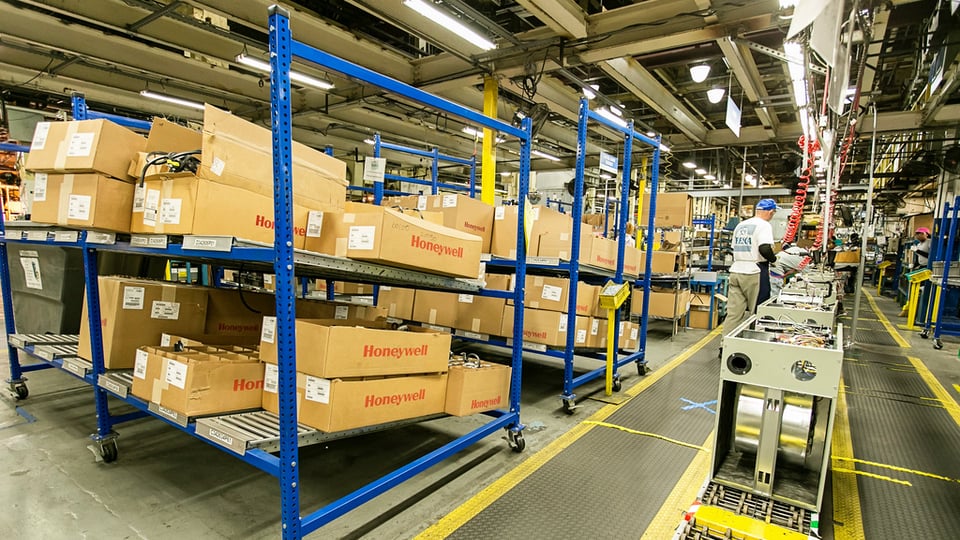
If 2025 was the year manufacturers tested new forms of flexibility, 2026 is the year they’ll need to rely on them. Product lifecycles keep shrinking, customization is growing more common, and demand continues to swing in ways that are hard to forecast. [Deloitte’s outlook](https://www.deloitte.com/us/en/insights/industry/manufacturing-industrial-products/manufacturing-industry-outlook.html) notes an increased investment in technologies that shorten changeovers and help teams adjust capacity quickly.
In practice, flexibility is the ability to reshape production on short notice. A line that produced one SKU in the morning may handle a custom run in the afternoon. Equipment may have to be repositioned more frequently. Teams might rotate between small-batch jobs that use different tools, setups, or processes. In this context, agility isn’t a question of chasing efficiency. The goal is to maintain throughput when demand changes faster than traditional systems were designed to handle.
While software helps teams anticipate changes, the physical environment determines how quickly they can respond. Facilities need [modular workstations](https://www.unex.com/applications/packing-assembly/industrial-workstations) that can quickly adjust to new tasks, storage that can be reorganized without disruption, and material flow paths that don’t require long shutdowns to reconfigure. In 2026, the most adaptable plants will support technological improvements by designing more flexible spaces.
#### Learn lean manufacturing storage principles. Download the Lean Manufacturing Storage Guidebook!
## 3. Workforce Transformation and Human-Tech Collaboration
Even as automation takes hold in factories, the human workforce remains the backbone of manufacturing. [According to Deloitte’s outlook](https://www.deloitte.com/us/en/insights/industry/manufacturing-industrial-products/manufacturing-industry-outlook.html), 81% of task hours in the sector will still be performed by people in the coming years.
At the same time, [labor shortages](https://blog.unex.com/maximizing-labor-efficiency-a-smarter-approach-to-warehouse-productivity) are far from easing. Many facilities are dealing with high turnover, new skill requirements, and a shrinking pool of experienced operators. These pressures are setting up a future where humans and technology work more closely together, not in competition, but in partnership.
This type of collaboration is getting easier to spot on the production floor:
- Operators use digital guidance tools to speed up production.
- Maintenance teams rely on AI-generated insights to predict equipment failures.
- Supervisors can quickly reassign work because scheduling systems handle the heavy lifting in the background.
Instead of replacing workers, [technology is taking on the tedious or data-heavy tasks](https://blog.unex.com/increasing-warehouse-efficiency-with-dynamic-and-automated-storage-solutions) that slow teams down. This frees people to focus on the uniquely human jobs of problem-solving, precision work, and oversight.
As roles change, so do the expectations for the physical workplace. Teams need intuitive layouts that reduce unnecessary walking, lifting, and searching. [Workstations must support faster onboarding](https://www.unex.com/applications/packing-assembly/industrial-workstations) to help operators of different experience levels thrive. Underneath it all, the facility environment should help people work at their best, especially as production accelerates with smarter tools.
## 4. Supply Chain Complexity Driving Better Inventory Strategies
Although some global pressures have eased, supply chain uncertainty continues to weigh on manufacturers heading into 2026. In [Deloitte’s outlook](https://www.deloitte.com/us/en/insights/industry/manufacturing-industrial-products/manufacturing-industry-outlook.html), 78% of executives view trade instability as a top concern. Their concerns reflect ongoing volatility in tariffs, international sourcing, transportation, and demand.
This unpredictability affects more than long-range planning. It changes what facilities must keep on hand day to day. Many plants now carry more safety stock, or entirely different inventory mixes, simply to avoid being caught short.
On the production line, teams face [rapid SKU turnover](https://blog.unex.com/slotting-a-place-for-everything) as suppliers shift, components are swapped, or customer expectations change with little warning. Processes designed around a stable set of parts can suddenly feel out of sync. And when the inbound flow becomes less predictable, internal material movement becomes harder to manage.
As a result, many manufacturers are rethinking how they position and access inventory inside their buildings. [Lineside storage](https://www.unex.com/applications/packing-assembly/lineside-storage) keeps critical parts close to where work happens. Facilities are redesigning pick paths to [fit wider SKU mixes](https://blog.unex.com/slotting-a-place-for-everything) and adopting systems that make it easy to expand, contract, or reorganize as needs evolve. When upstream changes can trickle down to a plant overnight, manufacturers need flexibility built directly into their storage and inventory strategies.
## How UNEX Helps Facilities Put These Trends Into Practice
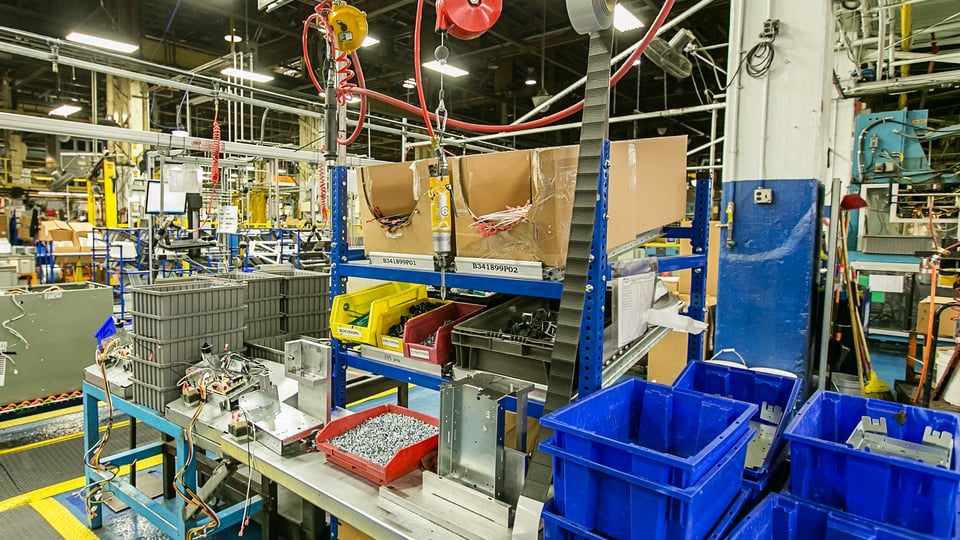
Manufacturers can only capitalize on 2026’s biggest trends if their physical environments support them. Smarter systems, flexible lines, empowered workers, and shifting inventory patterns all depend on the same foundation: a plant floor that moves materials efficiently and adapts without slowing production.
[UNEX solutions](https://www.unex.com/dynamic-storage-solutions) are a natural fit for this kind of environment. Our [manufacturing storage solutions](https://www.unex.com/industries/manufacturing) keep teams nimble even as demands change around them.
### UNEX Flow Racks
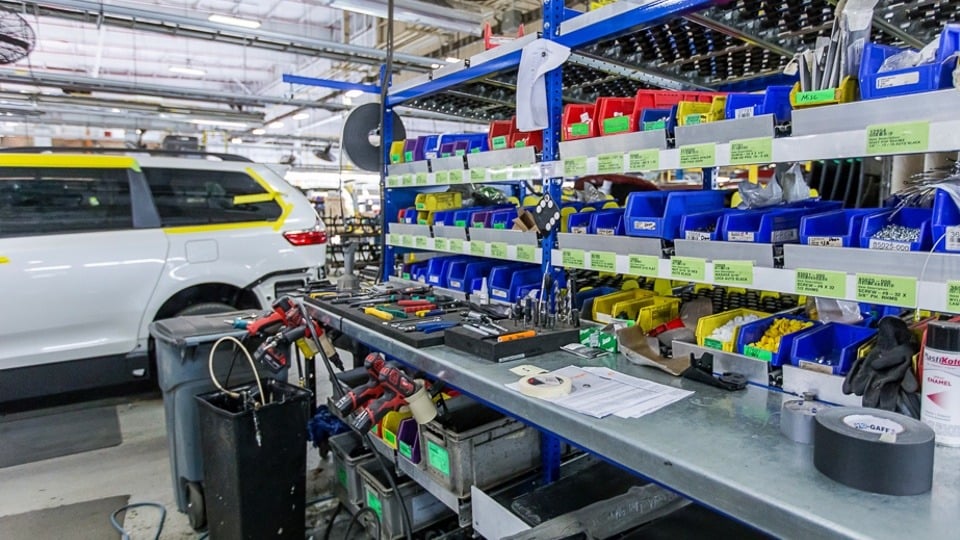
Static shelving and fixed workstations make it difficult for production lines to keep pace with changing build schedules or shifting demand. [UNEX flow rack solutions](https://www.unex.com/solutions/flow-racks) like [FlowCell](https://www.unex.com/solutions/flow-racks/flowcell) and [Roller Rack](https://www.unex.com/solutions/flow-racks/roller-rack) provide a modular, high-performance foundation that supports continuous improvement. These systems use [gravity-fed carton flow](https://www.unex.com/solutions/carton-flow/spantrack-lane), adjustable structures, and configurable frames to create workstations and storage zones that can be redesigned as tasks, product mixes, or batch sizes change.
Because components can be added, moved, or reconfigured with minimal downtime, teams can adapt quickly and maintain efficient material flow from kitting to assembly. [UNEX flow racks](https://www.unex.com/solutions/flow-racks) also support ergonomic best practices by positioning parts and products at a comfortable, consistent pick point to reduce strain and shorten training time for new team members.
FlowCell Modular Flow Racks
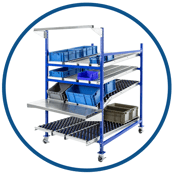[FlowCell](https://www.unex.com/solutions/flow-racks/flowcell) is ideal for building [custom workstations](https://www.unex.com/solutions/flow-racks/flowcell) and work cells that support lean manufacturing. Its lightweight, modular frames allow teams to design solutions that fit the exact needs of each process. [FlowCell](https://www.unex.com/solutions/flow-racks/flowcell) makes it possible to bring parts closer to the point of use, reduce unnecessary motion, and create ergonomic setups that position items at a consistent pick point. As production requirements shift, [FlowCell](https://www.unex.com/solutions/flow-racks/flowcell) structures can be reconfigured or expanded with minimal disruption, which keeps work areas aligned with changing assembly demands.
Roller Rack Gravity Flow Racks
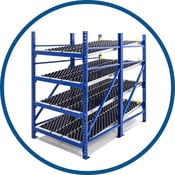[Roller Rack](https://www.unex.com/solutions/flow-racks/roller-rack) provides a robust carton flow solution for high-volume manufacturing environments. It delivers a stable, durable rack structure with full-depth carton flow that keeps parts, kits, and components moving efficiently. [Roller Rack](https://www.unex.com/solutions/flow-racks/roller-rack) is especially effective for [manufacturing supermarkets](https://www.unex.com/applications/packing-assembly/manufacturing-supermarkets), assembly zones, or staging areas where teams need reliable replenishment and predictable flow. Its steel frames and heavy-duty construction support long-term use, and [carton flow lanes](https://www.unex.com/solutions/carton-flow/spantrack-lane) or [wheel beds](https://www.unex.com/solutions/carton-flow/spantrack-wheel-bed) can be adjusted or re-slotted to keep up with evolving SKU profiles.
Both [FlowCell](https://www.unex.com/solutions/flow-racks/flowcell) and [Roller Rack](https://www.unex.com/solutions/flow-racks/roller-rack) help manufacturers maintain efficient material flow from kitting to assembly by reducing travel, improving visibility, and supporting ergonomic best practices. Together, they create a flexible framework that allows teams to adapt quickly and maintain consistent throughput as production needs evolve into 2026 and beyond.
## Turning Trends Into Action
As manufacturers navigate a time of uncertainty, the most resilient operations will be those built for flexibility and flow. Smarter systems, agile lines, and empowered workers all depend on a physical environment that adjusts just as quickly. With configurable storage and modular workstations, UNEX helps facilities respond to big industry trends with practical, day-to-day improvements on the production floor. [Contact us today](https://www.unex.com/contact) to help your team stay efficient, responsive, and ready for the year ahead!
[](https://cta-redirect.hubspot.com/cta/redirect/4747213/8c7949f2-eab9-4b99-990b-21877fe9c4ef)
[Manufacturing](https://blog.unex.com/tag/manufacturing)
## Related Blogs
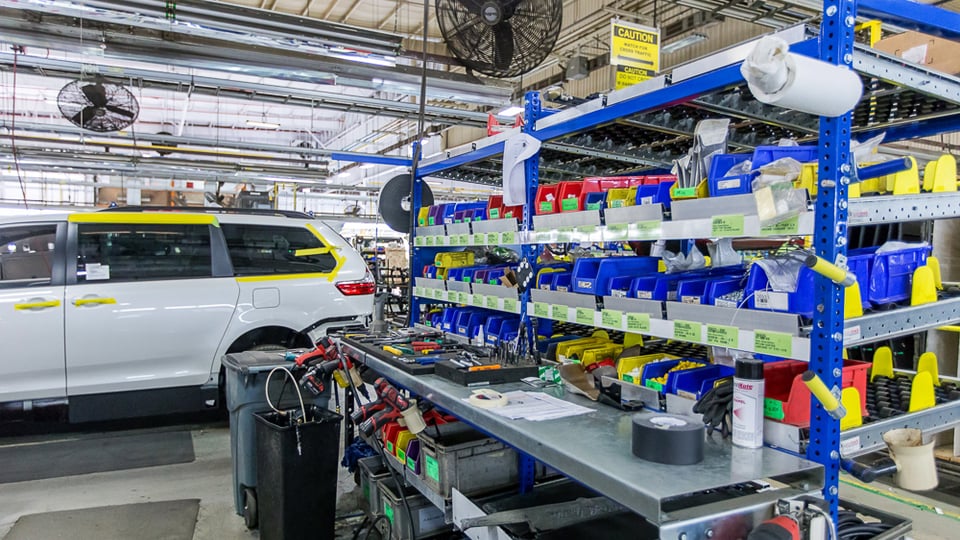
### How Manufacturers Improve Lineside Storage and Productivity With Flow Racks
[Read More](https://blog.unex.com/how-manufacturers-improve-lineside-storage-and-productivity-with-flow-racks)
### Key Features of a Flexible Manufacturing Workstation
[Read More](https://blog.unex.com/key-features-of-a-flexible-manufacturing-workstation)
[](https://blog.unex.com/)
- - [Applications](https://www.unex.com/applications)
- [Storage](https://blog.unex.com/applications#storage)
- [Order Picking](https://blog.unex.com/applications#picking)
- [Packing & Assembly](https://blog.unex.com/applications#packing)
- [Solutions](https://www.unex.com/solutions)
- [Carton Flow](https://www.unex.com/solutions/carton-flow)
- [Flow Racks](https://www.unex.com/solutions/flow-racks)
- [High-Density Storage](https://www.unex.com/solutions/high-density-storage)
- [Conveyors](https://www.unex.com/solutions/conveyors)
- - Industries
- [Manufacturing](https://www.unex.com/industries/manufacturing)
- [Order Fulfillment & Warehousing](https://www.unex.com/industries/order-fulfillment-warehousing)
- [Retail](https://www.unex.com/industries/retail)
- [Logistics](https://www.unex.com/industries/logistics)
- [About](https://www.unex.com/about)
- [Find a Distributor](https://go.unex.com/find-material-handling-distributor)
- [Distributor Portal](https://go.unex.com/distributors)
- [Careers](https://go.unex.com/careers)
- - [Build a Solution](https://www.unex.com/configurator)
- [Contact Us](https://www.unex.com/contact)
- [Resources](https://www.unex.com/resources)
[800-334-8639](tel:8003348639)
691 New Hampshire Ave Lakewood, NJ 08701
[Privacy Policy](https://www.unex.com/legal/privacy-policy)|[Terms of Service](https://www.unex.com/legal/terms-service)
[Sitemap](https://www.unex.com/sitemap)|[Warranty](https://www.unex.com/legal/warranty)
© UNEX Manufacturing. 2026 All Rights Reserved.
```json
{
"@context" : "https://schema.org",
"@type" : "BlogPosting",
"author" : {
"@type" : "Person",
"name" : "UNEX",
"url" : "https://blog.unex.com/author/unex"
},
"dateModified" : "2026-09-21T20:07:12.843Z",
"datePublished" : "2025-12-01T11:00:00.000Z",
"headline" : "2026 Manufacturing Outlook: Changing Landscape",
"image" : [ "https://blog.unex.com/hubfs/manufacturing%20assembly%20with%20flows%20racks%20and%20workstations.jpg" ],
"mainEntityOfPage" : {
"@id" : "https://blog.unex.com/2026-manufacturing-outlook-how-facilities-are-adapting-to-a-changing-landscape",
"@type" : "WebPage"
},
"publisher" : {
"@type" : "Organization",
"logo" : {
"@type" : "ImageObject",
"url" : "https://blog.unex.com/hubfs/unex_logo_061013_RGB_Medium-1.jpg"
},
"name" : "UNEX Manufacturing Inc"
}
}
```