In case picking, speed and accuracy are often framed as a tradeoff. Pick faster, and errors go up. Slow down to improve accuracy, and throughput drops. In reality, that tradeoff usually points to a design problem, not a labor problem.
When slotting is logical, pick paths are shorter, replenishment is separated from picking, and cases stay visible and accessible at the pick-face, workers can move faster with fewer mistakes. That’s why the best case picking strategies focus less on pushing labor harder and more on creating an environment where cases flow predictably and picks happen with less friction.
Case picking is a full-case order fulfillment method commonly used for fast- to medium-velocity SKUs, with medium movers often handled from carton flow systems. To improve case picking, operations need to look beyond labor performance and examine the system behind the pick. That starts with understanding how SKU movement, slotting, pick-face design, and replenishment all shape speed and accuracy on the warehouse floor.
Better Design Improves Both Picking Speed and Accuracy
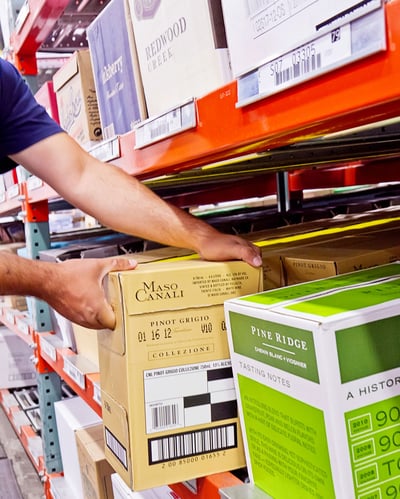 Case picking is built around fulfilling orders that include full cartons rather than individual units. In warehouse and distribution environments, this makes it a strong fit for retail, eCommerce, beverage, and 3PL operations handling high volumes of full-case products. Compared with each picking, case picking maintains the full case as the pick unit and is ideal for moving high volumes of fast- to medium-velocity SKUs.
But the challenge in case picking is everything around the lift: how far the picker travels, how often they stop to verify the product, how easily they can reach the carton, and whether inventory is actually where it should be. That leads to many of the same operational issues that show up across facilities, from poor ergonomics to weak FIFO control, and a lack of organization by throughput to layouts that increase travel, search, and pick time.
That’s why high-performing case picking operations are intentionally designed and engineered to minimize touches, travel, and congestion. In the end, an efficient case picking operation results from strategic system design, not just equipment alone.
Start with How Your SKUs Move
One of the easiest ways to underperform in case picking is to organize storage based on available rack space rather than actual SKU behavior.
Not every case should be stored the same way. Some SKUs are picked constantly, while others move steadily but not fast enough to be picked from pallet positions. Some have stable carton dimensions and reliable flow characteristics, and others vary enough in size, weight, or packaging condition that they require more careful layout and equipment design consideration. Replenishment rhythm matters too. A lane that works well for a predictable medium mover can become a bottleneck if the SKU burns down too quickly or the carton doesn’t present consistently.
That’s why a better case picking strategy starts with movement, carton profile, and replenishment frequency. UNEX recommends slotting inventory by velocity: placing faster-moving items in carton flow and slower movers in high-density storage.
The goal is simple: match the storage method to how the SKU behaves, not just where it fits.
Better Slotting Creates Faster Picks
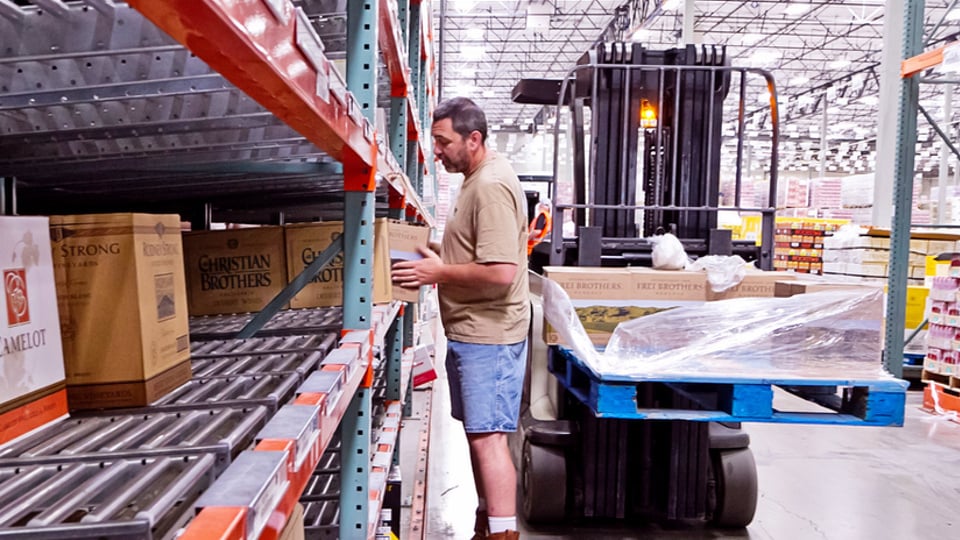
Travel time is one of the biggest hidden drains in case picking. Poor space utilization and inefficient layouts increase picker travel distances and search times, slowing operations and reducing overall efficiency.
Velocity-based slotting is the right starting point. UNEX recommends using order frequency and SKU velocity to place the most frequently picked products closest to the picker, since shorter travel distances support faster fulfillment and reduced fatigue. But advanced slotting should go further than velocity alone.
Good slotting also considers order affinity, carton size, replenishment frequency, and ergonomics. Fast movers should usually sit in the shortest, cleanest path. Medium movers should be grouped to keep the route compact. High-activity case SKUs should be zoned strategically near shipping or downstream process points when possible, reducing unnecessary worker movement across the facility.
The real objective isn’t just shorter routes, but fewer interruptions, fewer second checks, and fewer unnecessary touches inside the route.
Build Pick Faces for Speed and Visibility
A case location can be technically stored and still be poorly designed for picking. If workers have to lean into the rack, reach for buried cartons, reposition products by hand, or search for the right case before making the pick, the pick-face is slowing the operation down. Those small delays repeat thousands of times throughout a shift.
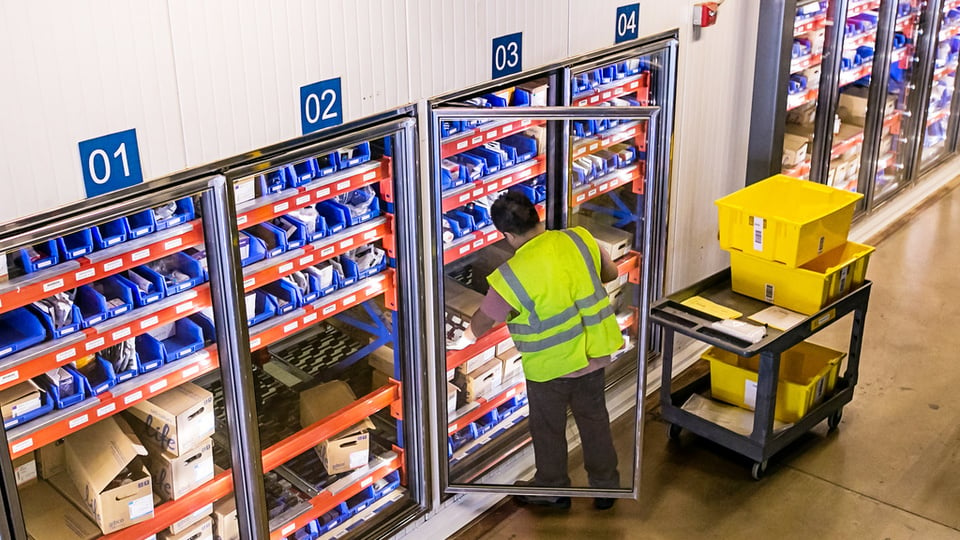
One of the most critical factors in improving picking efficiency is accessibility at the pick-face. Carton flow systems keep cases visible and within reach, and angled pick-faces help workers grab full cases more quickly and easily.
This is where throughput and ergonomics intersect. Better accessibility is about consistency. When the next case is clearly visible and presented properly, the worker spends less time searching, bending, and reaching, and recovering from awkward picks. By designing a system with knuckled end treatments, operations can move products even closer to workers, minimizing reaching and bending while improving ergonomics at the pick-face.
How Replenishment Affects Throughput
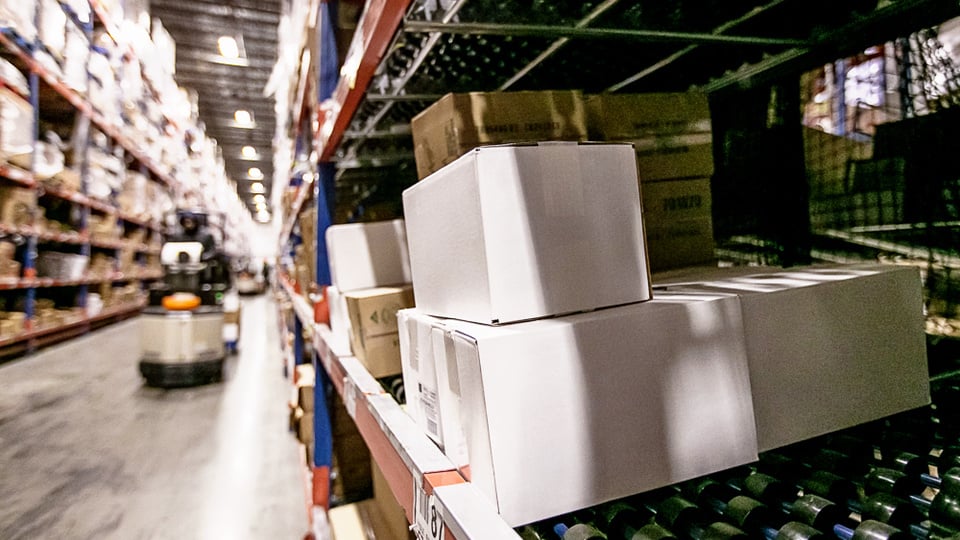
In case picking, replenishment should support the pick line, not compete with it. When pick-faces run empty too often, operations fall into reactive replenishment. When replenishment happens from the same side as the pick, workers lose time waiting, weaving around each other, or correcting messy conditions at the location. By contrast, carton flow supports restocking from the back while maintaining clear picker access at the front, reducing interruptions and improving productivity.
FIFO is a big part of that advantage. Without effective FIFO processes, older stock can get buried, leading to waste and reduced product quality. With carton flow, new inventory is loaded behind older inventory, and as cases are picked from the front, the next case slides forward automatically. That reduces reshuffling, avoids double-handling, and makes older inventory easier to move first.
Replenishment strategy is more than just an inventory control issue. It directly affects throughput, visibility, and picking accuracy.
How to Evaluate a Case Picking Operation
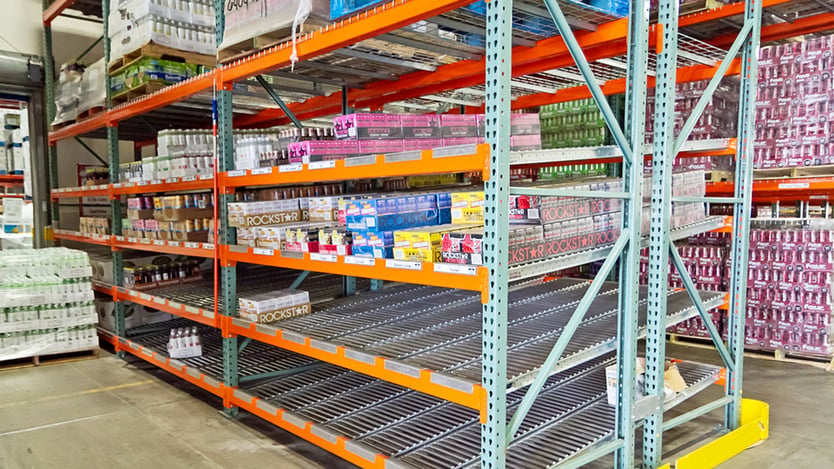
When a case picking area is well-designed, the signs are easy to spot. Fast-moving SKUs are located in the shortest, cleanest pick path, while medium movers are organized in compact, logical zones. Pick faces are visible, ergonomic, and easy to access. Cases move forward consistently, and replenishment protects the pick line instead of interrupting it. Together, this means workers aren’t wasting time searching, backtracking, or correcting preventable layout problems.
The opposite is also true. If pickers are walking too far for common SKUs, if cartons are hard to see or hard to reach, if stockouts occur at the pick-face, or if the area depends on constant manual adjustments to stay productive, the problem usually isn’t the picker but instead becomes the design of the storage and flow around the picker.
A few questions can reveal whether the strategy is working:
- Are the highest-activity SKUs in the shortest travel path?
- Can workers see and reach the case without overreaching or second-checking?
- Does replenishment keep product flowing without disrupting picks?
- Are lane widths and depths matched to the carton profile?
- When errors happen, are they really labor errors, or symptoms of poor pick-face design?
How SpanTrack Supports Faster, More Accurate Case Picking
 For fast- to medium-moving case picks, carton flow is often the storage method that best aligns with these operational goals. UNEX SpanTrack carton flow is a drop-in carton flow solution for new or existing pallet rack structures that creates FIFO storage lanes and keeps product at the pick point.
That matters because better case picking isn’t just about storing cartons in a rack, but about creating a predictable pick environment where the product stays visible, accessible, and ready for the next order.
As workers pick cases from the front, replacement stock automatically slides forward, helping maintain FIFO rotation and reducing the need to manually reshuffle products. SpanTrack supports predefined pick zones that limit travel while maintaining speed and accuracy in various order picking environments.
A few key benefits of using SpanTrack for case picking include:
- FIFO stock rotation to keep older inventory in front and reduce waste
- Reduced worker travel time by up to 75%, helping compact SKU storage into a more efficient pick path
- Up to 150% throughput improvement from full-width roller lanes and wheel beds
- Better ergonomics at the pick-face through accessible case presentation and knuckled end treatments that position products at a better pick angle
- Back-side replenishment with clear access for pickers at the front, reducing interruptions during active picking
- Flexible lane and wheel bed options to support a range of carton sizes, weights, and slotting needs
SpanTrack carton flow is a strong fit when an operation needs to improve medium-velocity case picking without adding unnecessary complexity. It helps condense and organize SKUs, keep cases within easy reach, support FIFO, and reduce the travel and handling that slow down fulfillment.
Better Case Picking Starts With Better Flow
The most effective case picking strategies aren’t built around asking workers to move faster in a system that slows them down. They’re built around creating a pick environment that supports both speed and accuracy. When SKUs are slotted with intention, pick-faces keep cases visible and accessible, and replenishment is designed to protect the flow of work, operations can reduce wasted motion, improve consistency, and move more product with fewer errors.
That’s what makes case picking improvement a design opportunity as much as a labor one. Better slotting shortens travel, better pick-face design reduces hesitation and strain, and better replenishment keeps product moving forward without disrupting active picks. And when medium-moving cases need a more efficient, organized, and reliable storage method, SpanTrack carton flow brings those improvements together in one system.
Contact UNEX today to learn how SpanTrack carton flow can help you improve case picking accuracy, increase throughput, and create a more efficient picking environment.