---
title: "Understanding Carton Flow Racks: Types, Uses, and Benefits"
description: Learn about the types, uses, and benefits of carton flow racks for improving warehouse efficiency and storage.
image: https://blog.unex.com/hubfs/carton-flow-for-3pl-fulfillment%20.jpg
---
[Skip to content](https://blog.unex.com/understanding-carton-flow-racks-types-uses-and-benefits#main-content)
[](https://www.unex.com/)
- [Applications](https://www.unex.com/applications)
- Storage
- [Warehouse Storage](https://www.unex.com/applications/storage/warehouse-storage)
- [Storage for 3PLs](https://www.unex.com/applications/storage/storage-3pls)
- [Retail Storage Solutions](https://www.unex.com/applications/storage/retail-storage)
- [Lineside Storage](https://www.unex.com/applications/packing-assembly/lineside-storage)
- [Beverage Storage](https://www.unex.com/applications/storage/beverage-storage)
- [Keg Storage](https://www.unex.com/applications/storage/keg-storage)
- Picking
- [Order Picking](https://www.unex.com/applications/picking/order-picking)
- [Case Picking](https://www.unex.com/applications/picking/case-picking)
- [Each Picking](https://www.unex.com/applications/picking/each-picking)
- [Picking Carts](https://www.unex.com/applications/picking/picking-carts)
- [Pick Module](https://www.unex.com/applications/picking/pick-module)
- Packing & Assembly
- [Industrial Carts](https://www.unex.com/applications/packing-assembly/industrial-carts)
- [Packing Stations](https://www.unex.com/applications/packing-assembly/packing-station)
- [Industrial Workstations](https://www.unex.com/applications/packing-assembly/industrial-workstations)
- [Manufacturing Supermarkets](https://www.unex.com/applications/packing-assembly/manufacturing-supermarkets)
- [Solutions](https://www.unex.com/solutions)
- [Carton Flow](https://www.unex.com/solutions/carton-flow)
- [SpanTrack Lane](https://www.unex.com/solutions/carton-flow/spantrack-lane)
- [SpanTrack Wheel Bed](https://www.unex.com/solutions/carton-flow/spantrack-wheel-bed)
- [SpanTrack Keg Flow](https://www.unex.com/solutions/carton-flow/spantrack-keg-flow)
- [Shelf Track](https://www.unex.com/solutions/carton-flow/shelf-track)
- [Flow Racks](https://www.unex.com/solutions/flow-racks)
- [FlowCell](https://www.unex.com/solutions/flow-racks/flowcell)
- [Roller Rack](https://www.unex.com/solutions/flow-racks/roller-rack)
- [High-Density Storage](https://www.unex.com/solutions/high-density-storage)
- [SpeedCell](https://www.unex.com/solutions/high-density-storage/speedcell)
- [SpeedCartt](https://www.unex.com/solutions/high-density-storage/speedcartt)
- [Pick Shelves](https://www.unex.com/solutions/high-density-storage/pick-shelves)
- [Conveyors](https://www.unex.com/solutions/conveyors)
- [Gravity Conveyor](https://www.unex.com/solutions/conveyors/gravity-conveyors)
- [Pallet Track](https://www.unex.com/solutions/conveyors/pallet-track)
- [About](https://www.unex.com/about)
- [Resources](https://www.unex.com/resources)
- [Blog](https://blog.unex.com)
- [Press Releases](https://blog.unex.com/press-releases)
- [Guides](https://www.unex.com/resources/guides)
- [Product Brochures](https://www.unex.com/resources/product-brochures)
- [Installation Guides](https://www.unex.com/resources/installation-guides)
- [Case Studies](https://www.unex.com/resources/case-studies)
- [FAQs](https://go.unex.com/faq)
[Contact Us](https://www.unex.com/contact) [Build a Solution](https://www.unex.com/configurator)
- [Applications](https://www.unex.com/applications)
- Storage
- [Warehouse Storage](https://www.unex.com/applications/storage/warehouse-storage)
- [Storage for 3PLs](https://www.unex.com/applications/storage/storage-3pls)
- [Retail Storage Solutions](https://www.unex.com/applications/storage/retail-storage)
- [Lineside Storage](https://www.unex.com/applications/packing-assembly/lineside-storage)
- [Beverage Storage](https://www.unex.com/applications/storage/beverage-storage)
- [Keg Storage](https://www.unex.com/applications/storage/keg-storage)
- Picking
- [Order Picking](https://www.unex.com/applications/picking/order-picking)
- [Case Picking](https://www.unex.com/applications/picking/case-picking)
- [Each Picking](https://www.unex.com/applications/picking/each-picking)
- [Picking Carts](https://www.unex.com/applications/picking/picking-carts)
- [Pick Module](https://www.unex.com/applications/picking/pick-module)
- Packing & Assembly
- [Industrial Carts](https://www.unex.com/applications/packing-assembly/industrial-carts)
- [Packing Stations](https://www.unex.com/applications/packing-assembly/packing-station)
- [Industrial Workstations](https://www.unex.com/applications/packing-assembly/industrial-workstations)
- [Manufacturing Supermarkets](https://www.unex.com/applications/packing-assembly/manufacturing-supermarkets)
- [Solutions](https://www.unex.com/solutions)
- [Carton Flow](https://www.unex.com/solutions/carton-flow)
- [SpanTrack Lane](https://www.unex.com/solutions/carton-flow/spantrack-lane)
- [SpanTrack Wheel Bed](https://www.unex.com/solutions/carton-flow/spantrack-wheel-bed)
- [SpanTrack Keg Flow](https://www.unex.com/solutions/carton-flow/spantrack-keg-flow)
- [Shelf Track](https://www.unex.com/solutions/carton-flow/shelf-track)
- [Flow Racks](https://www.unex.com/solutions/flow-racks)
- [FlowCell](https://www.unex.com/solutions/flow-racks/flowcell)
- [Roller Rack](https://www.unex.com/solutions/flow-racks/roller-rack)
- [High-Density Storage](https://www.unex.com/solutions/high-density-storage)
- [SpeedCell](https://www.unex.com/solutions/high-density-storage/speedcell)
- [SpeedCartt](https://www.unex.com/solutions/high-density-storage/speedcartt)
- [Pick Shelves](https://www.unex.com/solutions/high-density-storage/pick-shelves)
- [Conveyors](https://www.unex.com/solutions/conveyors)
- [Gravity Conveyor](https://www.unex.com/solutions/conveyors/gravity-conveyors)
- [Pallet Track](https://www.unex.com/solutions/conveyors/pallet-track)
- [About](https://www.unex.com/about)
- [Resources](https://www.unex.com/resources)
- [Blog](https://blog.unex.com)
- [Press Releases](https://blog.unex.com/press-releases)
- [Guides](https://www.unex.com/resources/guides)
- [Product Brochures](https://www.unex.com/resources/product-brochures)
- [Installation Guides](https://www.unex.com/resources/installation-guides)
- [Case Studies](https://www.unex.com/resources/case-studies)
- [FAQs](https://go.unex.com/faq)
[Contact Us](https://www.unex.com/contact) [Build a Solution](https://www.unex.com/configurator)
# Understanding Carton Flow Racks: Types, Uses, and Benefits
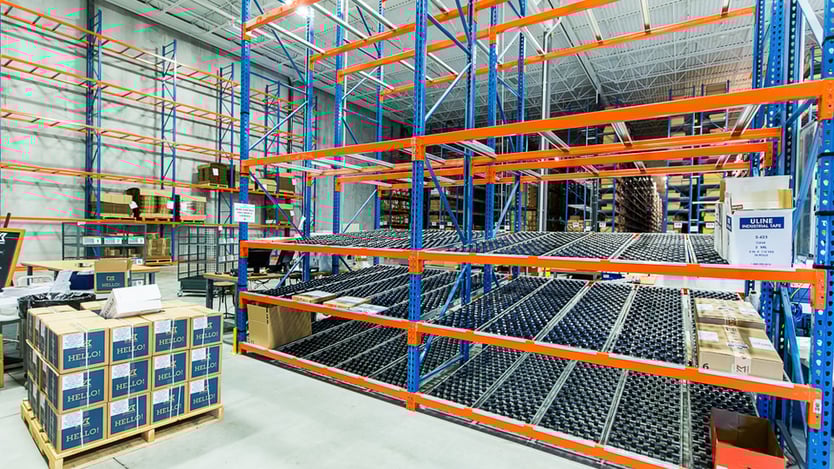
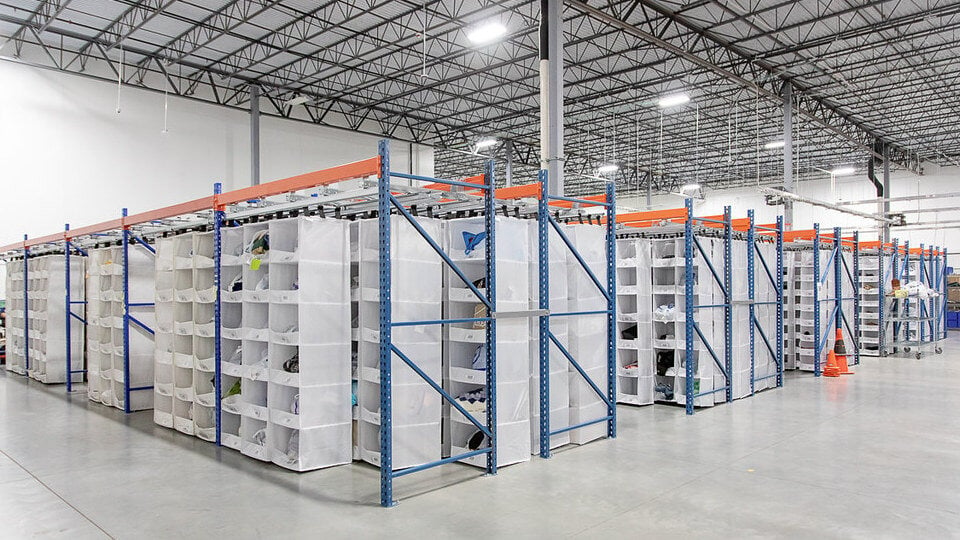
[Carton flow racks](https://www.unex.com/solutions/carton-flow) are one of the most effective ways to increase picking speed, improve inventory rotation, and maximize storage density within a [warehouse or distribution center](https://www.unex.com/industries/order-fulfillment-warehousing). At their core, carton flow systems use gravity to move cartons, totes, or cases from the back of a rack to the pick face, creating a continuous, organized flow of product.
These systems are widely used in operations that rely on high-volume, case picking or each picking. That includes [eCommerce fulfillment](https://www.unex.com/industries/order-fulfillment-warehousing), [retail distribution](https://www.unex.com/industries/retail), [manufacturing](https://www.unex.com/industries/manufacturing), and [third-party logistics](https://www.unex.com/industries/logistics). Any operation handling a large number of SKUs with consistent picking demand can benefit from carton flow.
Compared to static shelving, [carton flow](https://www.unex.com/solutions/carton-flow) introduces automatic product replenishment at the pick face. Workers no longer need to reach deep into shelving or walk back and forth to retrieve inventory. Compared to full automation, carton flow offers a cost-effective, low-maintenance solution that delivers significant productivity gains.
The result is faster picks, better space utilization, and improved accuracy, all powered by a simple gravity-fed design. To understand how these benefits are achieved, it starts with a closer look at how [carton flow racks](https://www.unex.com/solutions/carton-flow) are structured and how they function within a picking operation.
## **What is a Carton Flow Rack?**
A [carton flow rack](https://www.unex.com/solutions/carton-flow) is a [dynamic storage system](https://blog.unex.com/how-dynamic-storage-systems-enhance-warehouse-efficiency) designed with slightly inclined tracks that use gravity to move cartons, totes, or cases from the back of the rack to the pick face. As one carton is removed, the next automatically advances into position, keeping product consistently accessible without manual repositioning.
This continuous forward movement creates a [First-In, First-Out](https://blog.unex.com/creating-fifo-storage-with-carton-flow-rack-systems) (FIFO) inventory flow. FIFO is essential for operations managing expiration dates, lot tracking, or strict inventory rotation requirements, as it ensures older products are picked first.
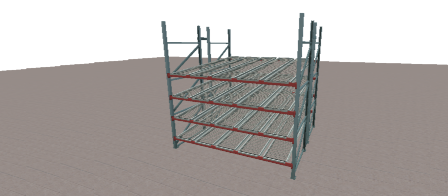
Carton flow racks are typically [integrated into pallet racking](https://blog.unex.com/carton-flow-101-the-advantages-of-a-gravity-flow-rack) and can span multiple levels. Each level is outfitted with flow lanes sized to accommodate specific products, allowing facilities to store a large number of SKUs within a compact footprint. This multi-level design transforms basic static storage into dense, high-throughput picking zones that support faster, more organized workflows.
Beyond storage, carton flow racks directly improve picking efficiency. By keeping inventory at the front of the rack, [carton flow racks](https://www.unex.com/solutions/carton-flow) reduce the need to reach, bend, or walk to access product. This not only speeds up the picking process but also creates a more ergonomic work environment for operators.
Because of their adaptability, carton flow racks can be configured to support a wide range of applications, from small parts picking in a [manufacturing environment](https://blog.unex.com/how-to-design-a-carton-flow-system-based-on-storage-requirements) to [full case picking in an order fulfillment center](https://blog.unex.com/how-carton-flow-storage-enhances-efficiency-in-case-picking-operations). Whether installed as part of a standalone shelving system or incorporated into a larger pick module, carton flow racks provide a scalable solution that aligns storage density with picking performance.
## **Types of Carton Flow**
The two primary types of [carton flow rack systems](https://www.unex.com/solutions/carton-flow) are [carton flow rollers](https://www.unex.com/solutions/carton-flow/spantrack-lane) and [carton flow beds](https://www.unex.com/solutions/carton-flow/spantrack-wheel-bed). Each serves a specific purpose depending on product characteristics and operational requirements.
### **Carton Flow Rollers**
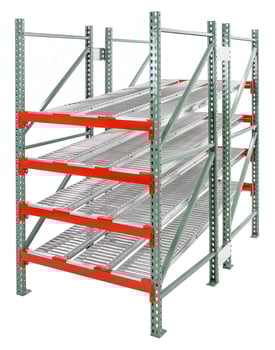[Carton flow rollers](https://www.unex.com/solutions/carton-flow/spantrack-lane) consist of a series of steel or aluminum gravity rollers mounted in a track. These rollers allow cartons to glide smoothly down the lane.
This type of carton flow is ideal for:
- Uniform cartons with consistent dimensions
- Applications requiring smooth, controlled movement
- Operations where speed and efficiency are priorities
[Carton flow roller systems](https://www.unex.com/solutions/carton-flow/spantrack-lane) provide excellent flow for rigid cartons with flat bottoms. Because the rollers create continuous contact, they help maintain consistent movement across longer lanes.
[UNEX SpanTrack Lane](https://www.unex.com/solutions/carton-flow/spantrack-lane) is a leading example of carton flow roller technology. It is designed for durability and precision, offering smooth product flow and high load capacity. [SpanTrack Lane](https://www.unex.com/solutions/carton-flow/spantrack-lane) is well-suited for high-volume picking environments where reliability and performance are critical.
### **Carton Flow Beds**
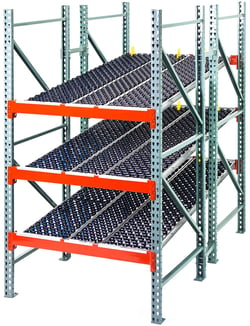[Carton flow beds](https://www.unex.com/solutions/carton-flow/spantrack-wheel-bed) use skate wheels arranged across the full width of the rack. Instead of rollers, multiple independent wheels support carton flow.
This design makes wheel beds highly versatile. They are ideal for:
- Cartons of varying sizes
- Applications with a wide mix of SKU shapes and sizes
- Operations where flexibility is more important than uniformity
Carton flow bed’s multi-wheel design provides consistent support, helping maintain smooth flow across different carton sizes within the same system. This makes them especially effective in operations handling a diverse product mix, where adaptability is key to maintaining consistent picking performance.
[UNEX SpanTrack Wheel Bed](https://www.unex.com/solutions/carton-flow/spantrack-wheel-bed) is designed to provide a steady, reliable flow for many types of products. Its wheel layout keeps cartons supported at several points, helping them move smoothly and perform well in busy picking areas.
### **Choosing Between Carton Flow Rollers and Wheel Beds**
The decision between [carton flow rollers](https://www.unex.com/solutions/carton-flow/spantrack-lane) and [carton flow beds](https://www.unex.com/solutions/carton-flow/spantrack-wheel-bed) comes down to product characteristics and the structure of the pick environment.
Rollers are typically the right choice when cartons are consistent in size, and the system is designed for highly organized, dedicated lanes. They provide controlled, predictable flow and are often used in tightly optimized [pick modules](https://www.unex.com/applications/picking/pick-module) where each lane is engineered for a specific product.
Wheel beds are well-suited for operations that require more flexibility within the same picking area. Their design allows multiple carton sizes to flow effectively, making them a strong option for applications with a [broader SKU mix](https://blog.unex.com/improving-order-picking-accuracy-with-carton-flow-systems) or where lane configurations need to accommodate variation.
Both options support high-throughput picking environments and are core components of [UNEX SpanTrack carton flow solutions](https://www.unex.com/solutions/carton-flow), allowing systems to be tailored to specific applications without sacrificing performance.
## **Carton Flow Types and Configuration Options**
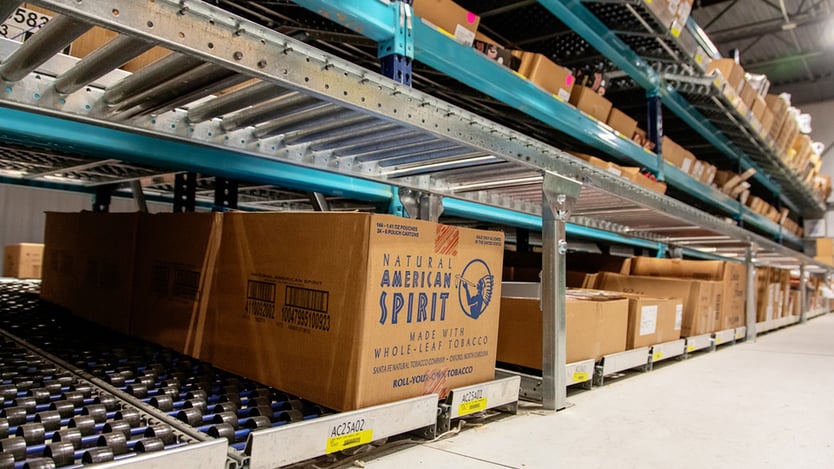
Beyond the primary types, [carton flow systems](https://www.unex.com/solutions/carton-flow) can be further customized through different configurations. These variations allow operations to fine-tune performance based on space constraints, product characteristics, and workflow needs.
### **Low-Profile**
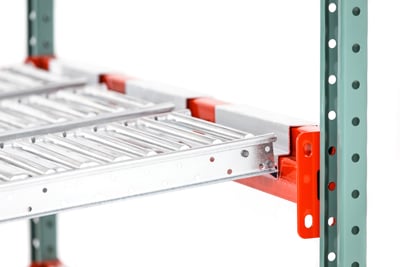Low-profile carton flow is designed for applications where vertical space is limited or where [ergonomic picking](https://blog.unex.com/5-benefits-of-implementing-carton-flow-in-your-warehouse) is a priority. By minimizing the height of the flow track, low-profile systems allow more levels within the same rack structure. This increases storage density without sacrificing accessibility.
These systems are commonly used in pick modules where maximizing SKU count in a compact footprint is essential. Low-profile carton flow tracks are suitable for full case picking or each picking applications and are perfect for racks with pallet storage above.
### **High-Profile**
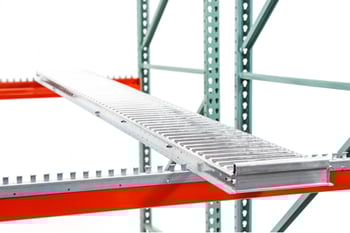High-profile carton flow refers to track configurations with increased height, allowing the flow surface to sit higher within the rack structure. This is often used when additional clearance is needed to properly position cartons or align with rack beams and system components.
High-profile configurations are commonly used in [pallet rack systems](https://www.unex.com/solutions/conveyors/pallet-track) or [multi-level pick modules](https://www.unex.com/applications/picking/pick-module), where spacing, carton size, and system integration must be carefully balanced. By adjusting the track height, high-profile flow helps ensure consistent product movement while maintaining proper fit within the overall rack design.
Because these tracks extend beyond the front face of the rack, you can gain an additional 24 inches of carton flow while maintaining full capacity.
### **Pushback Carton Flow**
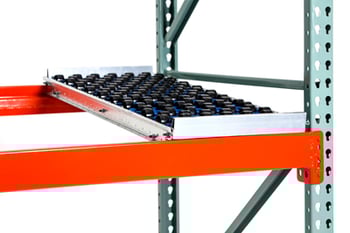Pushback configurations combine elements of carton flow with deeper lane storage. Instead of a single forward flow, cartons can be loaded from the front and pushed back as additional product is added.
This approach operates on a Last-In, First-Out (LIFO) basis, meaning the most recently loaded carton is the first to be picked. This makes it well-suited for applications where [strict inventory rotation](https://blog.unex.com/creating-fifo-storage-with-carton-flow-rack-systems) is not required and where maximizing storage density is a priority.
Pushback carton flow is useful in operations where space is limited but multiple units of the same SKU need to be stored in depth. It allows for efficient use of available space while still maintaining organized and accessible inventory within each lane.
### **Knuckled Carton Flow**
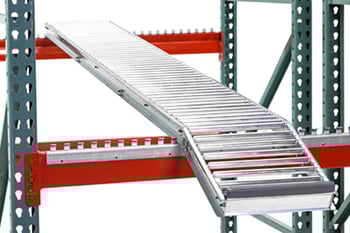Knuckled carton flow refers to a pick-face end treatment that angles the front of the track downward toward the picker. This presentation helps bring product into a more visible, accessible position at the point of pick.
This configuration is used to improve ergonomics, visibility, accessibility, and picking efficiency, especially in applications where quick visual identification and easy carton access are important. By presenting product more clearly to the picker, knuckled end treatments can help reduce search time and support faster, smoother order fulfillment.
### **Carton Flow with Pick Trays**
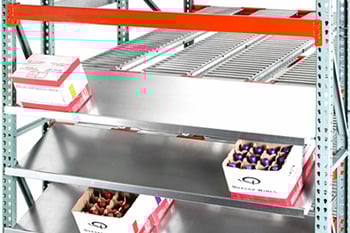Carton flow with adjustable pick trays presents open cases to order pickers so product can be picked from the case without interference from the shelf level above.
Pick trays are ideal for each picking applications where product is being picked from [open (split) cases](https://blog.unex.com/improve-efficiency-of-split-case-order-picking). Static or adjustable pick trays are offered in a variety of sizes to accommodate an operation’s unique needs.
Pick trays are commonly used in high-volume picking environments where speed and accuracy are critical. By standardizing how product is presented, they support more consistent picking performance and help create a more ergonomic interaction between the worker and the system.
## Increase Efficiency with SpanTrack
[Build a Solution](https://config.unex.com/)
## **Carton Flow Accessories and Options**
[Carton flow systems](https://www.unex.com/solutions/carton-flow) can be further optimized through a [range of accessories and options](https://blog.unex.com/spantrack-carton-flow-accessories-and-options) that are designed to control product movement, protect cartons and the system, and improve overall picking performance. These enhancements allow each flow lane to be tailored to the specific demands of the application.
### ****Impact Plate
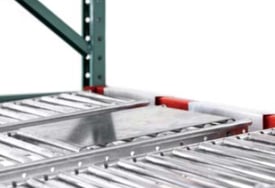
An impact plate is a sheet metal component installed at the front or rear of a carton flow lane to help control product movement. It creates additional friction and surface contact, which reduces impact on the flow track during loading and at the pick face. Impact plates are commonly used to soften the force of incoming cartons and to slow product as it moves forward. They are designed to easily attach over existing rollers or wheels.
### Impact Zone
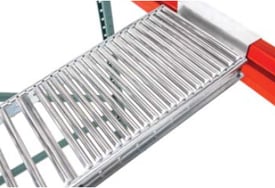
An impact zone is a reinforced section at the rear of a carton flow lane that features a dense concentration of steel rollers. This section typically spans about 12 inches and uses tighter roller spacing than the rest of the track. By increasing surface contact in this high-impact area, the impact zone helps absorb the load and reduces wear on the rest of the system.
### ****Raised Pressure Relief Ramp Stop
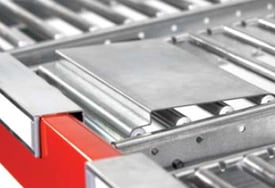
A raised pressure relief ramp stop is a sheet metal attachment installed at the front of a lane. It slightly elevates the leading carton, preventing it from becoming pinned against the front beam or end stop. This design helps relieve back pressure from cartons behind it and also contributes to slowing product flow, especially in longer lanes.
### ****Slow Down Strips
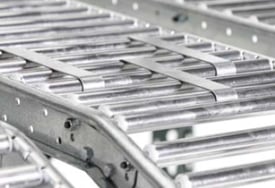
Slow down strips are narrow sheet metal pieces that attach directly to the flow path to create additional friction. Positioned along the lane, they help reduce carton speed before it reaches the pick face. This added control prevents cartons from striking the front of the rack too forcefully and supports smoother, more consistent flow.
### ****Lane Infeed Guides
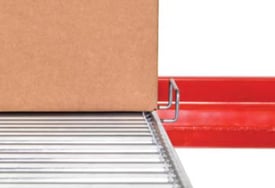
Lane infeed guides are metal guides mounted along the outer edges of roller lanes. They assist operators during loading by directing cartons into the correct position at the rear of the rack. By guiding placement, they help ensure proper alignment and consistent product flow through the lane.
### ****Wheel Bed Infeed Guides
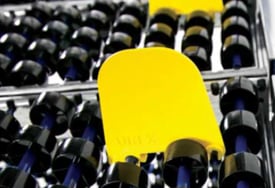
Wheel bed infeed guides are snap-on dividers that create defined lanes across a carton flow bed. Their design makes it easy to position and reposition them as needed, allowing operations to quickly adjust lane configurations. These guides help direct product placement during loading and maintain organized flow across the bed.
### ****Lane Guard Rails
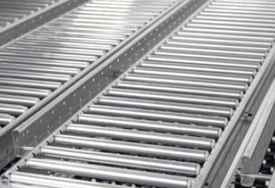
Lane guard rails are steel side barriers that keep cartons contained within their designated lanes. Mounted to the sides of roller lanes, they help prevent product from shifting out of position and ensure items travel straight from the infeed to the pick face.
### ****Wheel Bed Guide Rail
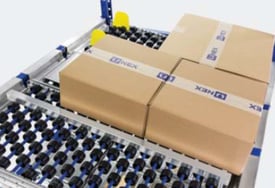
Wheel bed guide rails are extruded rails that run the length of a carton flow bed to create separation between product lanes. They snap into place over the wheel surface and help maintain organized flow by keeping cartons aligned as they move forward.
### ****Swing Stop
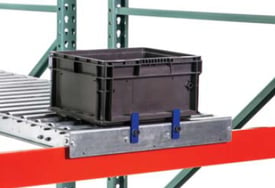
A swing stop is a movable stop that can be positioned at the front or rear of a lane. It can be raised to hold product in place during storage or lowered to allow for easy picking and loading. Swing stops attach directly to the flow track and provide flexibility in controlling product movement during different stages of operation.
These accessories allow carton flow to be fine-tuned for different products and picking conditions. Rather than a one-size-fits-all solution, carton flow becomes a highly adaptable system that can be configured to maintain smooth, reliable flow while supporting the specific needs of the operation.
## **Why Carton Flow Delivers Measurable Results**
[Carton flow racks](https://www.unex.com/solutions/carton-flow) transform static storage into [dynamic picking systems](https://blog.unex.com/dynamic-storage-solutions-for-efficient-order-picking). By leveraging gravity, they reduce travel time, streamline replenishment, and improve overall workflow.
Operations that implement carton flow often see immediate [improvements in picking efficiency](https://blog.unex.com/improving-order-picking-accuracy-with-carton-flow-systems). Workers spend less time searching for product and more time completing picks. Inventory remains organized and visible, which supports accuracy and reduces errors.
At the same time, carton flow maximizes the use of available space. By enabling dense storage and multi-level configurations, it allows facilities to handle more SKUs without expanding their footprint.
[UNEX SpanTrack Lane](https://www.unex.com/solutions/carton-flow/spantrack-lane) and [SpanTrack Wheel Bed](https://www.unex.com/solutions/carton-flow/spantrack-wheel-bed) provide the flexibility to match the right solution to the right application. Whether the priority is speed, versatility, or a balance of both, these systems deliver reliable performance in demanding environments.
Carton flow is not just a storage solution. It is a foundational component of efficient, [scalable warehouse operations](https://blog.unex.com/selecting-right-carton-flow-system-design-for-your-warehouse). When designed correctly, carton flow becomes a long-term performance driver, aligning storage, picking, and replenishment into a single, streamlined system.
If you are looking to improve throughput, increase storage density, or create a more efficient picking operation, the right carton flow solution can make a measurable impact. [Contact UNEX](https://www.unex.com/contact) to explore how [SpanTrack carton flow](https://www.unex.com/solutions/carton-flow) can be configured to meet your specific application.
[](https://cta-redirect.hubspot.com/cta/redirect/4747213/642b4a8f-a34b-4fce-83e3-b6d04d136d0b)
[Carton Flow](https://blog.unex.com/tag/carton-flow) [SpanTrack](https://blog.unex.com/tag/spantrack)
## Related Blogs
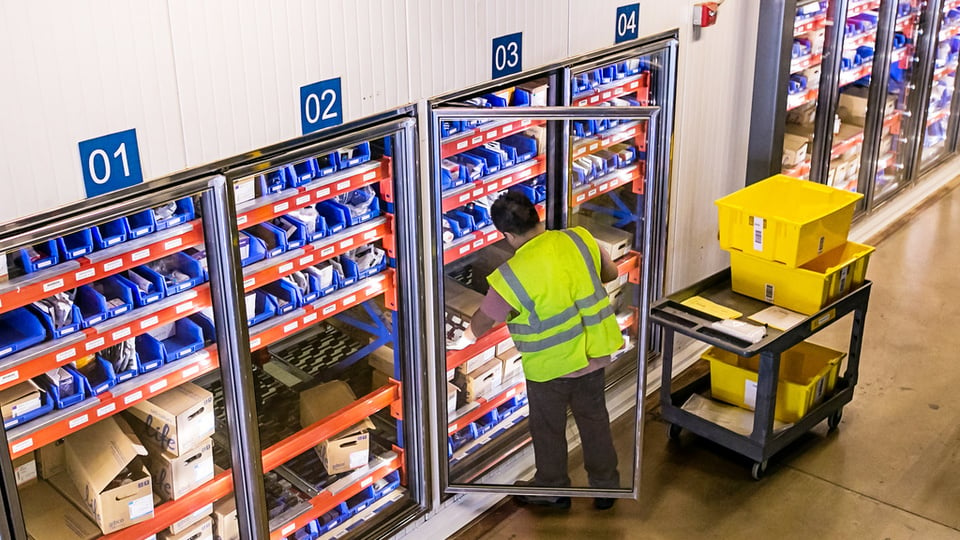
### Why Temperature-Controlled Operations Are Turning to SpanTrack Carton Flow
[Read More](https://blog.unex.com/why-temperature-controlled-operations-are-turning-to-spantrack-carton-flow)
### How Operations Are Increasing SKU Capacity Without Expanding Warehouse Space
[Read More](https://blog.unex.com/how-operations-are-increasing-sku-capacity-without-expanding-warehouse-space)
[](https://blog.unex.com/)
- - [Applications](https://www.unex.com/applications)
- [Storage](https://blog.unex.com/applications#storage)
- [Order Picking](https://blog.unex.com/applications#picking)
- [Packing & Assembly](https://blog.unex.com/applications#packing)
- [Solutions](https://www.unex.com/solutions)
- [Carton Flow](https://www.unex.com/solutions/carton-flow)
- [Flow Racks](https://www.unex.com/solutions/flow-racks)
- [High-Density Storage](https://www.unex.com/solutions/high-density-storage)
- [Conveyors](https://www.unex.com/solutions/conveyors)
- - Industries
- [Manufacturing](https://www.unex.com/industries/manufacturing)
- [Order Fulfillment & Warehousing](https://www.unex.com/industries/order-fulfillment-warehousing)
- [Retail](https://www.unex.com/industries/retail)
- [Logistics](https://www.unex.com/industries/logistics)
- [About](https://www.unex.com/about)
- [Find a Distributor](https://go.unex.com/find-material-handling-distributor)
- [Distributor Portal](https://go.unex.com/distributors)
- [Careers](https://go.unex.com/careers)
- - [Build a Solution](https://www.unex.com/configurator)
- [Contact Us](https://www.unex.com/contact)
- [Resources](https://www.unex.com/resources)
[800-334-8639](tel:8003348639)
691 New Hampshire Ave Lakewood, NJ 08701
[Privacy Policy](https://www.unex.com/legal/privacy-policy)|[Terms of Service](https://www.unex.com/legal/terms-service)
[Sitemap](https://www.unex.com/sitemap)|[Warranty](https://www.unex.com/legal/warranty)
© UNEX Manufacturing. 2026 All Rights Reserved.
```json
{
"@context" : "https://schema.org",
"@type" : "BlogPosting",
"author" : {
"@type" : "Person",
"name" : "UNEX",
"url" : "https://blog.unex.com/author/unex"
},
"dateModified" : "2026-03-19T12:24:32.455Z",
"datePublished" : "2026-03-19T12:24:32.000Z",
"headline" : "Understanding Carton Flow Racks: Types, Uses, and Benefits",
"image" : [ "https://blog.unex.com/hubfs/carton-flow-for-3pl-fulfillment%20.jpg" ],
"mainEntityOfPage" : {
"@id" : "https://blog.unex.com/understanding-carton-flow-racks-types-uses-and-benefits",
"@type" : "WebPage"
},
"publisher" : {
"@type" : "Organization",
"logo" : {
"@type" : "ImageObject",
"url" : "https://blog.unex.com/hubfs/unex_logo_061013_RGB_Medium-1.jpg"
},
"name" : "UNEX Manufacturing Inc"
}
}
```