Order picking is the most labor-intensive function inside a fulfillment center, and in eCommerce operations, it’s also the most performance-critical. A single order may require five individual picks from five different SKU locations. Multiply that by thousands of daily orders, and the efficiency of each pick quickly becomes mission-critical to overall throughput and profitability.
In each picking environments, success isn’t defined by how much product you can store, but by how quickly, accurately, and ergonomically a picker can access inventory. Throughput today is rarely constrained by dock capacity or conveyor speed; more often, it’s limited by how efficiently workers can move from one SKU to the next.
Still, many facilities continue to rely on storage systems originally designed for pallet movement and case picking. As SKU counts increase and order sizes shrink, those traditional layouts create excessive travel, wasted motion, and hidden labor costs that compound over time.
Each Picking vs. Case Picking: Understanding the Difference
Not all picking operations are created equal. Understanding the difference between case picking and each picking helps explain why storage strategy must evolve alongside order profiles.
Case Picking
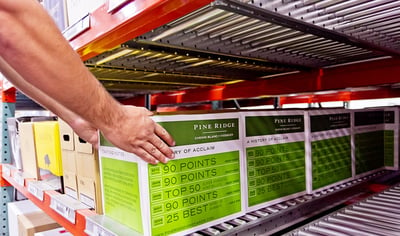 Case picking involves selecting full cartons or cases of product, typically for replenishment, wholesale distribution, or retail store restocking.
Case picking is ideal for:
- Larger order quantities
- Fewer SKU touchpoints per order
- Often pallet-based storage
- Designed around bulk movement
Case picking environments prioritize load capacity and flow-through replenishment. Storage systems like pallet rack with carton flow lanes are often ideal for this workflow.
Each Picking
 Each picking, on the other hand, involves selecting individual items, often one or two units per SKU, to fulfill direct-to-consumer orders.
Each picking is ideal for:
- Smaller order sizes
- Higher SKU diversity
- More pick locations per order
- Greater emphasis on speed and accessibility
In eCommerce fulfillment, each picking is dominant. A single order may require multiple individual picks across different zones of the warehouse. When that pattern repeats thousands of times per day, efficiency at the pick face becomes critical.
The Hidden Cost of Storage in Each Picking
Many fulfillment centers are still structured around static shelving and conventional pallet rack layouts. While these systems work well for bulk movement, they create inefficiencies in high-SKU each picking environments.
Excessive Travel Time
Travel time is the largest component of labor cost in order picking. When slow- and medium-moving SKUs are spread across long aisles, pickers spend more time walking than picking. Every additional step between SKU locations reduces picks per hour and increases cost per order for the business.
Limited Pick Faces Per Bay
Traditional static shelving assigns a fixed amount of horizontal space to each SKU. As SKU counts grow, operations respond by adding more shelving and more aisles. Over time, this expands the footprint of the picking area and increases travel distance.
In each picking operations where orders may require multiple touchpoints, this layout quickly becomes inefficient.
Disorganization and Slotting Challenges
When SKU growth outpaces storage design, overflow happens. Temporary fixes become permanent, pick faces become crowded or inconsistent, and accuracy suffers. Without a system designed for high-density SKU storage, maintaining organization becomes increasingly difficult.
Ergonomic Strain
Frequent bending, reaching, and searching slows pick speed and increases fatigue. Over time, poor ergonomics impacts productivity and safety. When picking is the performance bottleneck, these inefficiencies compound quickly.
Discover a high-density storage solution and get the Ultimate Order Fulfillment Checklist! Download the Meet SpeedCell Guide.

High-Density Storage Is a Performance Strategy in Each Picking
High-density storage is often discussed as a space-saving solution. In eCommerce each picking environments, it's fundamentally a performance strategy, especially when viewed through the lens of SKU velocity.
Most warehouses and order fulfillment centers follow the 80/20 rule: a small percentage of SKUs generate the majority of order volume, while the remaining SKUs move slowly or moderately. Yet those slower-moving SKUs still require immediate accessibility for each picking. The challenge is that they don’t justify full-width shelving lanes or dedicated rack bays.
In the broader material handling industry, high-density storage can take many forms, including automated systems like vertical lift modules (VLMs), carousels, and AS/RS technologies, as well as rack-integrated solutions that optimize space within existing pallet racking. Regardless of the approach, the goal is the same: increase SKU accessibility while reducing wasted space and travel.
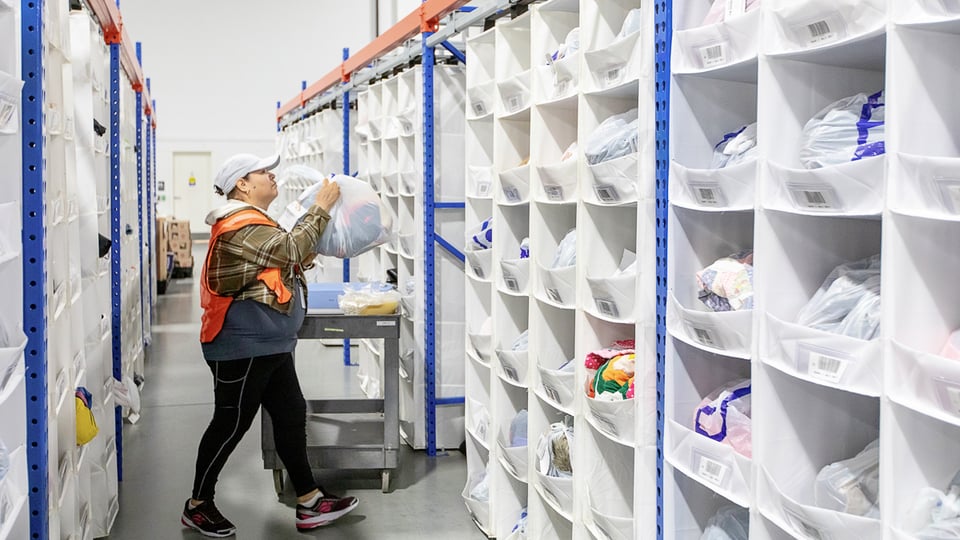
For many each picking operations, especially those managing high SKU counts with variable demand, manual high-density storage systems like SpeedCell offer a practical way to convert unused rack depth into productive SKU storage. Instead of dedicating full shelf lanes to low-velocity items, these systems compress slower-moving inventory into dense, organized locations while keeping every SKU immediately accessible. This reduces aisle count, shortens travel time, and improves slotting discipline without fundamentally restructuring the facility.
By consolidating slower movers into well-defined, high-density storage zones, operations preserve prime ergonomic pick space for fast-moving SKUs. At the same time, they increase total SKU capacity within the same footprint and maintain stronger organization as inventory profiles evolve.
The result is fewer aisles, shorter pick paths, improved ergonomics at the pick point, and higher picks per hour. When your storage strategy aligns with SKU velocity, labor performance improves, and each picking becomes faster, more consistent, and more scalable.
How High-Density Storage Elevates Each Picking Performance
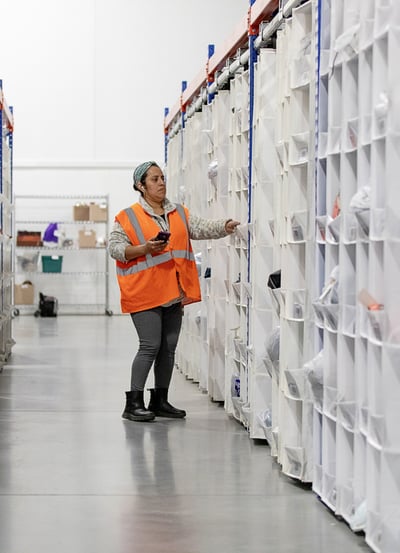 When high-density storage is implemented strategically, the impact goes beyond organization.
An optimized high-density storage system:
- Increases picks per labor hour. By consolidating more SKUs into fewer bays and reducing aisle count, pickers complete more selections per stop. Less walking translates directly into higher throughput without increasing headcount.
- Lowers cost per order. Travel time is the largest component of picking labor. Compressing slow- and medium-moving SKUs into dense, accessible locations reduces non-productive motion and improves overall labor efficiency.
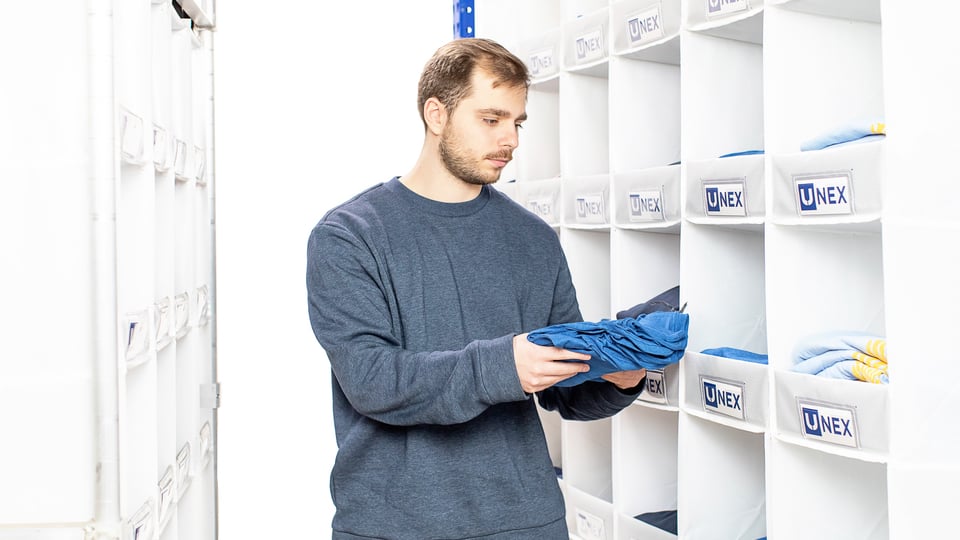
- Improves order accuracy and consistency. Clearly defined pick locations and structured slotting reduce search time and product confusion. When every SKU has a disciplined, visible home, mis-picks decline.
- Enhances scalability. As SKU counts grow, high-density storage absorbs complexity without requiring proportional increases in floor space or labor. Operations can expand SKU variety while maintaining predictable picking performance.
In each picking environments, where motion is the enemy of speed, high-density storage transforms storage layout into a measurable competitive advantage.
SpeedCell: High-Density Storage Built for Each Picking
For operations looking to optimize each picking without implementing complex automation, UNEX SpeedCell provides a purpose-built high-density storage solution.
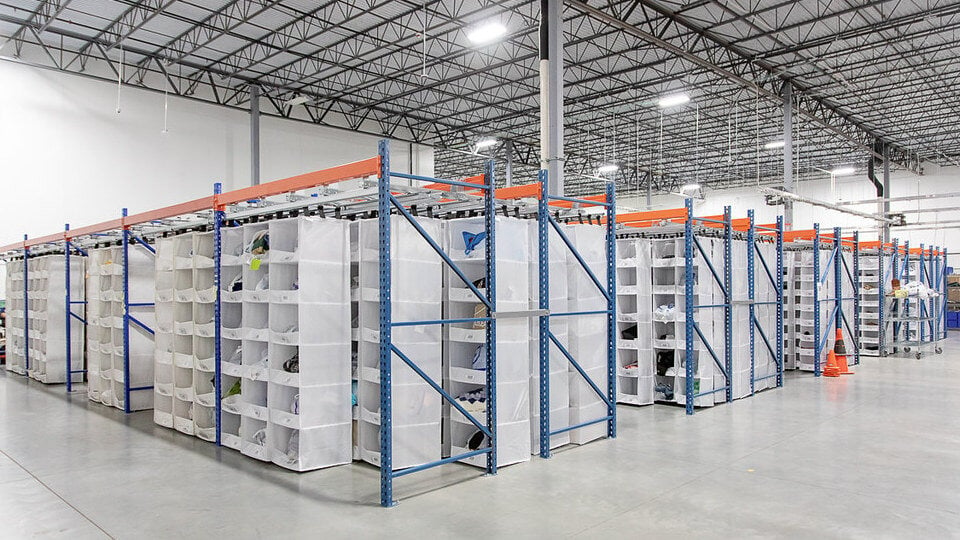
SpeedCell is a high-density storage system that can be suspended within existing pallet racking. It transforms rack depth into organized, high-density pick locations designed specifically for slow- and medium-moving SKUs.
Maximize Space with SpeedCell

Key SpeedCell features include:
- Up to 40–60% increase in storage density by compressing as much as 200 feet of rack or shelving into just 40 feet of highly organized storage
- Reduced labor costs by minimizing travel time and improving pick efficiency
- Side-to-side sliding columns that provide access to multiple rows of SKU storage within a single rack bay
- Six standard column sizes (XS–XXL) to accommodate a wide range of product dimensions
- Robust capacity design, supporting up to 35 pounds per cell and 240 pounds per column for diverse each picking applications
Because SpeedCell integrates directly into existing pallet rack beams using a pre-galvanized steel suspension system, facilities can retrofit current infrastructure without major structural changes. For eCommerce operations managing thousands of slow- and medium-moving SKUs, SpeedCell transforms underutilized rack depth into organized, accessible, high-density storage.
High-Density Storage: The Key to Scalable Each Picking
As eCommerce continues to drive smaller order sizes and greater SKU diversity, each picking will remain the backbone of fulfillment operations. Facilities that rely on traditional shelving and static layouts will continue to battle rising labor costs, expanding pick paths, and throughput constraints.
High-density storage solutions shift the focus from simply storing inventory to optimizing pick performance. When storage is designed around how products are picked and not just how they are stored, operations gain speed, accuracy, and scalability.
If you’re ready to improve each picking efficiency, increase SKU density, and reduce labor costs, contact UNEX today to learn how a high-density storage solution like SpeedCell can transform your fulfillment operation.