Beverage distributors manage an assortment that can expand quickly and change without much warning. New breweries, package formats, craft products, seasonal releases, imported brands, canned cocktails, soft drinks, and changing customer preferences can add SKUs faster than the warehouse or cooler can add conventional pick locations.
The physical products create another layer of complexity. Beverage cases are dense and heavy. Kegs are round, awkward to handle, and available in several sizes. Wine and spirits operations may pick full cases, split cases, or individual bottles while trying to maintain the throughput required for nightly delivery routes.
As assortments grow, floor storage and static rack can lead to longer pick paths, difficult replenishment, mispicks, and underused warehouse cube. Expanding the facility may be costly, while cooler additions bring additional refrigeration and energy requirements.
Dynamic case and keg flow can help beverage distributors place more SKUs within an organized pick area, keep inventory moving toward employees, and design storage around the actual product being handled.
Why Beverage Picking Requires a Specialized Flow Strategy
Beverage distribution isn’t one uniform process. A single operation may handle high-volume case picks, slower-moving craft brands, partial cases, several keg dimensions, and split-case wine or spirits fulfillment. That means the right storage system has to account for much more than available rack space.
Beverage Assortments Can Grow Rapidly
Craft beverages and specialty products have dramatically expanded the long tail of beverage distribution. A brand that once offered a handful of core products may now add seasonal flavors, alternative package sizes, variety packs, or limited releases.
Every new SKU requires a location, but not every SKU deserves the same amount of pick frontage. When slower-moving products remain on pallets or are spread across static storage, the active pick area can grow faster than the operation’s order volume. A more concentrated layout gives distributors room to add products while limiting the travel required to pick them.
Full Cases, Each Picks, and Kegs Require Different Storage Approaches
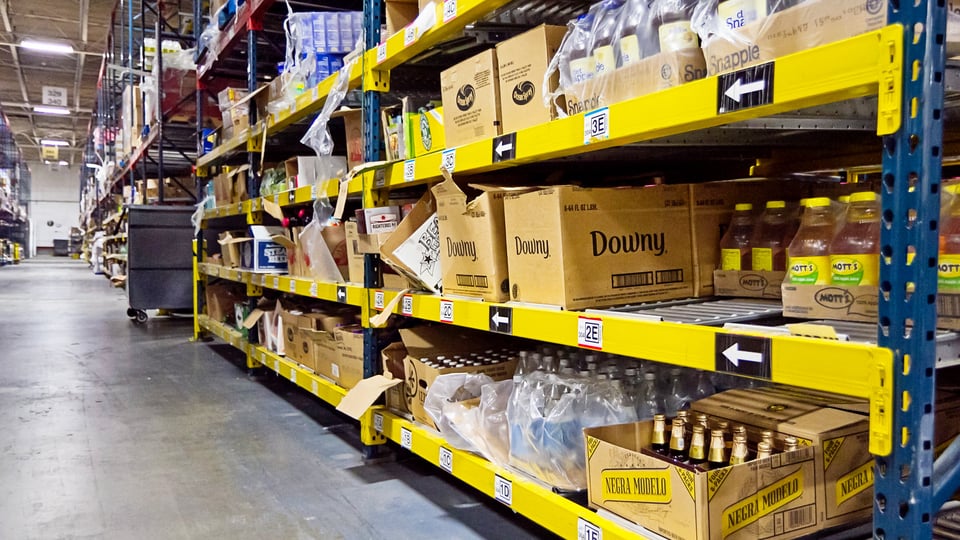
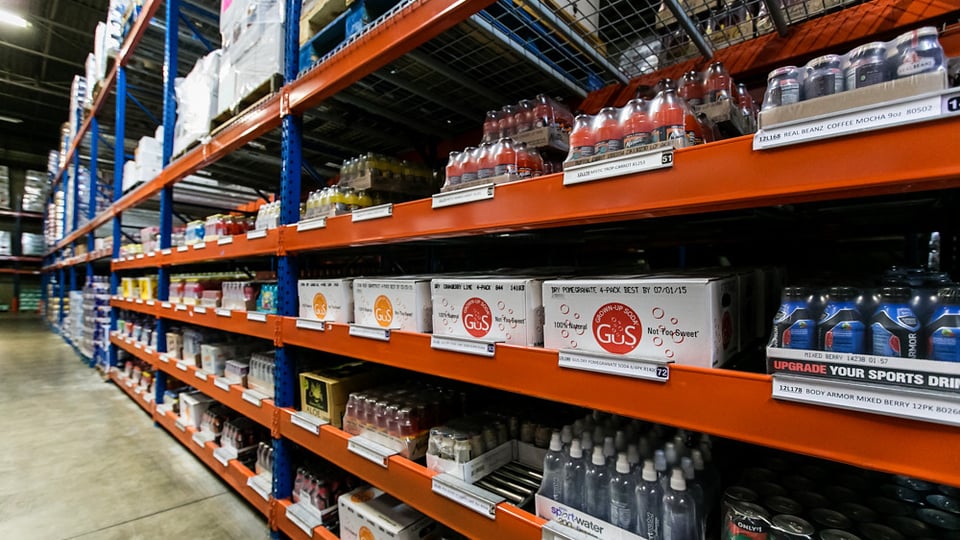
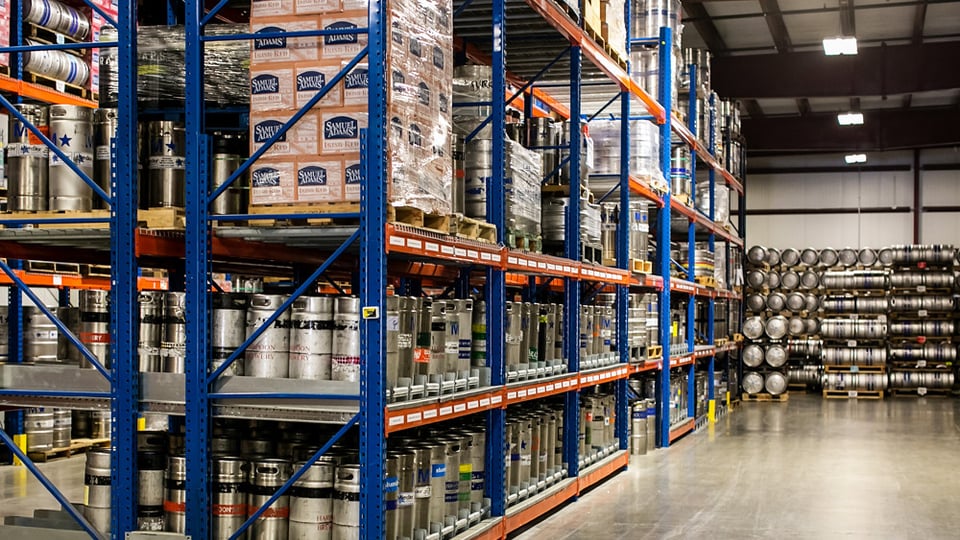
Cases with predictable dimensions may flow efficiently through dedicated carton flow lanes. A more varied case assortment may benefit from wheel beds that allow products to be re-slotted across the width of a rack level. For each pick operations, such as individual wine or spirits bottles, storage should keep open cases organized, visible, and accessible while supporting fast, accurate selection.
Kegs require a purpose-built approach. They’re heavy, round, and difficult to organize safely on the warehouse floor. Half-barrel kegs can weigh well over 100 pounds, while smaller kegs still create substantial handling demands. Effective beverage storage has to support the product’s dimensions, weight, velocity, and picking method rather than forcing every item into the same rack configuration.
Cooler Space Is Expensive to Waste
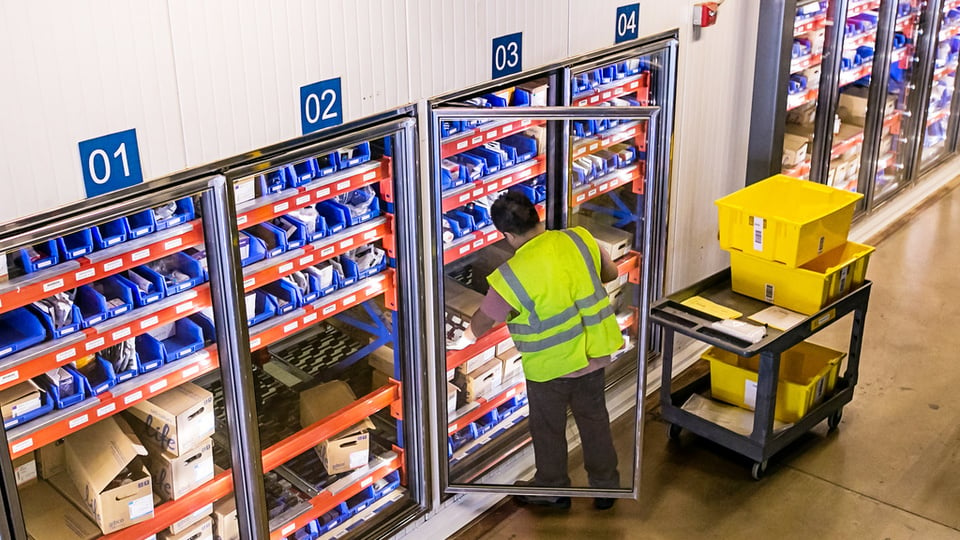
Beverage coolers can become crowded as new brands and keg formats are added. When inventory is stored on the floor or dispersed across long pick paths, distributors may assume that adding refrigerated space is the only way to create capacity.
However, cooler expansion requires construction, refrigeration, energy, and maintenance. Using the existing cube more effectively may provide a faster and more cost-effective path to growth.
A denser pick area can also reduce how long employees remain inside cold environments.
Mispicks Can Affect the Delivery Route
Accuracy matters in every warehouse, but a beverage mispick can be especially disruptive. If the wrong beer, wine, or spirit is loaded onto a truck, the distributor may need to make a special trip to correct the order.
Clearly defined and labeled pick locations make it easier for employees to confirm the product before it reaches shipping. Greater visibility also helps the operation monitor stock and identify replenishment needs.
Heavy Products Increase Physical Demands
Cases and kegs stored on the floor require employees to bend, pull, lift, and maneuver around pallets. Deep rack locations may force workers to reach for products or manually move containers forward.
Gravity-fed storage can reduce that unnecessary movement by bringing inventory toward the picker. Keg-specific systems can also keep round containers stable and present them at a more accessible retrieval point.
Design Beverage Storage Around Product Movement
Dynamic carton flow systems create an organized path from replenishment to picking. Products are loaded into defined locations and move toward the pick face as inventory is removed.
Forcase picking, this can reduce reaching and eliminate the need to manually pull the next carton forward. More SKUs can be concentrated along a shorter route, reducing picker travel and improving product visibility.
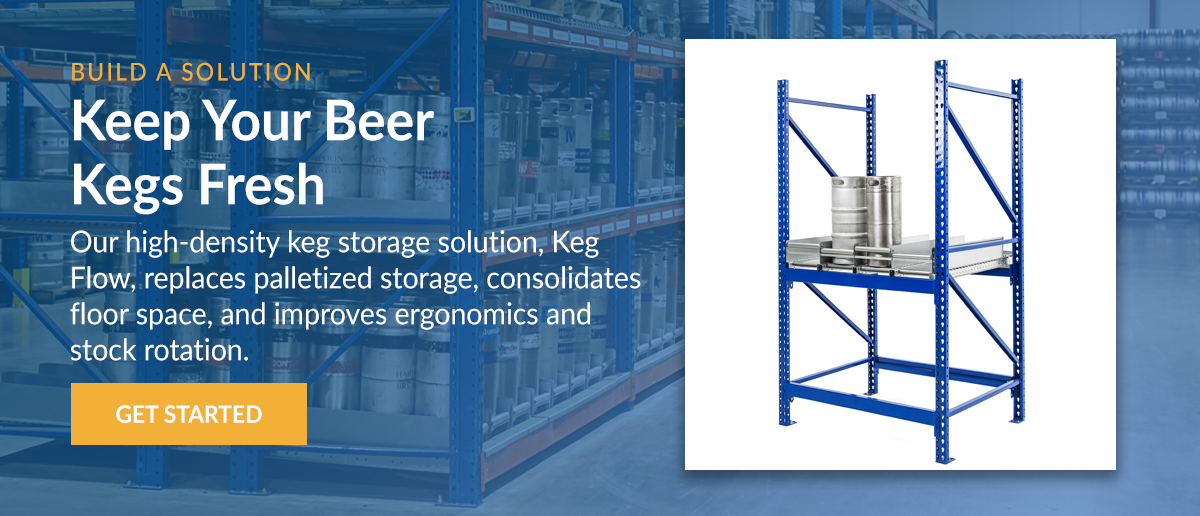
Keg flow applies the same principle to heavier, round containers. Instead of storing kegs in an unorganized grouping on the floor, each brand and size can be assigned to a stable rack lane designed around its weight and shape.
The system still has to reflect the application. High-volume cases, long-tail brands, split-case bottles, and kegs don’t necessarily belong in the same flow configuration. Atlas Distributing, Maletis Beverage, and Southern Wine & Spirits addressed different beverage fulfillment challenges, but each operation improved performance by designing storage around the way its products were picked and replenished.
Atlas Distributing Avoids Expanding Its Cooler
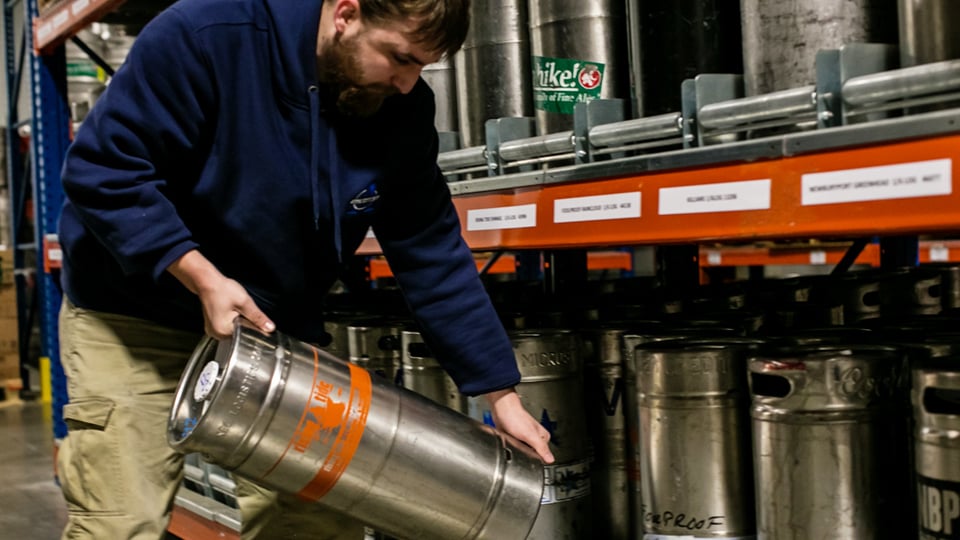
Atlas Distributing needed to accommodate a growing craft beer assortment and a major new product line within an already-constrained cooler. Floor-stored kegs and long-tail SKUs consumed space, complicated picking, and created handling concerns for employees working with heavy products.
Atlas installed more than 800 feet of SpanTrack to move inventory into organized, gravity-fed rack locations. The system improved product visibility, supported rear replenishment, and concentrated more SKUs within a smaller pick area.
In one area, Atlas stored 10 times more cases in the same footprint than it could with the previous system. The redesign also helped the distributor avoid adding approximately 5,000 square feet of refrigerated space.
With inventory easier to locate and retrieve, two employees could manage work that had previously required 20 people inside the 38-degree cooler, allowing the remaining team members to support other growing areas of the operation.
Atlas shows how better flow can reduce the need for conditioned space while improving labor utilization and limiting employee exposure to cold environments.
Learn how Atlas Distributing used SpanTrack Keg Flow to increase beer SKU capacity and avoid a 5,000 sq. ft. cooler expansion.
DOWNLOAD THE CASE STUDY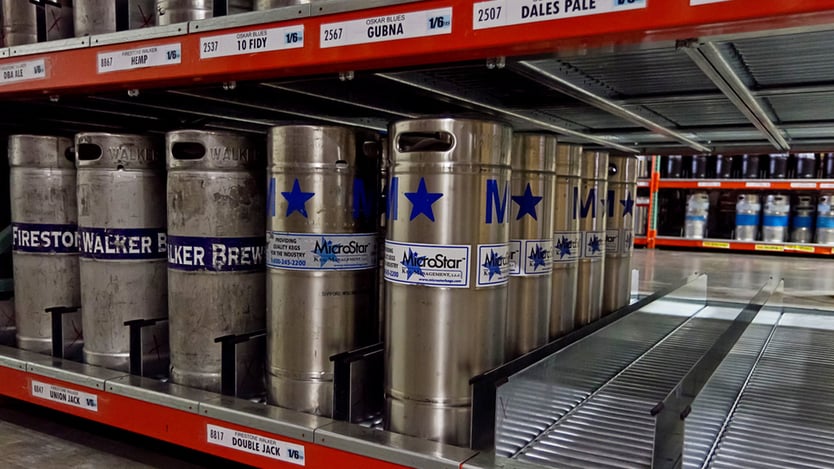
Maletis Beverage Stores Six Times More Kegs in the Same Footprint
Maletis Beverage was managing hundreds of 65-pound mini-kegs across approximately 400 beer varieties. As thousands of SKUs were added, pallets of poorly organized kegs took up floor space and made individual products difficult to locate.
UNEX designed 144 heavy-duty SpanTrack lanes, each capable of holding nine kegs deep for a specific brand. Customized side guards kept the round containers stable, while the configuration allowed employees to load or retrieve kegs from either side.
The system moved hundreds of kegs off the floor and enabled Maletis to store approximately six times more product in the same footprint. Clearly labeled locations also reduced mispicks, helping the distributor avoid the expense and customer disruption of making special trips to correct inaccurate orders.
The project demonstrates that a storage system engineered around an unusual product’s size, weight, and shape can improve density and accuracy without adding unnecessary complexity.
Learn how Maletis Beverage used SpanTrack Keg Flow to go from maxed-out floor storage to an efficient, space-saving keg storage system.
DOWNLOAD THE CASE STUDY
Southern Wine & Spirits Builds for High-Volume Growth
Southern Wine & Spirits faced a different type of capacity problem. Its Southern California operation was managing approximately 12,000 SKUs across five warehouses spread over 35 miles. Because no single building could hold the complete assortment, the company transferred about four million cases between facilities each year.
Southern Wine consolidated the five operations into one 620,000-square-foot high-speed distribution center. The new facility incorporated voice-based logistics, conveyor and sortation systems, and four tri-level pick modules using UNEX SpanTrack.
The resulting operation was designed to handle current demand while leaving room for long-term growth. The facility processed approximately 15 million cases per year, with the potential to reach a peak rate of 10,000 cases per hour.
At a separate Louisville operation, SpanTrack stored fast-moving SKUs for voice-directed split-case fulfillment and supported a facility shipping as many as 17,000 full cases of wine and spirits each night. The combination of voice picking and flow rack nearly doubled productivity while substantially improving accuracy.
Southern Wine’s experience shows that flow rack isn’t limited to solving a space shortage. It can also serve as a core component of a larger fulfillment design that combines storage, picking technology, conveyor, and labor into a high-throughput system.
Learn how Southern Wine & Spirits used UNEX carton flow to consolidate operations and increase throughput to 15 million cases per year.
DOWNLOAD THE CASE STUDY
What These Beverage Operations Have in Common
Atlas, Maletis, and Southern Wine operated at different scales, but their projects shared several principles. They designed storage around the product. Maletis needed heavy-duty lanes and guards for round kegs. Atlas needed a combination of case and keg storage to accommodate a long tail of beverage SKUs. Southern Wine used SpanTrack within high-volume case and split-case fulfillment systems.
They also increased density without making inventory harder to reach. Products were organized into defined, visible locations rather than left on the floor or dispersed across multiple inefficient pick areas.
Each operation connected storage design to labor. Atlas reduced the number of people needed inside its cooler. Maletis reduced the searching and corrective work associated with mispicks. Southern Wine paired flow rack with voice technology to improve throughput and accuracy.
Selecting a beverage flow solution should begin with questions such as:
- Is the product picked by the pallet, full case, split case, bottle, or keg?
- Are carton dimensions consistent or frequently changing?
- How quickly does each SKU move?
- How many keg sizes and beverage formats must be accommodated?
- Will the equipment operate in a cooler?
- Is FIFO rotation required?
- How frequently are new brands or seasonal products introduced?
- How much picker and forklift travel occurs today?
- Could replenishment be separated from picking?
The answers determine whether the operation needs dedicated carton flow lanes, flexible wheel beds, keg flow, or a combination of systems.
SpanTrack Features and Benefits for Beverage Storage
SpanTrack can be installed in new or existing pallet rack and configured around the sizes, weights, velocities, and handling requirements of beverage products.
SpanTrack Lane for Beverage Case Flow
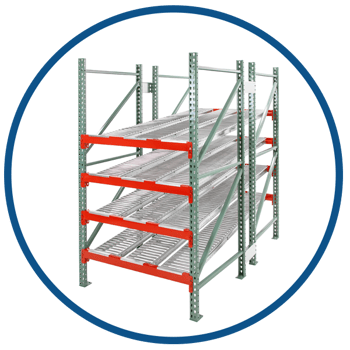 SpanTrack Lane creates dedicated gravity-fed locations for cases with relatively predictable dimensions. Broad support beneath each carton promotes consistent movement and reduces the gaps associated with individual plastic wheel rails.
For beverage case picking, SpanTrack Lane can:
- Keep the next case accessible at the pick face
- Support FIFO inventory rotation
- Separate rear replenishment from front picking
- Improve visibility and SKU organization
- Reduce reaching and manual carton movement
- Operate in cooler and below-zero environments
- Support full-case and split-case picking
SpanTrack Wheel Bed for Changing Case Assortments
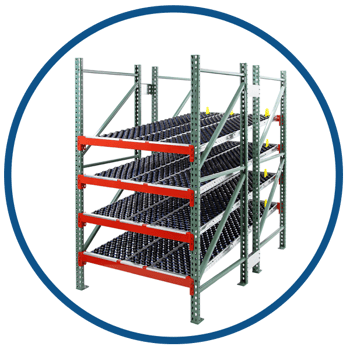 SpanTrack Wheel Bed provides a flexible flow surface for cases with varying widths. Products can be positioned across the rack level without being confined to fixed lanes, allowing the operation to adjust slotting as brands and package formats change.
SpanTrack Wheel Bed can help beverage distributors:
- Use more of the available rack width
- Re-slot products more easily
- Accommodate changing case dimensions
- Concentrate more SKUs along a shorter pick route
- Reduce walking and searching
- Maintain gravity flow in cold-storage environments
Keg Flow for Heavy, Round Beer Kegs
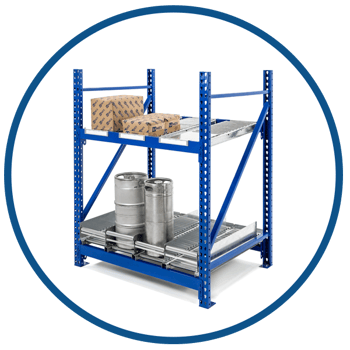 Keg storage requires equipment designed specifically for products that are heavy, round, and difficult to manage on pallets or directly on the floor.
UNEX Keg Flow uses heavy-duty steel rollers and guards to maintain stable, organized keg lanes. Single- and double-deep configurations can accommodate common slim keg sizes, support FIFO rotation, and bring each keg to an accessible retrieval point.
Key features and benefits include:
- Gets kegs off the floor
- Increases storage density by up to 200%
- Reduces bending and difficult floor-level handling
- Accommodates both one-sixth and one-quarter slim kegs
- Keeps kegs upright with heavy-duty guard rails
- Reduces picker travel and mispicks
- Supports more beverage varieties within a smaller footprint
- Uses roller stops designed for ergonomic keg removal
Better Beverage Flow Creates Capacity Beyond Storage
Beverage flow affects more than the number of products that fit inside a rack. It influences how far employees travel, how quickly orders are assembled, how accurately trucks are loaded, and how effectively the operation can respond when new brands arrive.
Atlas avoided a major cooler expansion and redeployed labor to other parts of its business. Maletis stored six times more keg inventory in the same footprint while reducing mispicks. Southern Wine used SpanTrack as part of high-speed fulfillment systems capable of processing millions of cases annually.
Those results came from different configurations, but they reflect the same strategy: design the storage system around the product and the work required to move it.
Contact UNEX today to discuss how the right combination of case flow and keg flow can help your beverage operation increase capacity, improve picking efficiency, and prepare for continued SKU growth.