Grocery operations don’t have the luxury of managing a fixed, predictable product mix. New brands, private-label products, specialty foods, seasonal items, ready-to-eat meals, and changing package formats can add hundreds of SKUs with little warning. At the same time, customers still expect complete, accurate orders to arrive on schedule.
That creates a familiar operational challenge: more inventory has to move through the same warehouse, cooler, or freezer. Adding space may be expensive, time-consuming, or simply impossible. Temperature-controlled areas make expansion even more complicated because every additional square foot must be constructed, refrigerated, maintained, and powered.
Before pursuing a larger facility, grocery operations should evaluate whether their current storage and picking methods are allowing them to use the available space effectively.
Improving case flow starts with examining how products move through the facility, not simply how much inventory the building can hold. By organizing SKUs around accessibility, travel distance, replenishment, and changing assortment needs, grocery operations can increase capacity within their existing footprint while helping employees pick faster and more accurately.
Why Grocery Case Picking Is Uniquely Demanding
Grocery distribution and food picking operations must accommodate changing assortments, a wide range of carton dimensions, strict inventory rotation requirements, and demanding fulfillment schedules. Much of that work also occurs in coolers and freezers, where every square foot incurs additional operational costs.
As these pressures build, inefficient storage affects more than capacity. It increases travel, complicates replenishment, slows picking, and makes it harder to keep inventory organized and accessible.
SKU Proliferation Puts Pressure on Limited Space
Consumer demand for more variety continues to expand grocery assortments. Private-label products, specialty diets, frozen meals, prepared foods, seasonal offerings, and alternative package sizes can add new SKUs faster than a facility can create conventional pick locations.
The challenge becomes especially pronounced when every product is assigned the same type or amount of space. A medium-moving case may need a dedicated, accessible pick face, but it doesn’t necessarily need a large static shelf or pallet position. When that pattern is repeated across hundreds of SKUs, valuable warehouse cube is consumed without creating an efficient pick area.
Greater density can help, but density alone isn’t the goal. Grocery operations need more organized and accessible SKU locations, not simply more inventory packed into the building. The right storage strategy places more products within the active pick area while keeping each location visible and easy to replenish.
Carton Sizes and Slotting Requirements Constantly Change
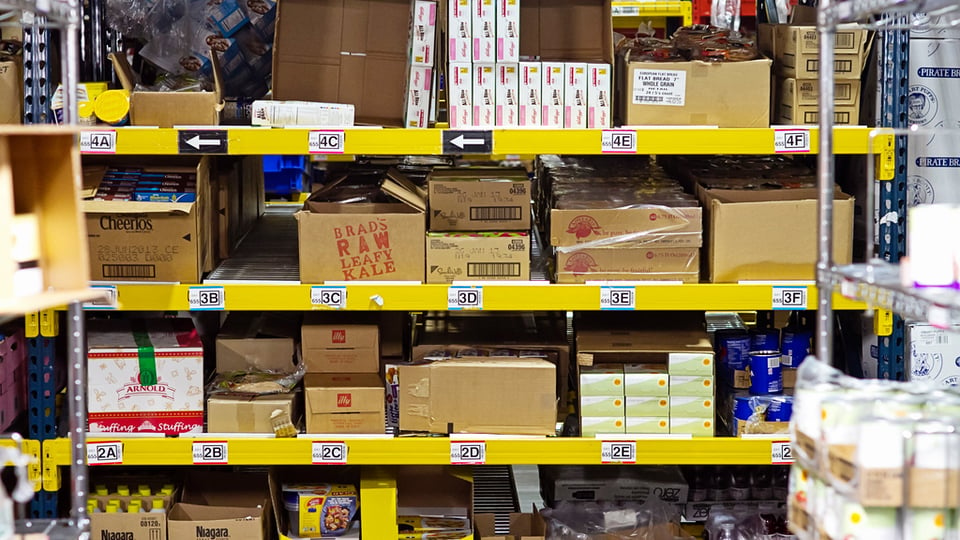
A grocery facility may handle corrugated cases, open cartons, trays, totes, cans, jars, bottles, and irregular containers within the same area. Even products in a single category can have very different widths, weights, and inventory requirements.
That variation makes rigid storage layouts difficult to maintain. A location configured around one carton can waste space when a narrower package replaces it, while fixed layouts can make it difficult to respond quickly when a customer adds or discontinues a product line.
Storage should reflect how predictable the product mix is. Stable SKUs may remain in consistent locations, while frequently changing assortments require a layout that can be adjusted without extensive rework.
The more often an assortment changes, the more important it becomes to re-slot inventory without rebuilding the pick area.
Cooler and Freezer Space Carries a Premium
Unused warehouse space is costly, but inefficient cooler and freezer space can be even more expensive. Temperature-controlled areas require refrigeration, energy, maintenance, and specialized construction, making expansion a significant capital decision.
Poorly organized cold storage can also increase labor costs. When products are spread across long aisles or difficult to locate, employees spend more time walking and searching in uncomfortable environments. Forklifts may travel farther, and replenishment can interfere with active picking.
A denser, more organized pick area helps operations use conditioned space more effectively. Placing more SKUs along a shorter route can reduce travel, limit the time employees spend in cold environments, and delay or avoid expensive facility alterations.
Inventory Rotation and Product Integrity Matter
Grocery products frequently have limited shelf lives, so inventory has to move in the correct order. When older and newer stock are loaded and picked from the same side of a static rack, cases can become mixed, hidden, or left behind.
Maintaining first-in, first-out inventory rotation becomes more difficult when employees can’t easily see or access the oldest product. Poor visibility, deep storage positions, and inconsistent replenishment practices can all increase the risk of expired, overlooked, or damaged inventory.
Consistent carton support matters too. Products that hang up, fall between wheel rails, or become damaged require additional handling and slow the operation. An effective carton flow system should protect cartons while helping employees see what’s available, what requires replenishment, and which inventory should move next.
Reaching, Bending, and Searching Slow Picking Operations
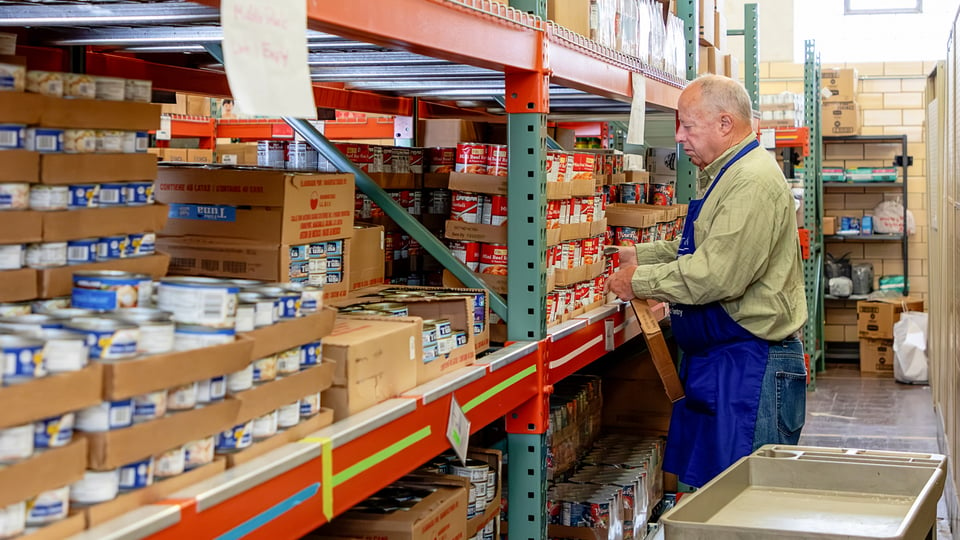
Cases stored deep inside static shelving may require repeated reaching and pulling. Products positioned near the floor can force employees to bend throughout a shift, while cartons that fail to move forward may need to be retrieved manually.
When inventory flows toward an accessible pick face, employees don’t have to reach as deeply into the rack or continually pull products forward. Properly configured systems can also present cases at more comfortable working heights.
Ergonomics and productivity are closely connected. When employees can see, reach, and retrieve products with less unnecessary movement, they can complete picks more efficiently while reducing physical strain.
Build the Pick Area Around Product Movement
Once the challenges affecting capacity, inventory rotation, and picking efficiency are understood, grocery operations can evaluate storage methods that better support how products move through the facility. One option is dynamic carton flow, which uses gravity to bring inventory toward the pick face as products are removed.
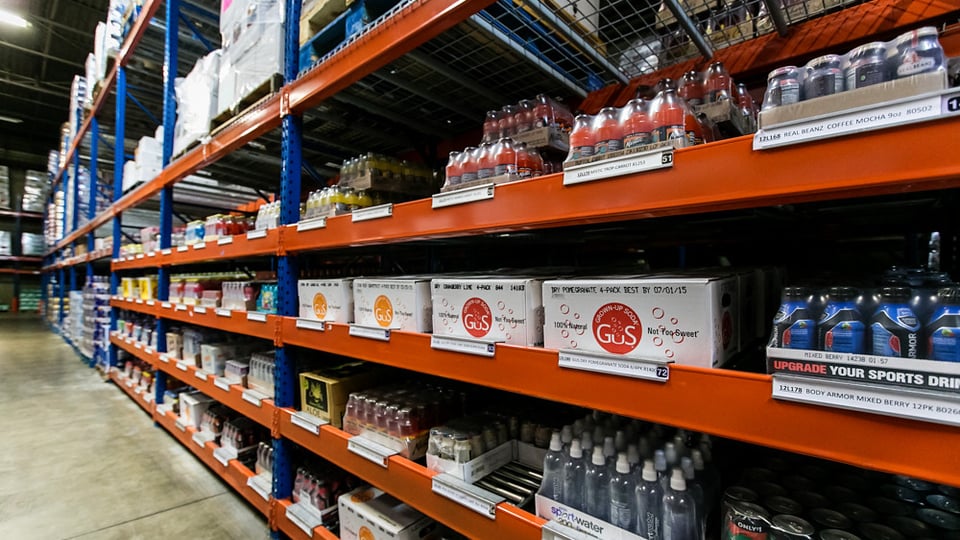
Instead of asking employees to walk around pallets, search deep inside a shelf, or manually pull the next case forward, carton flow keeps the next product visible and accessible. Concentrating more SKUs along a shorter pick path can reduce travel between products and make it easier to identify inventory, monitor stock levels, and avoid picking errors. Rear replenishment can also allow stockers to load products without interfering with employees picking from the front while supporting first-in, first-out inventory rotation.
The right configuration depends on the operation’s assortment, carton dimensions, inventory levels, and picking requirements. The goal is not simply to fit the greatest number of cartons into the smallest space. It is to increase capacity while keeping every SKU visible, accessible, and easy to replenish.
FreshDirect, a wholesale food distributor, and the St. Augustine Wellston Center operate at different scales and serve different customers, but they faced a common problem: inefficient storage was limiting capacity and making picking more difficult. Their results demonstrate how a better-designed carton flow system can make case picking faster, more organized, and more adaptable.
FreshDirect Improves Flow for a High-Volume Grocery Operation
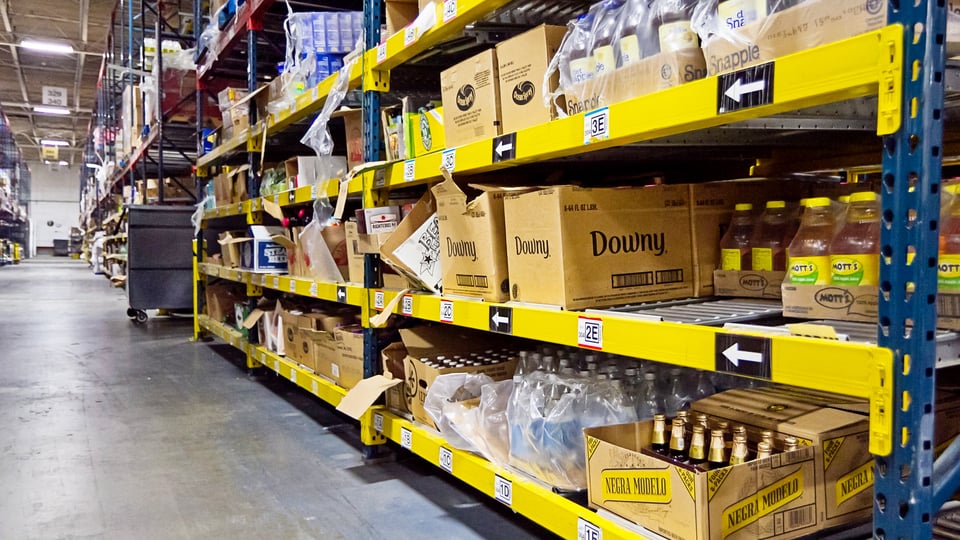
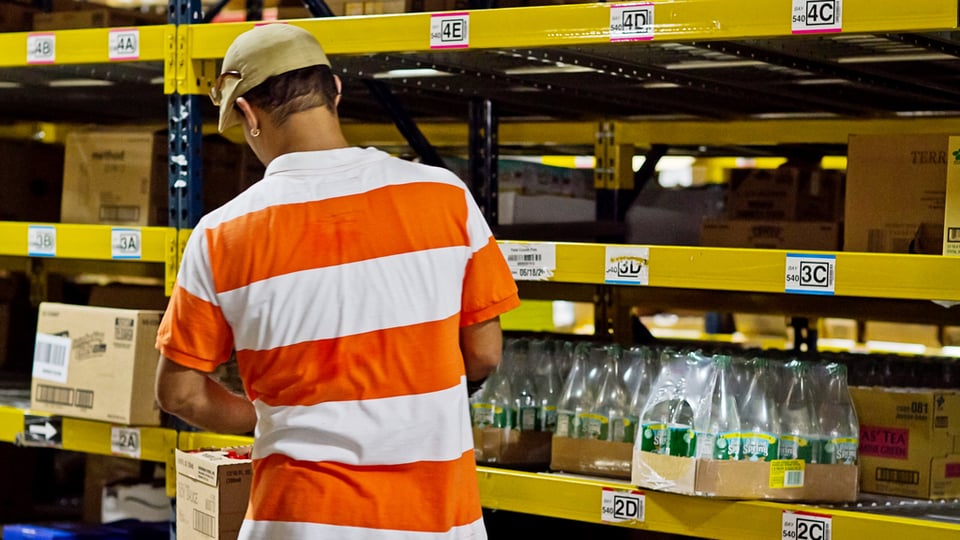
FreshDirect’s aging carton flow system was slowing an online grocery operation responsible for approximately 63,000 orders per week. Plastic wheels were breaking, products were becoming stuck or falling through gaps, and employees sometimes had to use hooks to retrieve cartons from deep inside the rack.
UNEX replaced the carton flow at roughly 4,000 product locations and later equipped a 70,000-square-foot facility with SpanTrack. The full-width flow surface provided better carton support, accommodated changing package dimensions, and kept products visible at the pick face.
FreshDirect added 500 SKUs in one year while minimizing the floor space required for active picking. The operation also improved pick rates, replenishment, accessibility, and warehouse cleanliness.
FreshDirect’s experience reinforces an important point: carton flow must be reliable as well as dense. Frequent hang-ups and manual intervention can quickly erase the productivity benefits a carton flow system is intended to provide.
Learn how Fresh Direct used SpanTrack to maximize floor space for hundreds of SKUs and improve pick rates to keep pace with online grocery demand.
DOWNLOAD THE CASE STUDY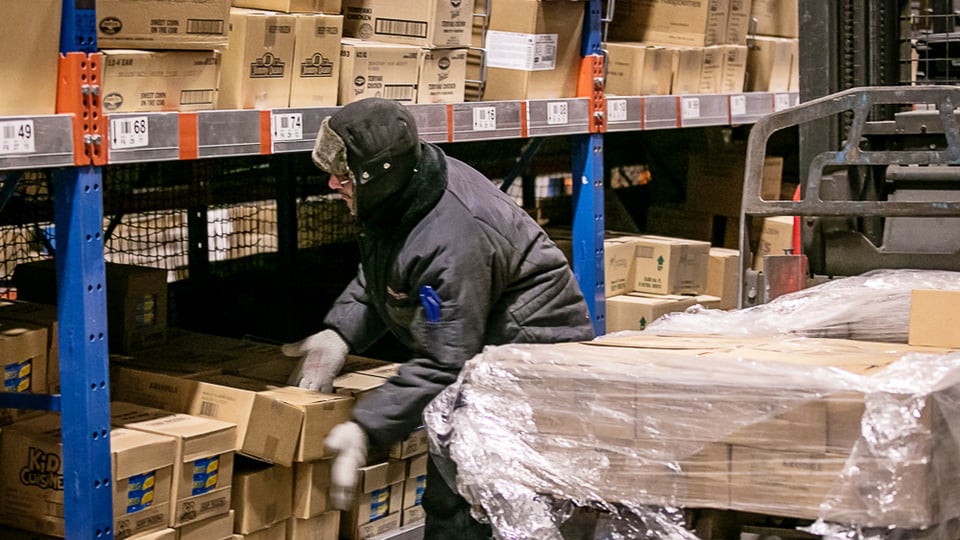
A Wholesale Distributor Creates a Pick Area Six Times Denser
After adding a large grocery chain, a wholesale distributor had to fit hundreds of new SKUs into freezers that were already full. There wasn’t time to expand or make major facility alterations, and the product mix could change by as many as 200 items with little notice.
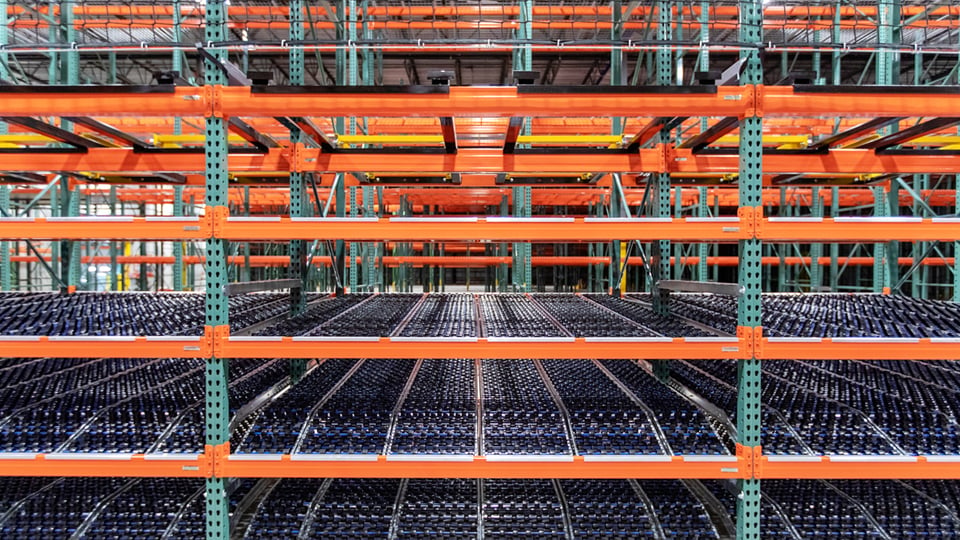
The distributor installed 7,200 feet of SpanTrack Wheel Bed in freezers maintained at -10 degrees. Because cartons weren’t restricted by fixed lane widths, the team could reconfigure products and use the available rack space more efficiently.
The freezer pick area became six times denser, travel between SKUs was virtually eliminated, and picker productivity increased by 17%. Cases also flowed forward to more accessible picking heights, reducing deep bending and unnecessary forklift movement.
This example shows why flexibility is part of capacity. An effective carton flow system must accommodate today’s assortment while allowing an operation to re-slot quickly when customers and consumer preferences change.
Learn how a leading wholesale distributor used SpanTrack Wheel Bed to increase SKU density in existing freezer space and boost order picker productivity by 17%.
DOWNLOAD THE CASE STUDY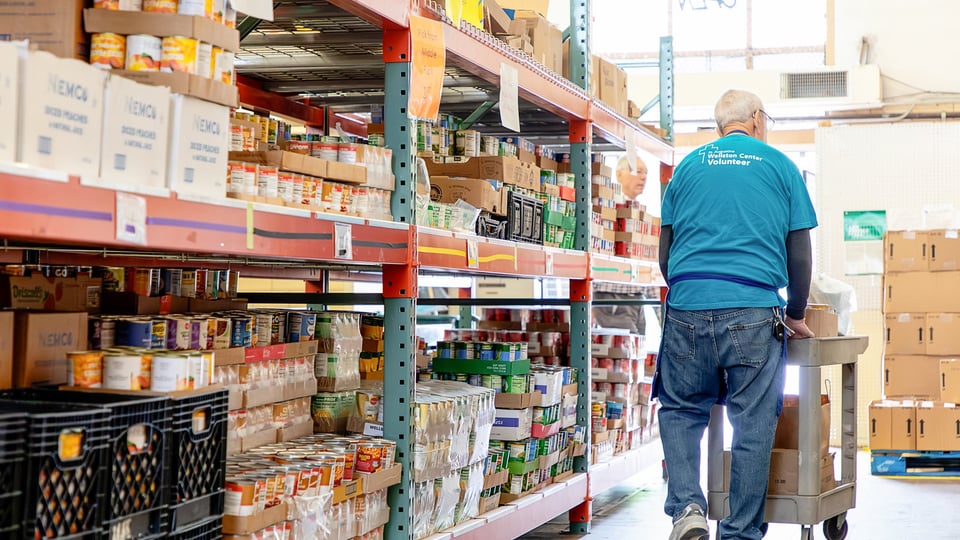
Better Flow Supports Safer Food Picking at the Wellston Center
The St. Augustine Wellston Center applies the same principles in a food pantry serving 500 to 600 families each month. Many volunteers are between 70 and 80 years old, yet the previous mixture of pallets and static shelving required repeated bending, reaching, lifting, and pulling.
SpanTrack Wheel Bed was installed across seven rack bays to support boxes and containers of different sizes. Products now move toward an accessible pick face, replenishment is easier, and FIFO rotation helps the center manage perishable inventory.
Volunteers can pick heavier items more safely, and the center reports completing the same amount of work in less time while creating room to help more families in the future.
Although the Wellston Center isn’t a commercial distribution operation, its experience demonstrates a universal principle: placing food products in visible, accessible flow locations can improve productivity and make picking safer for the people doing the work.
Learn how St. Augustine Wellston Center used SpanTrack Wheel Bed to create a safer, more efficient picking process for volunteers to serve more families.
DOWNLOAD THE CASE STUDY
What These Grocery Operations Have in Common
The three operations handled different order profiles, temperatures, products, and customer expectations, yet their projects shared several important decisions. They moved away from deep-rack or inconsistent storage methods. Products were placed in defined locations where employees could see and reach them without searching behind other inventory.
They increased pick density without sacrificing accessibility. FreshDirect added hundreds of SKUs, while the wholesale distributor condensed a growing frozen assortment into a much shorter path. The Wellston Center made products easier for volunteers to reach while increasing the potential capacity of its pantry.
They also separated replenishment from picking wherever the application allowed it. Loading products from the rear and picking from the front reduced interference between activities and supported FIFO inventory rotation.
Most importantly, each operation designed storage around its product mix. FreshDirect needed dependable carton support and flexibility for package variation. The wholesale distributor needed wheel beds that could operate at subzero temperatures and adapt when products were added or discontinued. Wellston needed versatile, easy-to-use storage for mixed cartons and containers.
Carton flow selection should therefore start with practical questions:
- How frequently does the product mix change?
- Are carton dimensions predictable or highly variable?
- How many SKUs need to remain accessible in the active pick area?
- Are products picked by the case or as individual items?
- Does the operation require FIFO rotation?
- Will the system operate in a cooler or freezer?
- How much walking, reaching, or manual product movement occurs today?
- Where should replenishment take place in relation to picking?
The answers help determine whether the application is better suited to a dedicated roller lane, a flexible wheel bed, or a combination of both.
SpanTrack Features and Benefits for Grocery Applications
SpanTrack is an engineered-to-order carton flow system that can be added to new or existing pallet rack. SpanTrack Lane and SpanTrack Wheel Bed configurations allow the system to be matched to carton dimensions, product velocity, storage temperatures, and changing slotting requirements.
SpanTrack Lane for Dedicated Case Flow
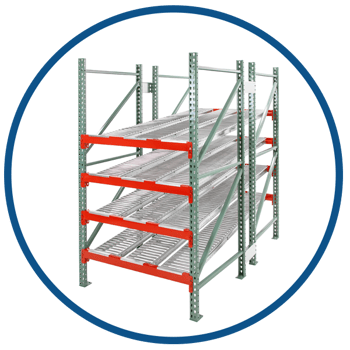 SpanTrack Lane creates defined gravity-fed locations for products with relatively predictable dimensions. Its broad carton contact helps products flow consistently while reducing the gaps found in individual plastic wheel-rail systems.
It can support full-case and each-pick applications, FIFO inventory rotation, and cooler or freezer storage.
Dedicated lanes are often a strong fit when:
- Case dimensions remain consistent
- A product has a stable pick location
- Clear separation between SKUs is important
- The operation requires dependable case flow
- Inventory rotation must be maintained
SpanTrack Wheel Bed for Flexible Slotting
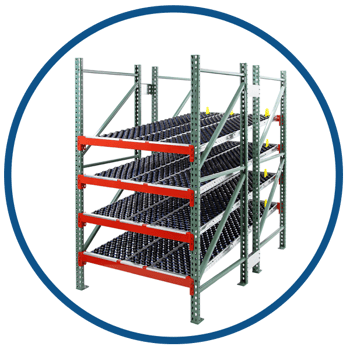 SpanTrack Wheel Bed creates a broad flow surface that allows cases of different widths to be positioned side by side. Because cartons aren’t restricted to fixed lanes, locations can be adjusted as assortments, dimensions, and inventory levels change.
SpanTrack Wheel Bed can help grocery operations:
- Use more of the available rack width
- Re-slot SKUs without rebuilding fixed lanes
- Keep cartons moving toward the pick face
- Support rear replenishment and FIFO rotation
- Reduce walking, reaching, and manual product handling
- Maintain reliable flow in coolers and freezers
Performance in Cold Environments
Cold storage equipment has to maintain reliable movement and load capacity despite continuous exposure to low temperatures. SpanTrack Lane and SpanTrack Wheel Bed are engineered for below-zero cooler and freezer applications, supporting dense storage and gravity flow where space is especially costly.
In addition to fitting more SKUs into the available cube, a more concentrated cold-storage pick area can reduce the time employees spend searching for inventory inside a cooler or freezer.
Better Grocery Flow Creates Capacity Beyond the Rack
Case flow affects more than storage. It influences how far employees walk, how often products are handled, how quickly inventory is replenished, and how accurately orders leave the building.
Grocery operations don’t have to accept longer pick paths, crowded freezers, or unreliable case movement as unavoidable consequences of assortment growth. By matching the carton flow system to the products and designing the pick area around how work is performed, facilities can increase capacity, support FIFO rotation, and move more orders without allowing the warehouse footprint to become the limiting factor.
Contact UNEX today to discuss how the right carton flow solution can improve grocery storage capacity, product accessibility, and picking efficiency.