---
title: How Smart Retail Storage Systems Keep Operations Moving
description: Discover how smart retail storage solutions enhance efficiency by maximizing space, boosting throughput, and ensuring adaptability in retail operations.
image: https://blog.unex.com/hubfs/retail-backroom-storage-solutions.jpg
---
[Skip to content](https://blog.unex.com/how-smart-retail-storage-systems-keep-operations-moving#main-content)
[](https://www.unex.com/)
- [Applications](https://www.unex.com/applications)
- Storage
- [Warehouse Storage](https://www.unex.com/applications/storage/warehouse-storage)
- [Storage for 3PLs](https://www.unex.com/applications/storage/storage-3pls)
- [Retail Storage Solutions](https://www.unex.com/applications/storage/retail-storage)
- [Lineside Storage](https://www.unex.com/applications/packing-assembly/lineside-storage)
- [Beverage Storage](https://www.unex.com/applications/storage/beverage-storage)
- [Keg Storage](https://www.unex.com/applications/storage/keg-storage)
- Picking
- [Order Picking](https://www.unex.com/applications/picking/order-picking)
- [Case Picking](https://www.unex.com/applications/picking/case-picking)
- [Each Picking](https://www.unex.com/applications/picking/each-picking)
- [Picking Carts](https://www.unex.com/applications/picking/picking-carts)
- [Pick Module](https://www.unex.com/applications/picking/pick-module)
- Packing & Assembly
- [Industrial Carts](https://www.unex.com/applications/packing-assembly/industrial-carts)
- [Packing Stations](https://www.unex.com/applications/packing-assembly/packing-station)
- [Industrial Workstations](https://www.unex.com/applications/packing-assembly/industrial-workstations)
- [Manufacturing Supermarkets](https://www.unex.com/applications/packing-assembly/manufacturing-supermarkets)
- [Solutions](https://www.unex.com/solutions)
- [Carton Flow](https://www.unex.com/solutions/carton-flow)
- [SpanTrack Lane](https://www.unex.com/solutions/carton-flow/spantrack-lane)
- [SpanTrack Wheel Bed](https://www.unex.com/solutions/carton-flow/spantrack-wheel-bed)
- [SpanTrack Keg Flow](https://www.unex.com/solutions/carton-flow/spantrack-keg-flow)
- [Shelf Track](https://www.unex.com/solutions/carton-flow/shelf-track)
- [Flow Racks](https://www.unex.com/solutions/flow-racks)
- [FlowCell](https://www.unex.com/solutions/flow-racks/flowcell)
- [Roller Rack](https://www.unex.com/solutions/flow-racks/roller-rack)
- [High-Density Storage](https://www.unex.com/solutions/high-density-storage)
- [SpeedCell](https://www.unex.com/solutions/high-density-storage/speedcell)
- [SpeedCartt](https://www.unex.com/solutions/high-density-storage/speedcartt)
- [Pick Shelves](https://www.unex.com/solutions/high-density-storage/pick-shelves)
- [Conveyors](https://www.unex.com/solutions/conveyors)
- [Gravity Conveyor](https://www.unex.com/solutions/conveyors/gravity-conveyors)
- [Pallet Track](https://www.unex.com/solutions/conveyors/pallet-track)
- [About](https://www.unex.com/about)
- [Resources](https://www.unex.com/resources)
- [Blog](https://blog.unex.com)
- [Press Releases](https://blog.unex.com/press-releases)
- [Guides](https://www.unex.com/resources/guides)
- [Product Brochures](https://www.unex.com/resources/product-brochures)
- [Installation Guides](https://www.unex.com/resources/installation-guides)
- [Case Studies](https://www.unex.com/resources/case-studies)
- [FAQs](https://go.unex.com/faq)
[Contact Us](https://www.unex.com/contact) [Build a Solution](https://www.unex.com/configurator)
- [Applications](https://www.unex.com/applications)
- Storage
- [Warehouse Storage](https://www.unex.com/applications/storage/warehouse-storage)
- [Storage for 3PLs](https://www.unex.com/applications/storage/storage-3pls)
- [Retail Storage Solutions](https://www.unex.com/applications/storage/retail-storage)
- [Lineside Storage](https://www.unex.com/applications/packing-assembly/lineside-storage)
- [Beverage Storage](https://www.unex.com/applications/storage/beverage-storage)
- [Keg Storage](https://www.unex.com/applications/storage/keg-storage)
- Picking
- [Order Picking](https://www.unex.com/applications/picking/order-picking)
- [Case Picking](https://www.unex.com/applications/picking/case-picking)
- [Each Picking](https://www.unex.com/applications/picking/each-picking)
- [Picking Carts](https://www.unex.com/applications/picking/picking-carts)
- [Pick Module](https://www.unex.com/applications/picking/pick-module)
- Packing & Assembly
- [Industrial Carts](https://www.unex.com/applications/packing-assembly/industrial-carts)
- [Packing Stations](https://www.unex.com/applications/packing-assembly/packing-station)
- [Industrial Workstations](https://www.unex.com/applications/packing-assembly/industrial-workstations)
- [Manufacturing Supermarkets](https://www.unex.com/applications/packing-assembly/manufacturing-supermarkets)
- [Solutions](https://www.unex.com/solutions)
- [Carton Flow](https://www.unex.com/solutions/carton-flow)
- [SpanTrack Lane](https://www.unex.com/solutions/carton-flow/spantrack-lane)
- [SpanTrack Wheel Bed](https://www.unex.com/solutions/carton-flow/spantrack-wheel-bed)
- [SpanTrack Keg Flow](https://www.unex.com/solutions/carton-flow/spantrack-keg-flow)
- [Shelf Track](https://www.unex.com/solutions/carton-flow/shelf-track)
- [Flow Racks](https://www.unex.com/solutions/flow-racks)
- [FlowCell](https://www.unex.com/solutions/flow-racks/flowcell)
- [Roller Rack](https://www.unex.com/solutions/flow-racks/roller-rack)
- [High-Density Storage](https://www.unex.com/solutions/high-density-storage)
- [SpeedCell](https://www.unex.com/solutions/high-density-storage/speedcell)
- [SpeedCartt](https://www.unex.com/solutions/high-density-storage/speedcartt)
- [Pick Shelves](https://www.unex.com/solutions/high-density-storage/pick-shelves)
- [Conveyors](https://www.unex.com/solutions/conveyors)
- [Gravity Conveyor](https://www.unex.com/solutions/conveyors/gravity-conveyors)
- [Pallet Track](https://www.unex.com/solutions/conveyors/pallet-track)
- [About](https://www.unex.com/about)
- [Resources](https://www.unex.com/resources)
- [Blog](https://blog.unex.com)
- [Press Releases](https://blog.unex.com/press-releases)
- [Guides](https://www.unex.com/resources/guides)
- [Product Brochures](https://www.unex.com/resources/product-brochures)
- [Installation Guides](https://www.unex.com/resources/installation-guides)
- [Case Studies](https://www.unex.com/resources/case-studies)
- [FAQs](https://go.unex.com/faq)
[Contact Us](https://www.unex.com/contact) [Build a Solution](https://www.unex.com/configurator)
# How Smart Retail Storage Systems Keep Operations Moving
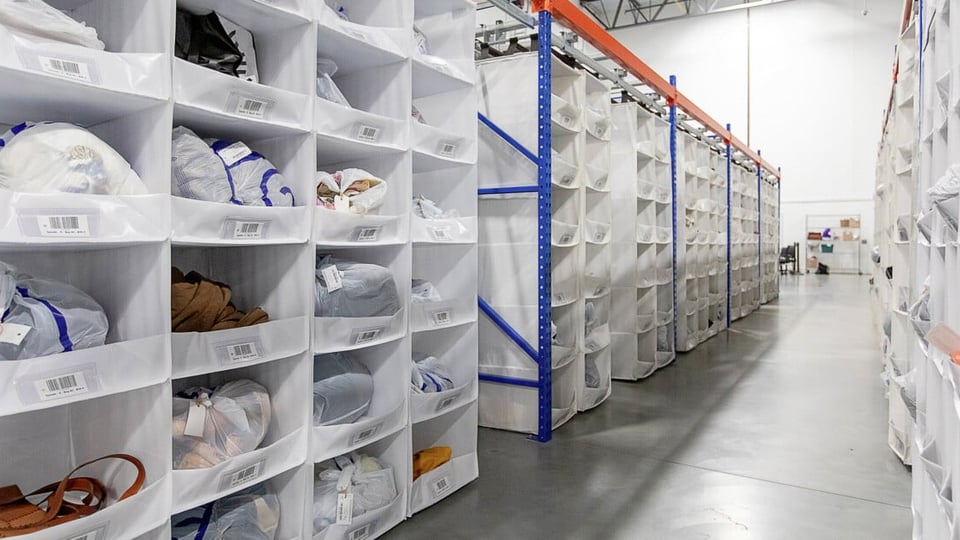
Space is often the core issue in any discussion about [retail storage](https://www.unex.com/industries/retail). Yet, in a world where inventory flows faster and fulfillment spans more channels than ever, storage is just as much a movement problem as a space issue. From [back rooms](https://blog.unex.com/how-retailers-can-optimize-backroom-storage-with-dynamic-solutions) to [micro-fulfillment zones](https://blog.unex.com/how-to-setup-micro-fulfillment) to [distribution centers](https://www.unex.com/industries/order-fulfillment-warehousing), healthy margins depend on products in constant motion, not sitting idle on a shelf.
Effective [retail storage solutions](https://www.unex.com/applications/storage/retail-storage) are built for this reality. They emphasize speed, accessibility, and adaptability, moving inventory efficiently from receiving to shipping, even as SKU counts grow and demand patterns change. The goal isn’t merely to make the most of your space, but to build and sustain momentum.
As [eCommerce](https://blog.unex.com/optimizing-ecommerce-fulfillment-with-dynamic-storage-solutions), [in-store fulfillment](https://blog.unex.com/how-to-setup-micro-fulfillment), and modern delivery expectations converge, retailers need storage solutions that keep operations in motion. Because in modern retail, how inventory moves is just as important as where it’s stored.
## Traditional Retail Storage Challenges
Many [retail storage systems](https://www.unex.com/applications/storage/retail-storage) were designed for a simpler operating model where inventory arrived at a predictable pace, moved in a single direction, and sat in place until needed. And while traditional, static storage systems are still important for modern warehouses and [retail backrooms](https://blog.unex.com/how-retailers-can-optimize-backroom-storage-with-dynamic-solutions), that model doesn’t completely reflect how modern retail works.
Today’s retailers are managing high SKU counts, varying demand, and orders that come in from multiple channels at once. Backrooms are expected to support [buy-online-pick-up-in-store](https://blog.unex.com/ecommerce-fulfillment-strategies-for-bodfs-buy-online-deliver-from-store) (BOPIS), ship-from-store, and rapid replenishment within the same footprint. If the storage system isn’t designed for this pace, inefficiencies will quickly compound.
Teams lose precious time searching for SKUs, rehandling products, or working around storage layouts that don’t support [first-in, first-out](https://blog.unex.com/how-to-implement-an-effective-fifo-strategy-in-your-operation) (FIFO) methods or seasonal turnover. Space may exist, but it isn’t usable. Inventory is technically on hand, but it’s not easily accessible. Each product search or inefficient pick stacks on the one before it, dialing up staff frustration and putting more pressure on margins.
The issue isn’t space, nor is it a lack of effort or execution. It’s that static, inflexible storage systems weren’t made for the way retail operations move today.

## Dynamic Storage Solutions Are Designed to Increase Throughput
[Dynamic storage solutions for retailers](https://blog.unex.com/dynamic-storage-solutions-buying-guide-for-retail-and-omnichannel-fulfillment) are designed to support movement, not static placement. Instead of treating storage as a passive container for inventory, they regard it as one step in a continuous flow from receiving to picking, packing, and shipping.
Practically speaking, this means emphasizing accessibility and predictability over basic shelf organization. In modern, [dynamic storage systems](https://www.unex.com/dynamic-storage-solutions), high-velocity items are positioned for quick access. Inventory moves in clear, defined paths that support FIFO rotation. [Storage layouts](https://blog.unex.com/warehouse-optimization-tips-to-modernize-your-space) reduce unnecessary touches, travel, and spot decisions at the pick face, accelerating every aspect of stocking, picking, and fulfillment.
Dynamic storage solutions for retailers are also built to adapt. As SKU mixes and demand shifts, or fulfillment models advance, the storage system can be reconfigured easily. That’s a major advantage when seasonality, promotions, and [omnichannel demand](https://blog.unex.com/omni-channel-fulfillment) create constant variability.
To put it another way, orienting the storage structure itself around movement amounts to a mentality shift. Rather than looking for ways to add more space, you can plan how to do more within the [space you already have](https://blog.unex.com/analyzing-your-existing-storage-space).
#### Learn how to save space in your facility. Download The Guide To Optimizing Warehouse Space Utilization!
## How Smart Storage Keeps Retail Operations Moving
When operations [implement dynamic storage](https://blog.unex.com/optimizing-ecommerce-fulfillment-with-dynamic-storage-solutions), they can stay responsive, no matter how quickly conditions change. Let’s look at four ways this plays out in practice.

### 1. Transforming Backrooms From Storage Closets Into Fulfillment Centers
As fulfillment becomes more distributed, [retail backrooms](https://blog.unex.com/how-retailers-can-optimize-backroom-storage-with-dynamic-solutions) have taken on a more active role in order execution. They’re no longer only serving as a storage closet for the sales floor; they’re helping with order fulfillment, rapid replenishment, and same-day delivery expectations.
That means backrooms need storage designed for flow rather than static placement. When that happens, high-turn SKUs stay accessible, FIFO rotation occurs naturally, and replenishment stops interrupting picking. Solutions like [high-density storage](https://www.unex.com/solutions/high-density-storage) or [carton flow shelving](https://www.unex.com/solutions/carton-flow) support this kind of steady movement and increased throughput. When products move seamlessly throughout the order fulfillment process, teams can make efficient use of tight backrooms without introducing a maze of workarounds.
### 2. Creating Micro-Fulfillment and High-Velocity Pick Areas
Not every SKU moves at the same pace. In most retail operations, a relatively small portion of inventory accounts for a large share of picks. [Micro-fulfillment](https://blog.unex.com/optimizing-micro-fulfillment-centers-with-dynamic-storage-solutions) and high-velocity pick areas are designed for this discrepancy, concentrating the fastest-moving items where teams can reach them quickly and repeatedly.
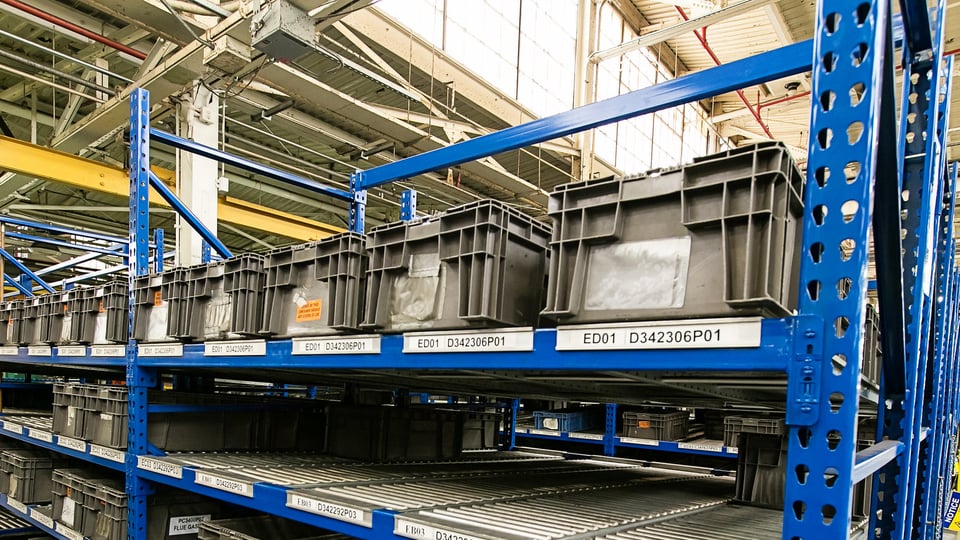
In this scenario, smart storage layouts are critical. Storage must be set up to keep pick faces consistent and scale smoothly as volume rises. [Carton flow lanes](https://www.unex.com/solutions/carton-flow) and [modular rack systems](https://www.unex.com/solutions/flow-racks) help maintain dense, organized pick areas that limit the need for travel and rehandling. When planned well, these zones allow retailers to handle peak demand without making every aisle into a bottleneck.
### 3. Adapting to SKU Proliferation and Seasonal Swings
Retail storage rarely stays static for long. Product mixes change, and seasonal inventory arrives in waves that don’t slide neatly into existing layouts. Retailers must find ways to make more room while keeping their daily operations flowing.
Frequently replacing shelves to match [changing SKU mixes](https://blog.unex.com/optimizing-ecommerce-fulfillment-with-dynamic-storage-solutions) would be inefficient and expensive. A far better approach is to use retail storage solutions that are built with reconfigurability in mind. Systems with modular components, adjustable lanes, and flexible pick faces let teams adapt layouts to new product lines while preventing downtime or temporary workarounds. This is especially important during [seasonal transitions](https://blog.unex.com/mastering-peak-season-year-round-strategies-streamlined-operations), which are often marked by high inventory turnover.
### 4. Supporting Reverse Logistics
In retail, [inventory movement](https://blog.unex.com/optimizing-retail-inventory-management-with-space-saving-solutions) doesn’t stop at fulfillment. Returns, restocks, transfers, and seasonal pullbacks all require product to move back through the operation. When [reverse logistics](https://blog.unex.com/managing-reverse-logistics-in-a-stressed-supply-chain) aren’t considered in storage design, it quickly becomes a source of congestion and rehandling.
Storage that supports [reverse logistics](https://blog.unex.com/managing-reverse-logistics-in-a-stressed-supply-chain) treats such movements as a rule of daily operations rather than an exception. Clear staging areas, accessible return lanes, and storage designed for orderly rotation help teams process inbound product while keeping outbound fulfillment moving. With a steady flow in both directions, retailers can recover value more quickly, reduce backroom clutter, and keep inventory moving to its next destination.
## Choosing Retail Storage Solutions That Keep Processes Flowing
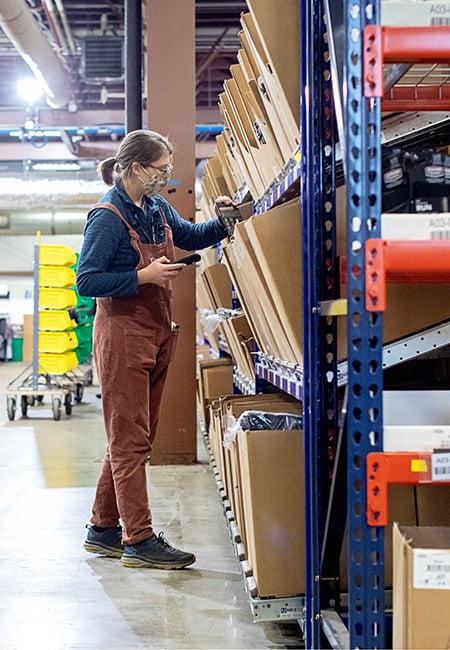Selecting a [retail storage solution](https://www.unex.com/applications/storage/retail-storage) is, first and foremost, a question of how inventory actually moves through your operation. The most effective storage decisions start with a clear view of demand patterns, SKU velocity, and the distribution of responsibilities across locations. Without that perspective, you might choose a strong system but end up with more friction than flow.
From there, a few important questions can help you narrow down your options as you explore storage solutions for your retail operation:
- Does this system support FIFO and high-mix SKUs?
- Can it adapt to seasonal volume swings?
- Does it reduce touches, travel, or rehandling?
- Can it scale without expanding square footage?
- Will it still work as fulfillment models evolve?
Systems designed around movement, versatility, and predictable access tend to stay effective and nimble even as order channels and demand patterns change. In that sense, [choosing the right storage approach](https://blog.unex.com/dynamic-storage-solutions-buying-guide-for-retail-and-omnichannel-fulfillment) is really about finding the best way to enable long-term flexibility.
## UNEX Retail Storage Solutions
From [retail backrooms](https://blog.unex.com/how-retailers-can-optimize-backroom-storage-with-dynamic-solutions) to [eCommerce fulfillment centers](https://blog.unex.com/optimizing-ecommerce-fulfillment-with-dynamic-storage-solutions), UNEX retail storage solutions help operations make the most of limited space, streamline order fulfillment, and adapt quickly to changing demand.
Here’s how our [retail storage solutions](https://www.unex.com/applications/storage/retail-storage) help operations stay efficient and responsive:
### 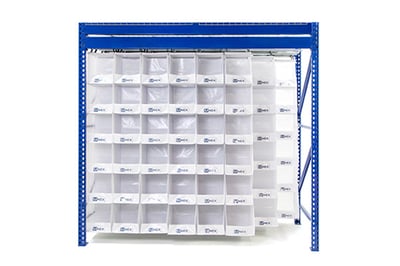SpeedCell High-Density Storage
- Maximize SKU density by compressing 200 feet of rack or shelving into just 40 feet of organized space, perfect for high-mix, low-velocity SKUs.
- Accelerate picking and restocking by keeping inventory visible, labeled, and within easy reach.
- **Ideal for:** Retail backrooms, eCommerce fulfillment zones, and seasonal inventory storage.
### 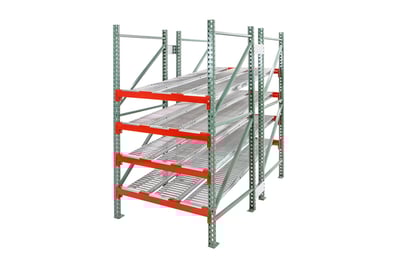SpanTrack Carton Flow Racks
- Ensure continuous product flow with gravity-fed lanes that bring inventory forward automatically, reducing time spent searching or restocking.
- Support FIFO rotation and streamline replenishment and increase throughput and picking speed by optimizing access to high-velocity SKUs.
- **Ideal for:** Pick modules, restocking zones, and micro-fulfillment areas.
### 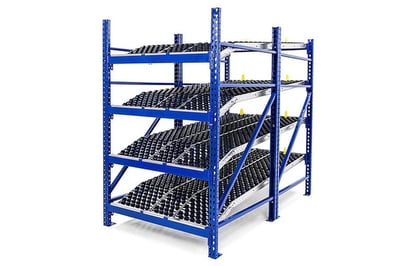Roller Rack Modular Flow Racks
- Pre-engineered and ready to roll, these standalone carton flow structures speed up picking and eliminate wasted travel.
- Adapt easily to changing layouts or seasonal peaks with modular, configurable designs.
- **Ideal for:** Backrooms, packaging areas, and flexible fulfillment setups.
These solutions give retail operations the flexibility to store more, move faster, and respond with confidence as demand shifts. By improving inventory visibility, reducing travel time, and supporting efficient picking and replenishment, [UNEX dynamic storage systems](https://www.unex.com/dynamic-storage-solutions) help teams keep product flowing without adding unnecessary complexity. The result is a smarter, more resilient storage strategy that supports daily operations today and scales easily for what comes next.
## Storage That Moves at the Speed of Modern Retail
For today’s retailers, storage must be more than a space-saving solution or a static holding space. Smart storage supports smooth inventory movement among backrooms, pick areas, and multiple fulfillment channels, all under constantly changing conditions.
That perspective has guided our approach to retail storage for decades. Solutions like [SpeedCell](https://www.unex.com/solutions/high-density-storage/speedcell), [SpanTrack](https://www.unex.com/solutions/carton-flow/spantrack-lane), and [Roller Rack](https://www.unex.com/solutions/flow-racks/roller-rack) are built to maximize space, increase throughput, and provide versatility and predictable access. In other words, they’re made to keep operations moving.
As fulfillment models evolve, storage design is one of the most important decisions facing any retailer. If you’re looking to build systems that bolster your operation for long-term performance, choosing an experienced storage solutions partner can go a long way. [Contact us today](https://www.unex.com/contact) to learn how UNEX solutions can help you increase space utilization and efficiency in your retail operations.
[](https://cta-redirect.hubspot.com/cta/redirect/4747213/8c7949f2-eab9-4b99-990b-21877fe9c4ef)
[Retail](https://blog.unex.com/tag/retail)
## Related Blogs
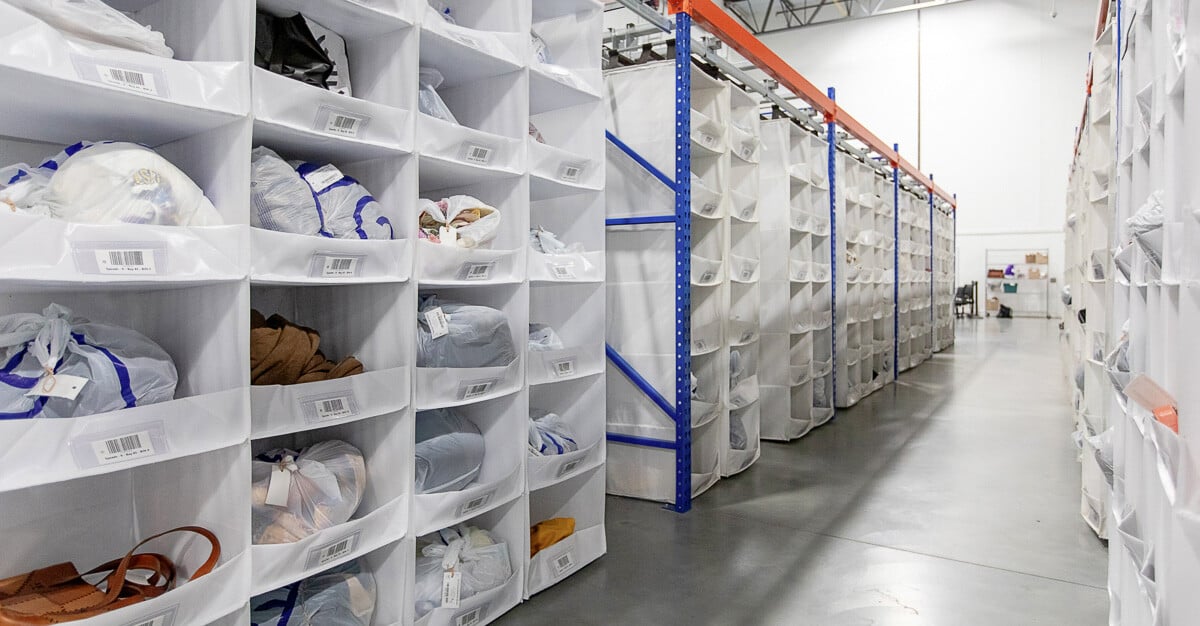
### How Retailers Can Optimize Backroom Storage with Dynamic Solutions
[Read More](https://blog.unex.com/how-retailers-can-optimize-backroom-storage-with-dynamic-solutions)
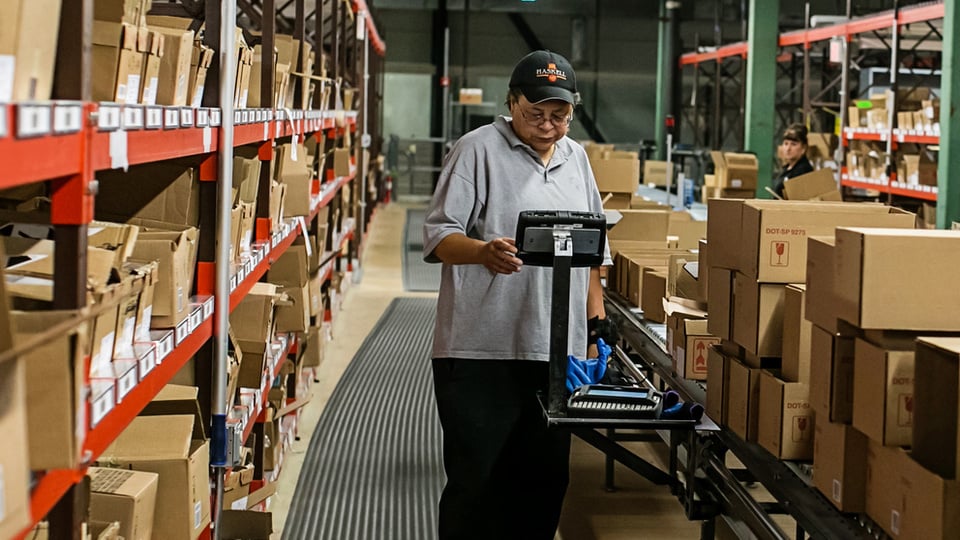
### Optimizing Retail Inventory Management with Space-Saving Solutions
[Read More](https://blog.unex.com/optimizing-retail-inventory-management-with-space-saving-solutions)
[](https://blog.unex.com/)
- - [Applications](https://www.unex.com/applications)
- [Storage](https://blog.unex.com/applications#storage)
- [Order Picking](https://blog.unex.com/applications#picking)
- [Packing & Assembly](https://blog.unex.com/applications#packing)
- [Solutions](https://www.unex.com/solutions)
- [Carton Flow](https://www.unex.com/solutions/carton-flow)
- [Flow Racks](https://www.unex.com/solutions/flow-racks)
- [High-Density Storage](https://www.unex.com/solutions/high-density-storage)
- [Conveyors](https://www.unex.com/solutions/conveyors)
- - Industries
- [Manufacturing](https://www.unex.com/industries/manufacturing)
- [Order Fulfillment & Warehousing](https://www.unex.com/industries/order-fulfillment-warehousing)
- [Retail](https://www.unex.com/industries/retail)
- [Logistics](https://www.unex.com/industries/logistics)
- [About](https://www.unex.com/about)
- [Find a Distributor](https://go.unex.com/find-material-handling-distributor)
- [Distributor Portal](https://go.unex.com/distributors)
- [Careers](https://go.unex.com/careers)
- - [Build a Solution](https://www.unex.com/configurator)
- [Contact Us](https://www.unex.com/contact)
- [Resources](https://www.unex.com/resources)
[800-334-8639](tel:8003348639)
691 New Hampshire Ave Lakewood, NJ 08701
[Privacy Policy](https://www.unex.com/legal/privacy-policy)|[Terms of Service](https://www.unex.com/legal/terms-service)
[Sitemap](https://www.unex.com/sitemap)|[Warranty](https://www.unex.com/legal/warranty)
© UNEX Manufacturing. 2026 All Rights Reserved.
```json
{
"@context" : "https://schema.org",
"@type" : "BlogPosting",
"author" : {
"@type" : "Person",
"name" : "UNEX",
"url" : "https://blog.unex.com/author/unex"
},
"dateModified" : "2025-12-29T16:48:08.317Z",
"datePublished" : "2025-12-29T16:48:08.000Z",
"headline" : "How Smart Retail Storage Systems Keep Operations Moving",
"image" : [ "https://blog.unex.com/hubfs/retail-backroom-storage-solutions.jpg" ],
"mainEntityOfPage" : {
"@id" : "https://blog.unex.com/how-smart-retail-storage-systems-keep-operations-moving",
"@type" : "WebPage"
},
"publisher" : {
"@type" : "Organization",
"logo" : {
"@type" : "ImageObject",
"url" : "https://blog.unex.com/hubfs/unex_logo_061013_RGB_Medium-1.jpg"
},
"name" : "UNEX Manufacturing Inc"
}
}
```