Warehouses rarely run out of storage all at once. More often, they run out of the right kind of storage in the places that matter most.
That’s why the smartest storage decisions don’t start with equipment but with throughput. When operations understand which SKUs move fastest, which move steadily, and which move only occasionally, they can match inventory to the right storage medium and get more out of the same footprint. This is known as a throughput-driven storage strategy, in which dynamic storage improves access, density, and pick performance without requiring costly building expansions.
This matters because fulfillment is a game of seconds. Shaving just 10 seconds off the time it takes to locate, pick, and deliver medium-throughput SKUs, for example, can increase capacity by 100 picks per day, reduce variable costs by 20%, and improve morale through better performance and lower turnover. Labor accounts for roughly 60–80% of fulfillment operating expenses, so the biggest opportunities for savings lie in reducing search and travel time.
Maximizing space utilization goes hand in hand with boosting picking performance. Aligning storage with SKU velocity means warehouses can not only hold more inventory but also process orders more quickly and accurately, increasing revenue capacity without expanding their footprint.
Why Throughput Should Drive Warehouse Storage Decisions
Too many storage decisions are made around available rack space, legacy layouts, or product categories. But those things don’t tell you how a warehouse actually performs. Throughput does. It shows which SKUs deserve prime pick locations, which need a balance of density and accessibility, and which can be stored more compactly without hurting service levels. That’s what makes throughput such a useful decision-making tool. It helps operations choose storage based on movement, labor impact, and pick behavior, rather than just physical fit.
Let’s look at how to choose the right warehouse storage solutions with a throughput-driven storage strategy.
Step 1: Segment inventory by throughput
Before changing any storage medium, sort SKUs into low-, medium-, and high-throughput groups. In practical terms, throughput is the rate at which inventory moves through the warehouse. Some SKUs are picked constantly, some steadily, and some only occasionally. Those groups shouldn’t be treated the same.
Low-throughput SKUs still need to be accessible, but they don’t need premium real estate within your warehouse. Medium-throughput SKUs usually represent the bulk of ongoing picks. High-throughput SKUs often drive a disproportionate share of revenue and activity, which means they need the shortest, cleanest path through the fulfillment operation.
When inventory is grouped in this manner, storage decision-making becomes more strategic. Instead of simply evaluating what fits in a given location, operators can assess which items should be placed there based on operational priorities.
Step 2: Give every SKU the right amount of accessibility
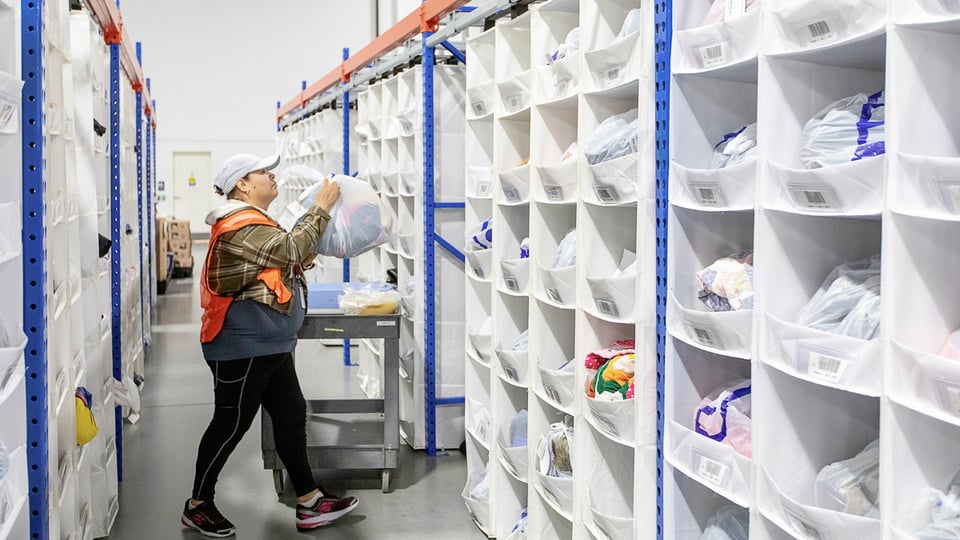
Not every SKU needs to be equally visible or equally close to the main pick line. It just needs the right level of access for how often it moves.
This distinction is significant because allocating high-value pick locations to low-throughput SKUs or burying medium movers in less accessible storage decreases efficiency. The objective isn’t universal accessibility, but rather suitability for each SKU’s movement profile.
That’s also why organizing inventory by similarity can backfire. A warehouse may want to keep all product variants together, but if one SKU accounts for most of the volume and the rest move infrequently, that layout can force workers to walk past low-volume inventory repeatedly just to reach the product they pick most often. Throughput-based slotting avoids that trap by prioritizing movement over product family.
Step 3: Match fast-moving palletized inventory to pallet flow
Fast-moving palletized SKUs require storage that balances speed and density. When they’re stored in static pallet positions on the floor, the operation often pays for it in extra forklift touches, slower replenishment, and more congestion.
That’s where pallet flow makes sense. For high-throughput palletized inventory, a pitched conveying surface helps pallets move forward efficiently and supports FIFO inventory rotation where it matters. UNEX Pallet Track was engineered to solve that exact challenge by increasing storage density, improving efficiency, reducing labor costs, reducing forklift operations, and reducing damage.
From a strategic standpoint, pallet flow is a way to protect throughput. When high-volume inventory is stored in a medium built for movement, the warehouse can support more output with less friction.
Learn to optimize warehouse space for increased speed and accuracy. Download the Guide to Understanding Throughput for Fulfillment!

Step 4: Store medium movers in carton flow
Medium-throughput SKUs are usually where a warehouse wins or loses each day in picking efficiency. They move often enough to warrant strong forward access, but not at a volume that justifies keeping them on pallets and storing them in pallet flow.
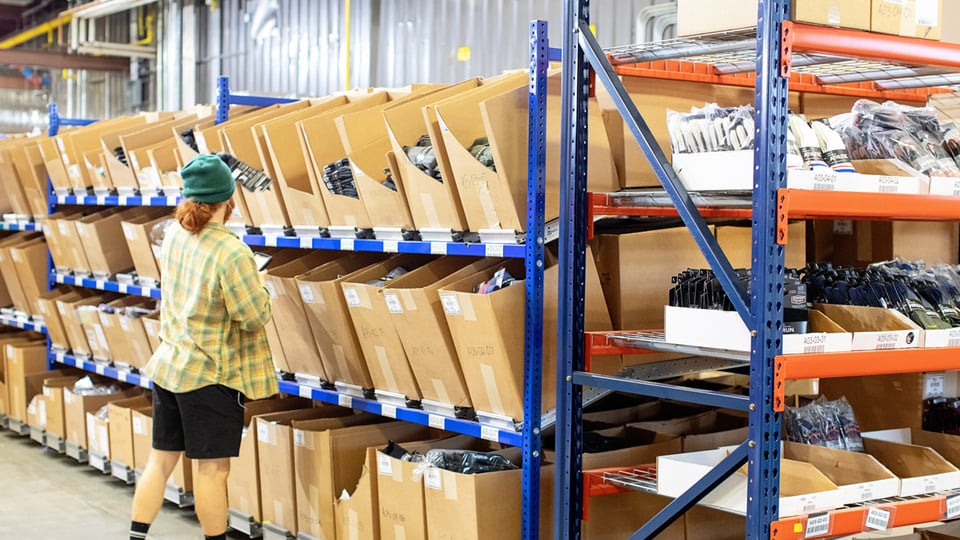
That’s why carton flow is often the best fit for a majority of picks in an operation. Carton flow gives medium-throughput SKUs a clear, organized, replenishable pick face. It keeps products accessible, supports FIFO inventory rotation, and separates replenishment from picking, helping reduce interruptions.
UNEX SpanTrack carton flow racks are designed for case picking and each picking, leading to better flow, higher density, improved ergonomics, and more efficient order picking. SpanTrack can improve throughput by up to 150% while also helping reduce labor costs and worker strain.
That’s a good example of what smarter storage looks like in practice. Carton flow doesn’t just add capacity. It adds structure to a frequently used part of the operation.
Step 5: Move slower each picks into high-density storage
Low-throughput SKUs are often where warehouse space quietly disappears. They may not move often, but they still need a dedicated location, and over time, they can take up far more prime space than they’ve earned.
For each pick operations with slower-moving SKUs, high-density storage solutions can be a better answer. It keeps inventory highly visible and accessible without taking up more space than necessary. UNEX recommends compact solutions, such as high-density dynamic storage for slow movers, to help operations store more SKUs while reducing wasted cubic space.
UNEX SpeedCell high-density storage is designed to create more pick locations within standard pallet racking, helping operations compress storage while improving organization. SpeedCell can compress 200 feet of rack or shelving into 40 feet of organized space, increase storage density by 40–60%, and reduce labor costs by up to 40%.
That makes high-density storage more than a space play. It’s a way to protect the most valuable pick space in the building for the products that actually need it.
Step 6: Shorten search time and travel time across the pick path
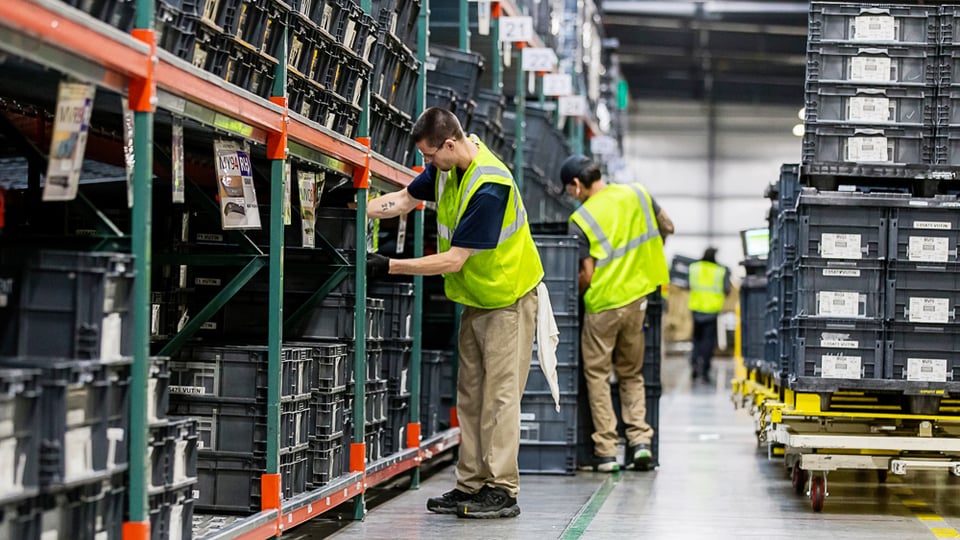
Once SKUs are stored in the right medium, the bigger operational benefit begins to show: less wasted motion. Search time drops because products have a clear address and a storage medium that fits their movement profile. Travel time drops because the fastest-moving SKUs are closer to the main pick path, and slower movers aren’t taking up that space. That’s a major reason throughput-based SKU slotting has such a broad impact on labor performance.
This is where space savings and time savings become one and the same. Better storage alignment shortens walks, reduces backtracking, cuts mispicks, and makes the warehouse feel more predictable under pressure. And in an environment where a few saved seconds can add up fast, that’s a meaningful advantage.
Solutions That Support a Throughput-Based Storage Strategy
A throughput-based storage strategy works best when it provides each inventory class with the right amount of space, accessibility, and flow. That’s where UNEX warehouse storage solutions come in. Rather than forcing every SKU into the same storage medium, UNEX offers solutions that align with how inventory actually moves through the warehouse.
For slower-moving each picks, the priority is density and organization. For medium movers, it’s accessible forward picking and efficient replenishment. For high-throughput palletized inventory, it’s speed, density, and FIFO flow where needed.
SpeedCell for low-throughput storage
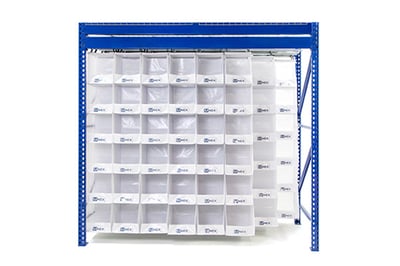 For slower-moving items, high-density storage helps protect valuable pick space while keeping inventory organized and accessible. SpeedCell high-density storage fits that role by creating additional pick locations within existing rack space, making it easier to manage long-tail inventory without spreading it across standard shelving or prime forward pick zones.
SpeedCell supports the idea that low-throughput SKUs still need a home, but not the same real estate as faster movers.
- Increases storage density by 40–60%
- Can compress 200 feet of rack or shelving into 40 feet of organized space
- Helps reduce travel time and search time by creating more labeled pick locations
- Works within standard pallet racking
- Supports slower-moving each picks that still need clear slotting and accessibility
SpanTrack for medium-throughput storage
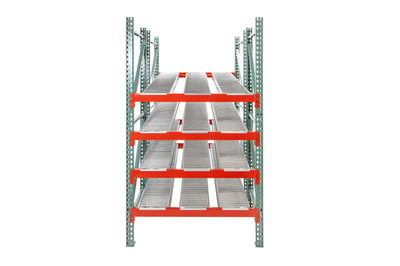 Medium-throughput SKUs are often where warehouse efficiency is won or lost. They move often enough to require consistent access, but not at a volume that justifies pallet flow. SpanTrack carton flow racks support that middle ground with carton flow designed for case and each picking. It keeps the product visible and accessible at the pick face, supports replenishment from the back, and helps operations maintain a cleaner, more repeatable picking process.
In this strategy, SpanTrack is the solution that connects throughput-based slotting to everyday execution on the floor.
- Designed for medium-throughput case and each picks
- Supports FIFO inventory rotation
- Improves pick-face accessibility and visibility
- Helps reduce worker strain with ergonomic pick options
- Can improve throughput by up to 150%
- Increases density while keeping replenishment and picking organized
Pallet Track for high-throughput palletized storage
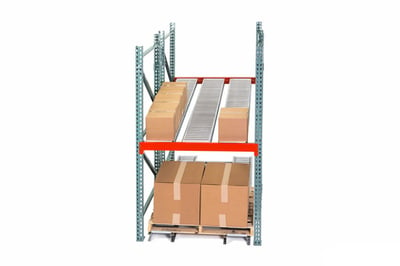 When palletized inventory moves quickly, static pallet positions can create unnecessary handling, congestion, and wasted time. Pallet Track supports high-throughput palletized SKUs by allowing pallets to move forward on a pitched conveying surface, helping operations improve access and maintain better flow.
Pallet Track represents the right fit for high-volume inventory that needs dense storage and efficient replenishment without excessive lift truck activity.
- Creates FIFO pallet storage
- Increases storage density for pallet positions
- Reduces forklift operations
- Helps reduce labor costs and product damage
- Supports faster movement of high-throughput palletized inventory
- Can be floor-mounted or supported by pallet rack beams
Put Throughput to Work in Your Warehouse
The right warehouse storage solution isn’t the one that simply holds the most product. It’s the one that helps the operation move product with less search, less travel, and less wasted space.
That’s why throughput is such a strong starting point. It helps operations decide which SKUs deserve the most accessible space, which belong in carton flow, which should remain in pallet flow, and which can be compressed into high-density storage without hurting pickability. When those decisions are made well, the result isn’t just better storage density but better warehouse performance. Smarter storage decisions help the building do more with what it already has.
Contact UNEX today to find the right storage solutions for your unique SKU mix, space, and picking goals!