Across manufacturing facilities, warehouses, and distribution centers, operations are being asked to increase throughput, handle more SKUs or parts, and improve accuracy, all while working within the same footprint and often with fewer people.
This is where flow rack systems have become a critical part of modern operations. Unlike static shelving, flow racks introduce movement into the storage environment. By using gravity to bring product or parts forward to the worker, they eliminate wasted motion, reduce search time, improve organization, and make better use of available space.
The result is not just incremental improvement, it’s a fundamental shift in how work gets done. Whether supporting manufacturing assembly lines, enabling faster order fulfillment, or optimizing backroom storage, flow rack systems offer a practical, scalable alternative to both inefficient static shelving and expensive automation.
In this article, we’ll take a closer look at how these systems work, the different types available, and how to determine which solution is right for your operation.
What Is a Flow Rack System?
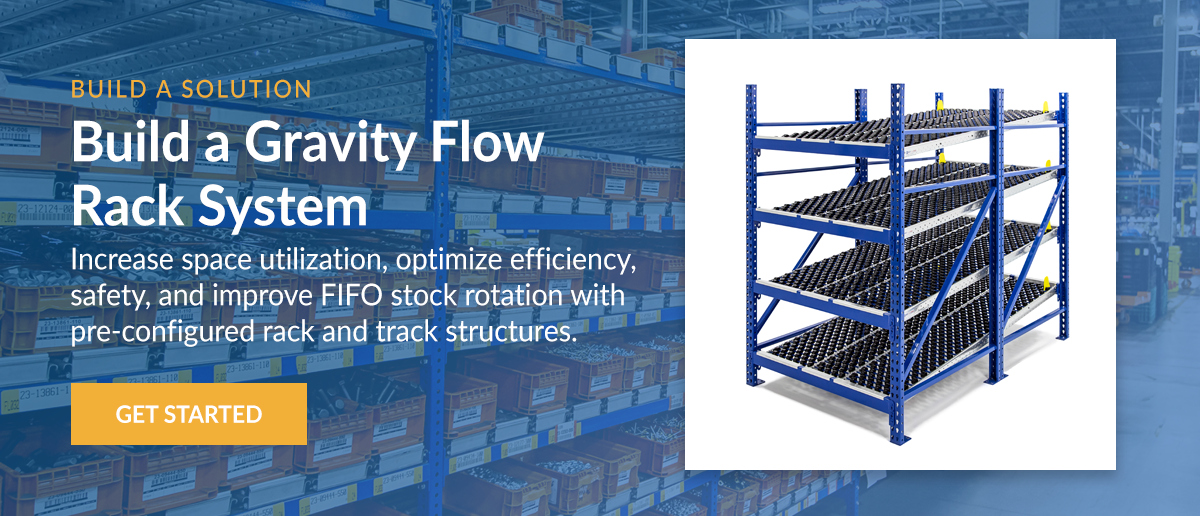
At its core, a flow rack system is a gravity-fed storage solution designed to keep product or parts, depending on the application, moving forward and accessible at all times. Instead of workers walking, reaching, or digging to retrieve inventory, the system does the work for them.
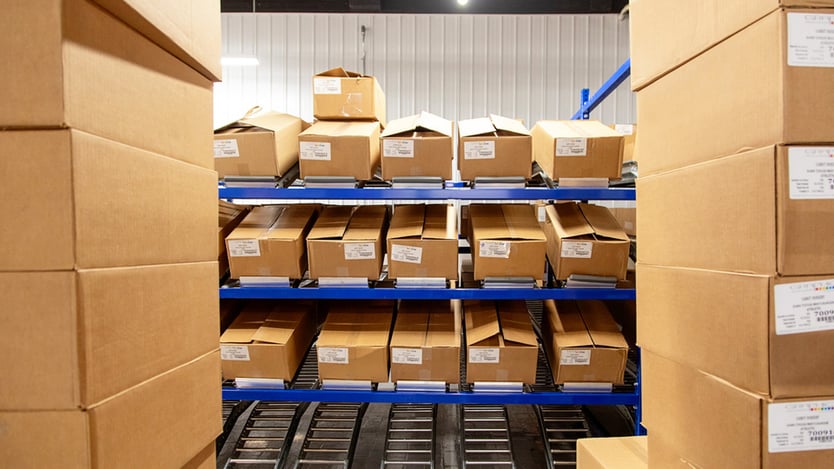
Cartons or totes are loaded from the rear of the rack and travel along slightly inclined tracks, either rollers or wheels, toward the pick face at the front of the rack. As soon as one item is removed, the next advances forward seamlessly into position. This creates a continuous flow of inventory that keeps operations moving without interruption.
Beyond efficiency, this design also supports First-In, First-Out (FIFO) inventory rotation. For operations managing expiration dates, lot tracking, or strict production sequencing, this is a critical advantage. It ensures that older inventory is always used first, without requiring manual intervention or complex tracking systems.
What makes gravity flow racks especially powerful is their ability to transform storage into an active part of the workflow. Instead of being a passive holding area, storage becomes a tool for improving speed, accuracy, and consistency.
Why Operations Are Moving to Flow Racks
Many operational challenges stem from inefficient storage systems. As SKU counts increase and order volumes grow, static shelving creates friction. In distribution environments, workers spend too much time walking between pick locations, searching for inventory, and navigating disorganized storage. In manufacturing settings, similar inefficiencies show up as lost time on the line with operators leaving their stations to retrieve parts, dealing with inconsistent material presentation, or waiting on replenishment.
Over time, these inefficiencies compound. Throughput slows, labor costs rise, and employees experience more physical strain from unnecessary movement and handling. Flow rack systems address these issues by aligning storage with how work actually happens.
In warehouse and fulfillment environments, they reduce travel time by keeping products consistently at the pick face and organizing inventory into dense, easy-to-navigate lanes. In manufacturing, they ensure parts are delivered to the point of use in a structured, repeatable way, supporting continuous flow and minimizing disruptions to production.
Across both environments, the impact is similar:
- Less time spent walking, searching, and handling inventory
- More efficient use of available space
- Improved visibility and organization
- More consistent, reliable workflows
For many organizations, adopting flow racks is less about upgrading storage and more about removing the bottlenecks that limit performance, whether that bottleneck is on the pick line or the production floor.
FlowCell Modular Flow Racks
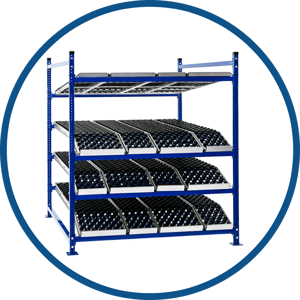 FlowCell is designed for environments where flexibility, adaptability, and integration are critical, especially in manufacturing and assembly operations.
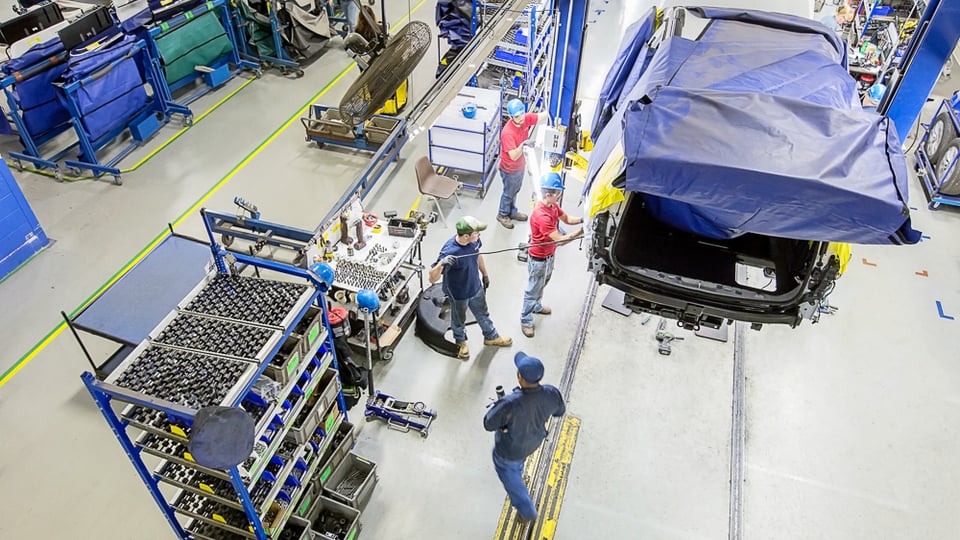
Unlike basic industrial shelving, FlowCell is built as a modular system that can be configured and reconfigured as processes evolve. It combines structural framing with integrated flow tracks to create a system that functions as both storage and a workstation.
What makes FlowCell particularly powerful is how it supports changing workflows. As product lines shift or processes are refined, the system can be adjusted without starting from scratch. This is a major advantage in lean manufacturing environments where continuous improvement is the goal.
FlowCell also enables the creation of fully integrated workstations. Storage, work surfaces, and tools can all be incorporated into a single unit, reducing movement between tasks and creating a more efficient workflow.
From an ergonomic standpoint, FlowCell is designed to bring parts to the worker. Angled presentation, accessible pick points, and reduced reaching all contribute to a safer and more productive work environment.
FlowCell modular flow racks are best suited for:
- Manufacturing and assembly lines
- Kitting and sub-assembly operations
- Lineside storage and manufacturing supermarkets
- Lean and JIT environments
Roller Rack Gravity Flow Racks
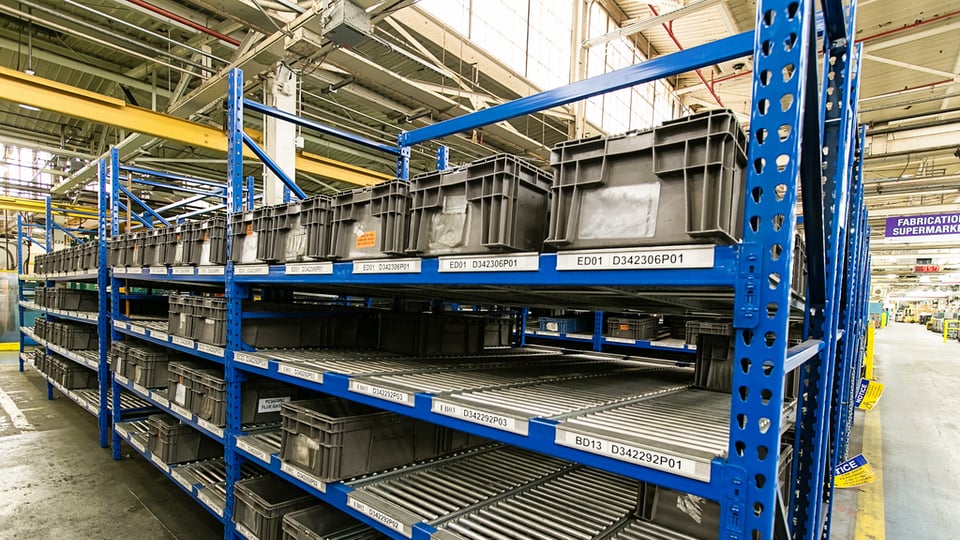
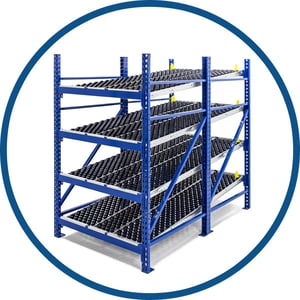 Roller Rack takes a different approach, focusing on speed, simplicity, and gravity flow storage. These systems are pre-engineered and standalone, meaning they don’t require integration into existing pallet racking. This allows them to be deployed quickly, making them ideal for operations that need fast improvements without complex implementation.
Roller Rack is built specifically for picking environments. It organizes inventory into structured lanes and levels, making it easy for workers to locate and retrieve items efficiently. Features like knuckled end treatments on tracks improve visibility and reduce strain, helping increase pick speed and accuracy.
Because replenishment happens from the rear of the rack, picking operations can continue uninterrupted at the front. This separation of workflows is key to maintaining consistent throughput in high-volume environments.
Roller Rack gravity flow racks are best suited for:
- Distribution centers
- eCommerce fulfillment operations
- Case and each picking environments
- Retail backrooms
Discover how to boost productivity with modular flow racks. Download our Meet FlowCell guide!
Flow Track Types: Roller Lanes vs. Wheel Beds
Within both FlowCell and Roller Rack systems, the type of carton flow track used plays a critical role in performance.
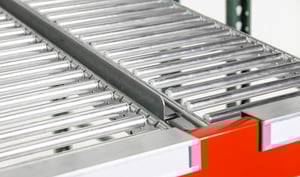 Roller lanes provide continuous contact with items being flowed, creating smooth and controlled movement. They are ideal for uniform cartons and operations with consistent SKU sizes, and where predictability is important.
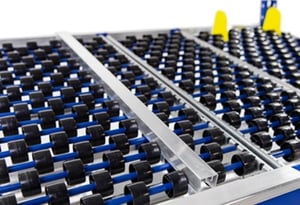 Wheel beds, on the other hand, offer greater flexibility. Their multi-wheel design allows them to handle a wider range of product widths and shapes, making them better suited for operations with mixed SKUs or changing inventory profiles.
In many cases, the decision comes down to whether your operation prioritizes consistency (individual roller lanes) or flexibility (universal wheel beds).
Benefits of Flow Rack Systems
Flow rack systems deliver value across multiple areas of an operation, often producing measurable improvements quickly.
- Increased Picking Efficiency: By keeping product at the pick face, flow racks reduce the time spent walking, searching, and reaching. Workers can complete more picks in less time, increasing overall throughput.
- Better Space Utilization: Flow racks maximize vertical space and increase storage density, allowing facilities to store more inventory within the same footprint.
- Improved Ergonomics: Products are presented in a way that minimizes bending and reaching, reducing strain and supporting safer, more consistent performance.
- FIFO Inventory Control: Automatic product rotation ensures older inventory is used first, improving accuracy and reducing waste.
- Reduced Labor Costs: With less travel time and faster picking, operations can handle higher volumes without increasing headcount.
Common Use Cases for Flow Rack Systems
Flow rack systems are highly versatile and can be adapted to a wide range of environments. However, the way they are used and the value they deliver varies depending on the operational context.
Understanding these use cases is key to determining where flow racks can have the greatest impact.

Manufacturing & Assembly
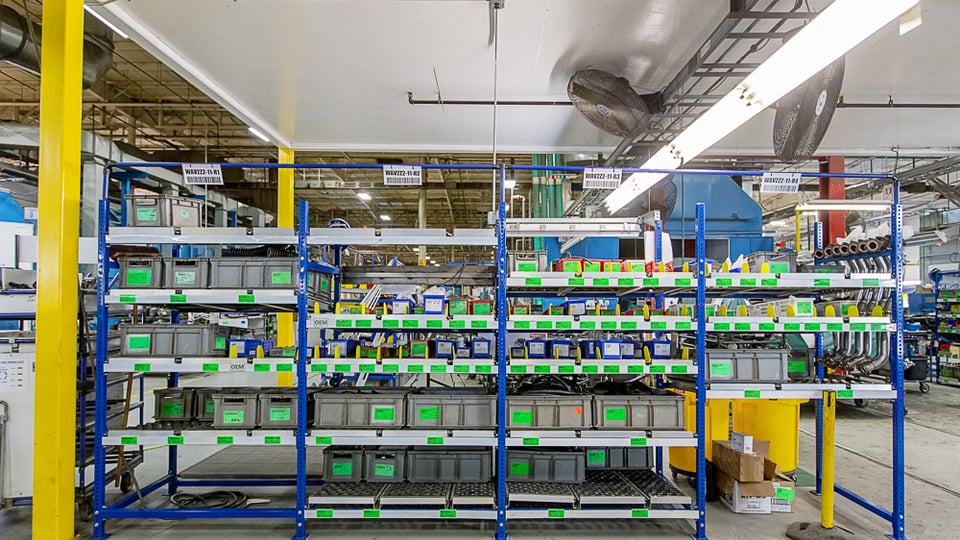
In manufacturing environments, flow racks are most commonly used to support lineside storage, sub-assembly, and kitting operations. In these settings, the goal is not just to store parts, but to ensure they are delivered to the point of use in the most efficient way possible.
FlowCell modular flow racks are particularly effective here because they align closely with lean manufacturing principles. Parts can be organized by process, positioned within easy reach of the operator, and replenished from the back without interrupting production. This reduces downtime, eliminates unnecessary movement, and helps maintain a consistent workflow.
For example, in a lineside application, components needed for assembly can be stored in clearly defined lanes with FIFO rotation. As parts are used, new inventory flows forward automatically, ensuring that workers always have access to what they need without leaving their station.
In sub-assembly or kitting areas, flow racks help standardize how materials are presented. This not only improves speed, but also reduces errors by making it easier for workers to identify and access the correct parts.
Ultimately, in manufacturing, flow racks are less about storage and more about supporting the production process, keeping materials organized, accessible, and aligned with the pace of work.

Distribution & Fulfillment
In distribution and fulfillment environments, the primary focus shifts from production to speed and accuracy of order picking.
Roller Rack gravity flow racks are commonly used here to create structured picking zones that maximize efficiency. By organizing SKUs into dense, easy-to-navigate lanes, they reduce the time workers spend walking, searching, and handling inventory.
In a typical case picking or each picking operation, products are stored in flow lanes and replenished from the rear. Pickers work from the front, where items are always presented at the pick face. This separation of replenishment and picking activities helps maintain a smooth, uninterrupted workflow, even during peak demand.
Flow racks are especially valuable in high-volume environments where even small inefficiencies can scale quickly. Reducing travel time by just a few seconds per pick can translate into significant productivity gains across an entire operation.
They also improve accuracy by creating a more organized and visual system. Clearly defined lanes and consistent product presentation make it easier for workers to locate items and reduce the likelihood of mis-picks.
In fulfillment operations, flow racks play a critical role in balancing speed, density, and accuracy, three factors that directly impact profitability and customer satisfaction.

Retail & Backroom Storage
Retail environments present a unique set of challenges, particularly in backroom storage areas where space is limited and SKU counts are high.
Flow rack systems help retailers make better use of this constrained space by increasing storage density and improving accessibility. Instead of stacking products in hard-to-reach areas or relying on static shelving, items are organized into flow lanes that keep inventory visible and easy to access.
This is especially important in omnichannel retail, where stores are expected to fulfill online orders in addition to supporting in-store customers. Faster access to inventory means employees can pick and restock more efficiently, helping meet demand without disrupting the shopping experience.
Flow racks also support better inventory rotation, which is critical for perishable goods or seasonal products. By ensuring older inventory is used first, they help reduce waste and improve overall inventory management.
In retail backrooms, the value of flow racks comes down to maximizing limited space while maintaining speed and organization.
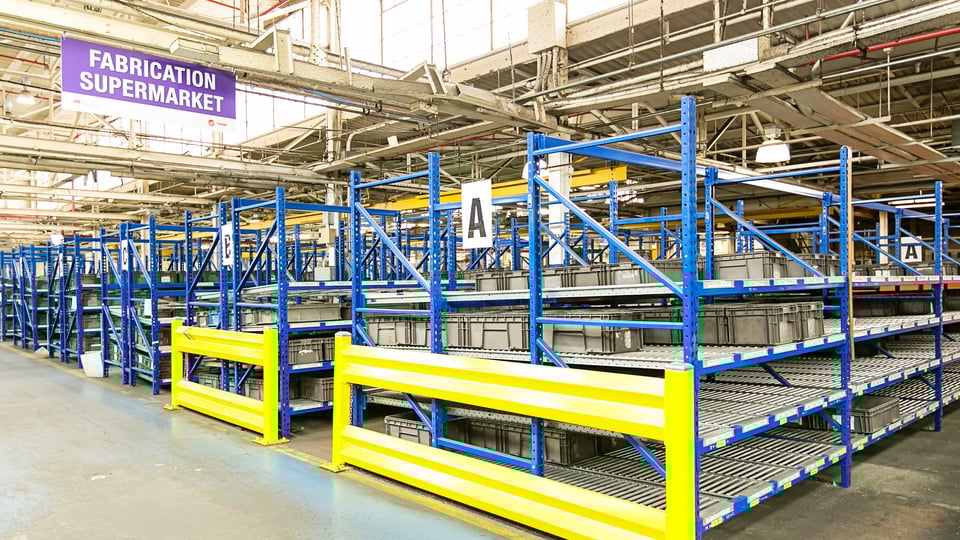
Hybrid Operations
Many operations today don’t fit neatly into a single category. Facilities may combine manufacturing, assembly, and fulfillment within the same space, creating more complex workflows that require flexible solutions. In these hybrid environments, flow rack systems are often used in combination to support different stages of the process.
For example, Roller Rack systems may be used upstream for dynamic warehouse storage and order picking, while FlowCell systems are implemented downstream at packing workstations or assembly areas. This creates a continuous flow of materials from storage to production, reducing handoffs and improving overall efficiency.
By connecting these systems, operations can create a more integrated workflow, one where inventory moves seamlessly between stages without unnecessary delays or handling. This approach not only improves productivity but also provides the flexibility needed to adapt as business needs change.
FlowCell vs. Roller Rack: How to Choose the Right System
While both FlowCell and Roller Rack use gravity flow to improve efficiency, they are designed to solve different operational challenges. Choosing the right system depends less on the technology itself and more on how your operation functions day to day.
At a high level, FlowCell is built for flexibility and integration, while Roller Rack is optimized for speed and density. Understanding where your priorities lie will help guide the decision.
Key Differences at a Glance
When to Choose FlowCell
FlowCell is the better choice when your operation requires flexibility, adaptability, and integration with the workflow. If your processes are constantly evolving, whether due to product changes, shifting production lines, or continuous improvement initiatives, a modular system becomes essential. FlowCell allows you to reconfigure layouts, adjust levels, and add components without replacing the entire structure.
FlowCell modular flow racks are also the right solution when storage needs to do more than just hold inventory. In manufacturing environments, where materials need to be presented at the point of use, FlowCell can function as part of a complete workstation. By combining storage, work surfaces, and tools into a single system, it reduces movement and keeps everything aligned with the pace of production.
FlowCell is typically the best fit if:
- Your operation supports assembly, kitting, or lineside workflows
- You are implementing or improving lean or JIT processes
- You need a system that can adapt to frequent changes
- You want to integrate storage directly into workstations
- Ergonomics and operator efficiency are a high priority
When to Choose Roller Rack
Roller Rack is the better choice when your priority is increasing picking speed, improving organization, and maximizing storage density in a more structured environment.
Because it is pre-engineered and easy to deploy, Roller Rack allows operations to implement improvements quickly without extensive customization. This makes it especially valuable in distribution and fulfillment settings where time-to-impact matters.
The strength of Roller Rack lies in creating highly efficient picking zones. By organizing inventory into dense, clearly defined lanes and keeping product consistently at the pick face, it reduces travel time and helps workers move through tasks faster and more accurately.
Roller Rack is typically the best fit if:
- Your operation is focused on case picking or each picking
- You need to increase throughput without adding labor
- Your SKU locations are relatively stable and predictable
- You want a solution that can be installed quickly and scaled easily
- Your goal is to maximize storage density in a defined space
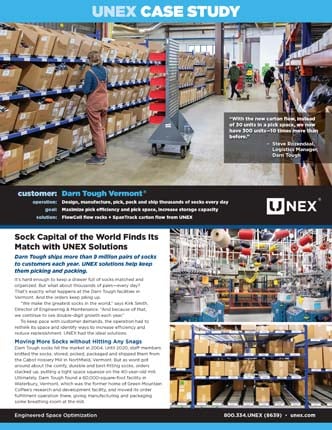
Learn how UNEX helped Darn Tough optimize production, storage, picking, and packing. Download the Case Study.
When It Makes Sense to Use Both
In many operations, the most effective solution isn’t choosing one system over the other: it’s using both together. For example, Roller Rack can be used upstream to create high-density picking and storage zones, while FlowCell is implemented downstream at assembly stations or kitting areas. This creates a continuous, efficient flow of materials from storage to the point of use.
By combining the strengths of both systems, operations can build a more complete solution, one that supports speed, flexibility, and efficiency across the entire workflow.
Designing Flow Rack Systems That Fit Your Operation
Flow rack systems are more than just a storage upgrade; they are a way to fundamentally improve how work gets done. By reducing wasted motion, improving organization, and maximizing space, they help operations become faster, more efficient, and more scalable. The key is not just implementing flow, but implementing the right type of flow for your specific needs.
Whether that means the flexibility of FlowCell, the efficiency of Roller Rack, or a combination of both, the right system can unlock significant performance gains across your operation.
Ready to improve efficiency and maximize your space? Contact UNEX today to find the right flow rack solution for your operation.