Warehouses are under constant pressure to do more with less. SKU counts continue to grow, order profiles are becoming more complex, and customer expectations around speed and accuracy are higher than ever. In response, many operations look to labor as the primary lever for improvement, adding staff, increasing picking speed, or reworking processes.
But in reality, most inefficiencies aren’t caused by labor. They are built into the system itself, specifically how inventory is stored and accessed throughout the warehouse.
Static storage systems were never designed for today’s operational demands. They create friction in the form of wasted space, excessive travel time, disorganized inventory, and frequent workflow interruptions. As a result, even the best teams struggle to keep up.
That’s why more operations are turning to gravity flow racks. These solutions are designed around flow, not just storage, allowing warehouses to eliminate inefficiencies at their source rather than managing around them.
Common Warehouse Problems That Limit Efficiency
Many of the challenges warehouse teams face today can be traced back to one root cause: storage systems that don’t support product flow. When inventory isn’t positioned for efficient movement, it creates a ripple effect across the operation, from space constraints to picking inefficiencies and workflow disruptions.
Here are five of the most common problems this creates in warehouses.
1. You’re Running Out of Space (Without Actually Being Full)
Many warehouses reach a point where they feel full, even though there is still unused space within the building. This typically happens when storage systems prioritize pallet positions over accessibility and storage density. Large portions of vertical space go underutilized, while pick faces remain limited and difficult to expand.
As SKU counts increase, this imbalance becomes more pronounced. Operations are forced to choose between overcrowding existing locations or expanding their footprint, both of which introduce new inefficiencies. This challenge is especially common in manufacturing and order fulfillment environments where product variety continues to grow but available space does not.
The underlying issue isn’t the size of the facility, but how effectively it’s being used. High-performing warehouses think in terms of how many SKUs can be stored and accessed within a given space, not just how many pallets can fit.
2. Your Pickers Spend More Time Walking Than Picking
In many facilities, the majority of a picker’s time is spent traveling between locations rather than actually picking items. Long aisles, dispersed inventory, and inefficient layouts all contribute to excessive movement throughout the warehouse.
This problem is often compounded as operations grow. New SKUs are added wherever space is available, creating fragmented storage zones that increase travel distances and slow down throughput. Over time, productivity declines even as labor costs rise.
Improving this dynamic requires more than process changes. It requires a different approach to storage. When inventory is positioned closer together and consistently presented at the pick face, travel time is naturally reduced and efficiency improves without increasing workload.
Learn to optimize warehouse space for increased speed and accuracy. Download the Guide to Understanding Throughput for Fulfillment!

3. Inventory Is Disorganized and Hard to Manage
Disorganization is rarely the result of poor discipline. More often, it’s a symptom of storage systems that don’t support consistent flow or visibility.
When products are stored in static locations, they tend to shift, get buried, or become difficult to access over time. This leads to misplaced inventory, slower replenishment, and an increased risk of picking errors. Even with a strong warehouse management system in place, the physical layout can make it difficult to maintain order.
Effective inventory management depends on more than tracking. It depends on how inventory moves. Warehouse storage solutions that keep products flowing forward, visible, and consistently positioned at the pick face create a more stable and predictable operation.
4. Replenishment Is Slowing Down Your Operation
In many warehouse layouts, replenishment and picking take place in the same space. This overlap creates congestion, forces pickers to wait, and introduces unnecessary interruptions into the workflow.
As order volume increases, these disruptions become more frequent and more costly. What should be a seamless process turns into a series of starts and stops that limit throughput.
Leading warehouse operations address this by separating these functions entirely. When replenishment happens independently of picking, both processes can run continuously without interfering with one another, significantly improving overall efficiency.
5. Poor Ergonomics Are Limiting Productivity
The way products are presented to workers has a direct impact on performance. When storage systems require excessive bending, reaching, or repositioning, they slow down the picking process and increase physical strain.
Over time, this leads to fatigue, inconsistent output, and a higher risk of injury. It also makes it more difficult to maintain productivity across shifts, as worker performance becomes more variable.
Designing storage with ergonomics in mind is not just a safety consideration. It’s a key driver of throughput. When products are positioned for easy access, workers can move more efficiently and maintain a steady pace throughout the day.
How Roller Rack Solves These Challenges
Rather than addressing each of these challenges individually, leading operations are redesigning their storage systems around flow, using gravity flow rack systems like Roller Rack to eliminate inefficiencies at their source.
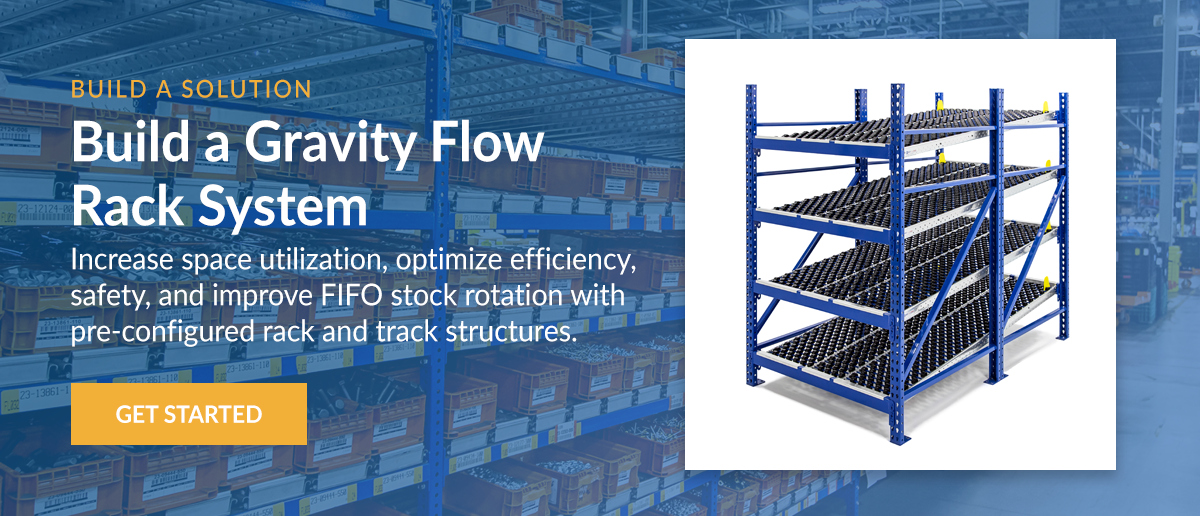
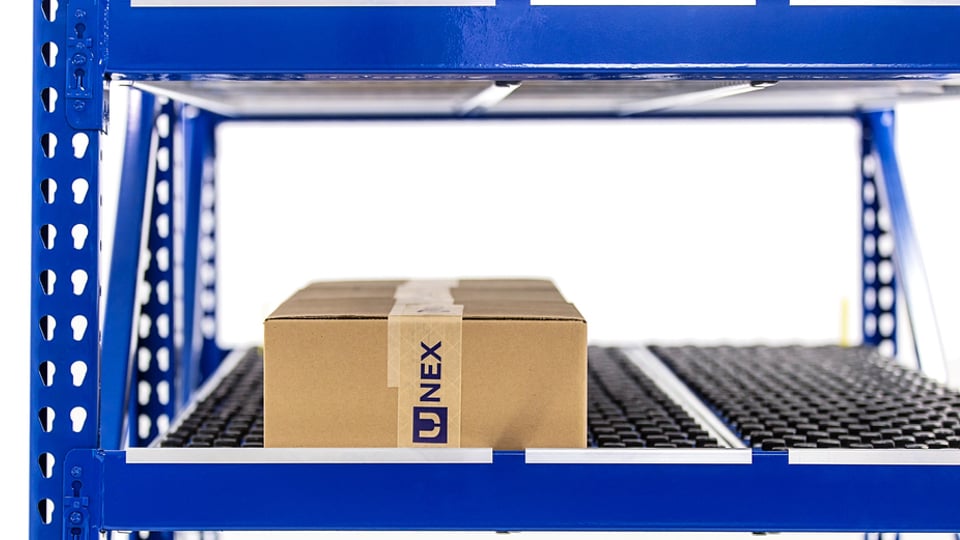
Gravity flow racks use a simple but highly effective concept: product is replenished from the back of the system and flows forward on a slight pitch to the pick face. Roller Rack builds on this concept with a standalone structure designed specifically for order picking environments, creating dense, organized storage that supports faster and more efficient workflows.
Here’s how Roller Rack solves the most common warehouse challenges.
Maximize Storage Density
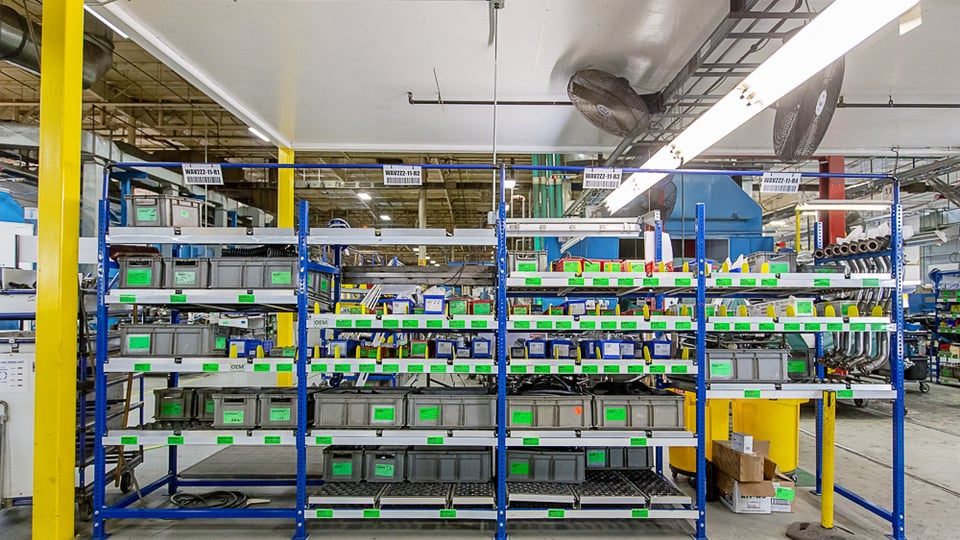
Roller Rack gravity flow racks increase the number of SKUs that can be stored within a given footprint by replacing static pallet positions with flow lanes. This allows operations to make better use of both vertical and horizontal space while maintaining accessibility at the pick face. As a result, warehouses can support growing inventory demands without expanding their facility.
Reduce Travel Time
By keeping product flowing forward and consistently positioned at the pick face, Roller Rack minimizes the distance pickers need to travel. Inventory is easier to access, pick paths are more compact, and workers can spend more time picking rather than searching or walking. This has a direct and measurable impact on productivity and throughput.
Improve Organization and Visibility
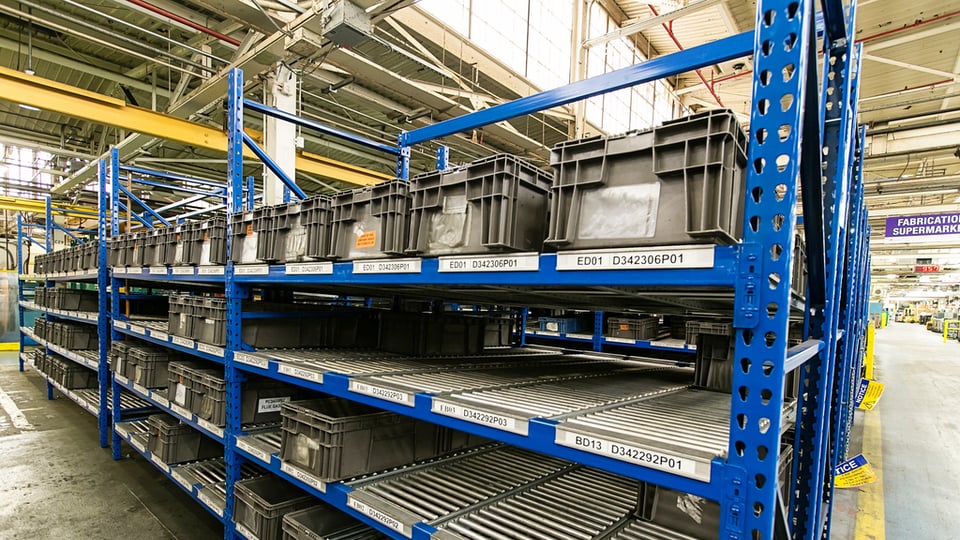
Gravity flow racks are inherently self-organizing. As products are replenished from the back, they flow forward into a consistent pick position, ensuring FIFO inventory rotation while keeping product visible and accessible. This reduces the likelihood of misplaced items and improves overall accuracy.
Separate Picking and Replenishment
One of the most significant advantages of Roller Rack is the ability to separate workflows. Products are loaded from the back and picked from the front, eliminating congestion and preventing replenishment from interrupting picking. This creates a smoother, more continuous operation.
Enhance Ergonomics
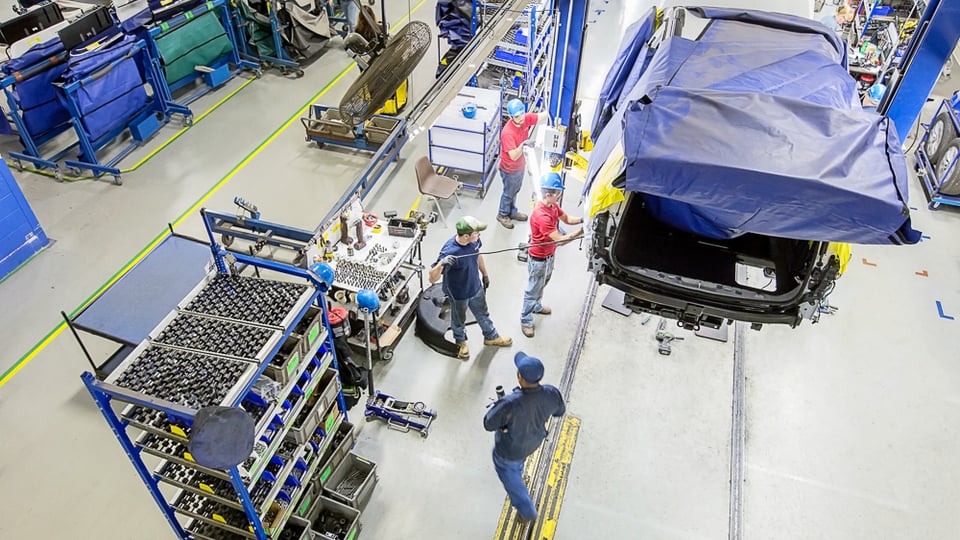
Roller Rack gravity flow racks are designed to present products at an optimal angle and height, improving visibility and accessibility. This reduces strain on workers, supports faster picking, and helps maintain consistent performance throughout the day.
What Is UNEX Roller Rack?
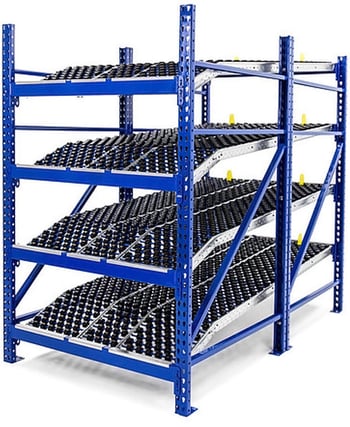 UNEX Roller Rack is a pre-engineered gravity flow rack system designed to bring the benefits of flow-based storage into a standalone, scalable rack structure.
Built with heavy-duty construction for long-term durability in demanding warehouse environments, Roller Rack integrates proven UNEX carton flow technology into a structure that can be quickly deployed and easily expanded as operations evolve. Its standalone design makes it ideal for facilities that need dedicated pick modules without relying on existing pallet rack systems.
Key advantages of UNEX Roller Rack include:
- Pre-engineered, standalone design for fast implementation
- Heavy-duty welded uprights and roll-formed beams for long-term durability
- Modular configuration that scales with your operation
- Gravity-fed flow lanes that keep products at the pick face
- Rear-load, front-pick design to separate replenishment and picking
These capabilities allow operations to significantly increase storage density, reduce travel time, and improve overall efficiency all while maintaining a more organized and ergonomic picking environment.
Build a More Efficient Warehouse with Roller Rack
The most persistent warehouse challenges are not isolated issues. They are the result of storage systems that were not designed for the realities of modern operations.
Gravity flow racks like Roller Rack offer a fundamentally different approach. By prioritizing flow, accessibility, and efficiency, they remove friction from the system and create a more streamlined, scalable operation.
As warehouses continue to evolve, the organizations that succeed will be those that move beyond static storage and invest in solutions designed for how work actually gets done. Contact UNEX today to see how Roller Rack can help you increase storage density, reduce travel time, and improve flow across your operation.