Wholesale and convenience distributors sell variety. One customer may need candy, beverages, tobacco products, grocery items, health and beauty products, paper goods, or refrigerated foods, all in the same delivery.
That assortment rarely stays still. New products enter the market, customer preferences change, seasonal demand shifts, and suppliers introduce new package sizes and SKUs. Yet the warehouse still has to get the right products onto the right trucks accurately and on time. The challenge is that assortment growth doesn't automatically come with more warehouse space or more labor.
As SKUs multiply, pick faces spread farther apart. Pickers walk longer routes, replenishment becomes more complicated, fast movers compete with slow movers for valuable pick space, and static storage that worked for yesterday's product mix can constrain tomorrow's operation. For distributors, then, picking efficiency isn't simply about how quickly someone can remove a case from a shelf, but about how the entire pick environment is designed.
The closer inventory is positioned to the picker, the more SKUs can be presented within the pick zone, and the easier products are to identify and replenish, the more productive the operation can become. That's where carton flow changes the equation.
Why Carton Flow Matters to Distribution Picking Efficiency
Order picking is inherently labor-intensive. Every trip down an aisle, search for a SKU, reach into a rack, reposition a carton, or wait for replenishment costs time without completing another pick.
A few extra seconds may not seem significant, but multiply them across hundreds or thousands of picks per shift, six or seven operating days per week, and small inefficiencies become an operational problem. The common answer has often been to add more shelving, extend the pick line, or add labor. But those approaches can also increase the distance workers travel and the amount of space required to support the same volume.
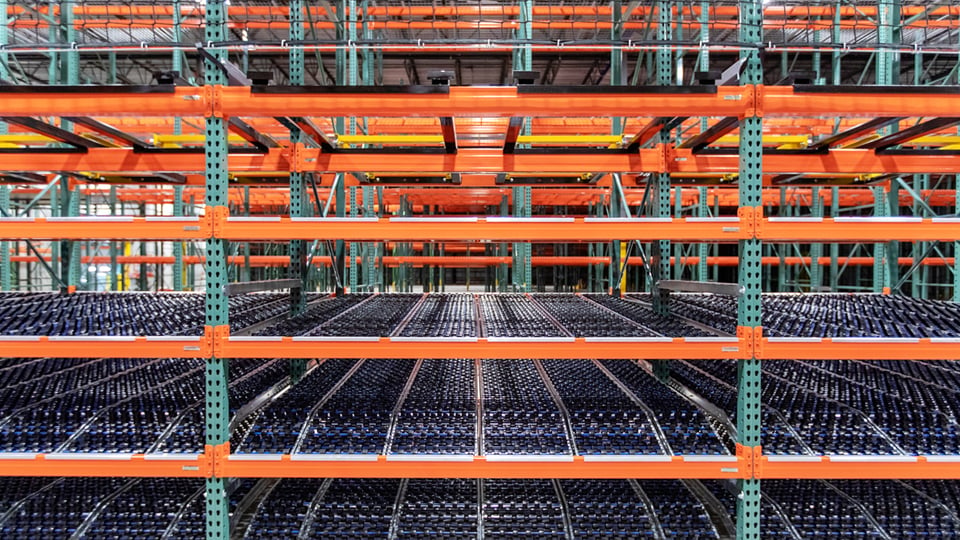
A better question is how much productive picking can take place within a given amount of space. Carton flow uses gravity-fed lanes or wheel beds to move inventory from the replenishment side of a rack toward the pick face. When a carton is removed, the next carton moves forward. That simple change turns storage into an active part of the picking process.
Instead of workers repeatedly reaching into static shelving or traveling between widely dispersed pick locations, products stay visible and accessible at the front of the rack. Greater storage density can fit more SKUs within a shorter pick path, while rear replenishment keeps stocking activity from interfering with workers picking from the front. Gravity flow also naturally supports first-in, first-out (FIFO) inventory rotation.
The result is a different way of thinking about warehouse efficiency: rather than asking pickers to move faster through the warehouse, design the warehouse so they don't have to move as much in the first place.
The experiences of Capital Candy, George J. Falter, and Pine State Trading show how that principle can address three different distribution challenges: density, productivity, and flexibility.
Capital Candy: Fitting More Inventory Into the Pick Area While Reducing Travel
Growth is usually a good problem to have, until the warehouse has nowhere left to put it.
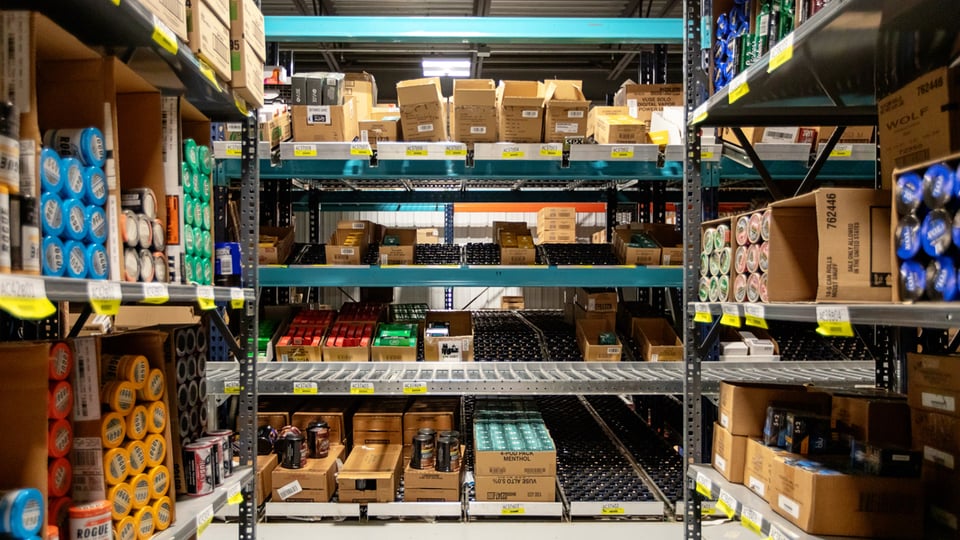
Capital Candy distributes grocery and convenience store products to approximately 3,000 customers across six states. The operation runs six days a week, 24 hours a day, picking and packing approximately 55,000 packages per week while trucks make 33 trips each night. After years of growth and a surge in convenience store business, parts of the warehouse exceeded 140% capacity. Capital Candy ultimately added a 60-by-100-foot, 26-foot-high addition to its Barre, Vermont, facility. But adding square footage was only part of the answer. The company also needed to make that new space productive.
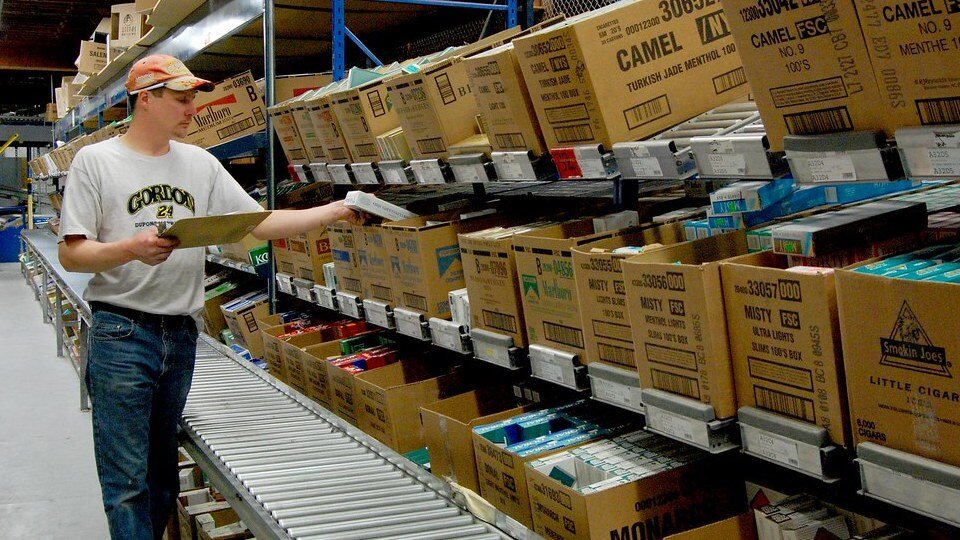
The new tobacco area was designed around different storage requirements for different SKU velocities. Twenty-seven bays of SpanTrack Wheel Bed, with four levels per bay, created 108 levels of carton flow for fast-moving inventory.
That increased pick density significantly. Capital Candy stored 3,600 additional cases and added 900 new items, with room to spare. Just as important, putting more picks into a condensed area reduced the amount of labor required to complete the work. The same picks could be completed with 1.5 fewer pickers in the tobacco area.
But Capital Candy didn't treat every SKU the same. They added two bays of SpeedCell for slower-moving items. The high-density storage system let 196 slow movers fit into two eight-foot bays, saving about 72 feet of shelf space. The gravity conveyor helped move loads through the operation.
Efficient storage isn't necessarily about putting every SKU into the same system. It's about matching the storage method to the way inventory moves. Fast movers need readily accessible pick faces and reliable replenishment. Slow movers still need organized locations, but giving them the same amount of prime pick-face space can unnecessarily lengthen the pick path.
By designing around SKU velocity, distributors can concentrate more activity into a smaller work zone and make every step a picker takes more productive.
Learn how Capital Candy used SpanTrack, SpeedCell, and Gravity Conveyor to store 3,600 more cases and add 900 new SKUs with room to grow.
DOWNLOAD THE CASE STUDY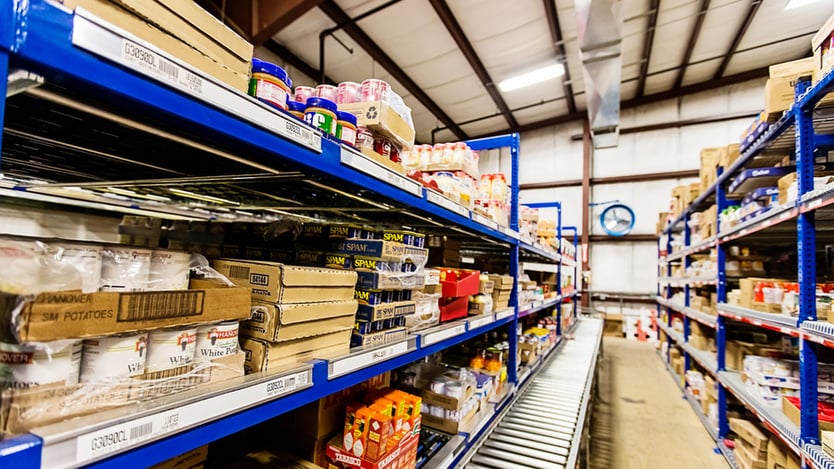
George J. Falter: Reducing Labor Through Better Pick-Line Design
At George J. Falter Co., the problem wasn't simply capacity. The existing pick environment itself was getting in the way of the work.
The Baltimore convenience store supplier handles a large assortment of products, many of which require broken-case picking. Its old mezzanine pick line had become undersized and difficult to work with. Plastic wheel tracks were damaged, products could fall through or get hung up, and the layout made inventory hard for employees to reach safely.
The redesigned operation used Roller Rack with Flow Bed for faster-moving grocery and dry-goods inventory, with static wire shelving positioned between carton flow sections for slower movers. Conveyor was incorporated into the overall pick environment. The team later expanded the approach underneath the mezzanine. Ultimately, the design incorporated 32 bays of carton flow and approximately 45 wire-deck shelving units across three pick lines housing 3,000 SKUs. The system was even customized around the mezzanine's structural columns so those fixed obstacles didn't dictate an inefficient pick path.
Between earlier improvements to the cigarette picking operation and the mezzanine project, George J. Falter reduced its number of pickers by one-third. The physical layout explains why. Products were concentrated closer to the pick point, reducing walking. Carton flow also kept products accessible at the front of the rack instead of requiring employees to continually bend, reach, and search through deeper storage locations.
That relationship between ergonomics and productivity matters. A warehouse doesn't become more productive simply because employees are told to pick faster. The physical environment determines how much non-picking activity surrounds every pick.
If employees spend less time walking, reaching, searching, and repositioning product, they can spend more of the shift actually fulfilling orders.
Learn how George J. Falter used UNEX carton flow and wire deck shelving to create three pick lines housing 3,000 SKUs and increase picker productivity.
DOWNLOAD THE CASE STUDY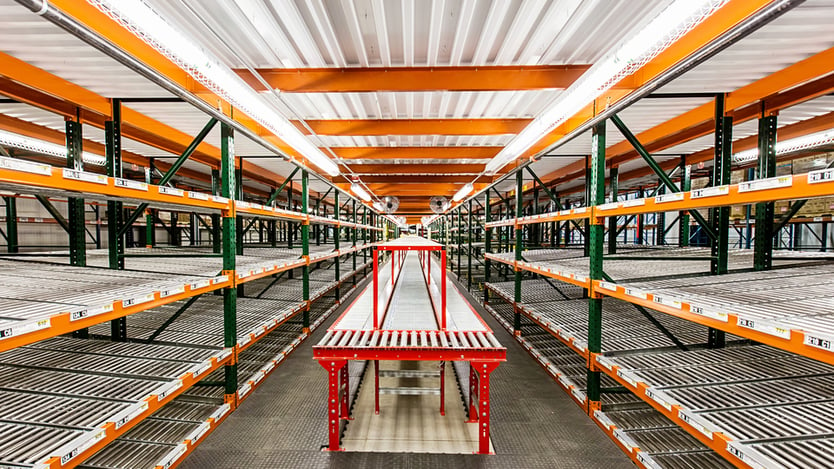
Pine State Trading: Building Flexibility for a Constantly Changing Product Mix
Density and travel aren't the only concerns for convenience distributors. Their storage systems also have to keep up with constant assortment changes.
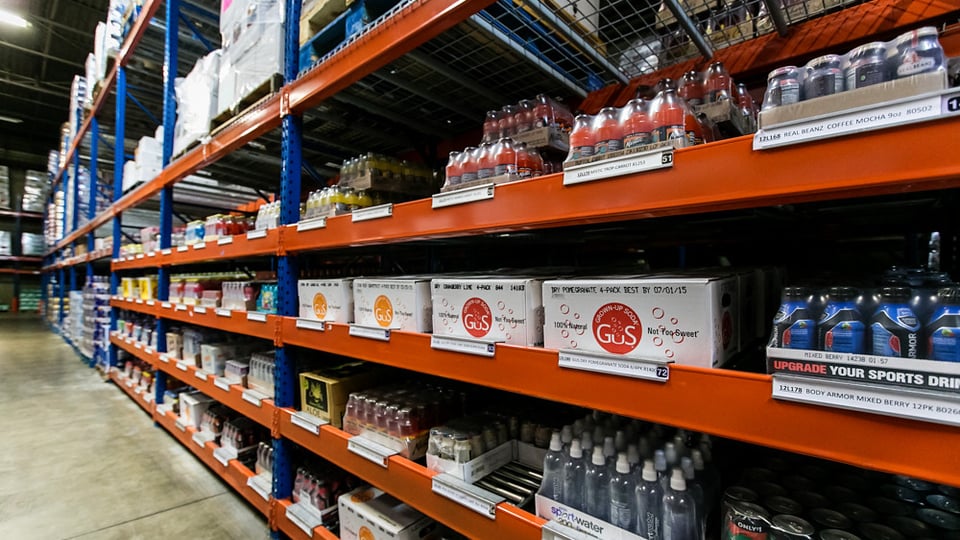
Pine State Trading Co. supplies more than 5,000 convenience stores throughout New England and New York with products ranging from candy and beverages to paper products, automotive supplies, deli sandwiches, dairy, and health and beauty items.
By 2011, the distributor had completely run out of space and was renting additional storage facilities while projecting a 50% increase in volume. When Pine State moved into a larger facility in Gardiner, Maine, the warehouse needed to accommodate approximately 10,000 existing SKUs while leaving room for future growth.
The challenge wasn't simply fitting 10,000 SKUs into the building. Those products came in different shapes and sizes, and the assortment could change frequently.
Rather than force all that inventory into one carton flow configuration, the system was designed around the products' characteristics. The system used full-width SpanTrack carton flow for products with consistent carton sizes, such as cases of cigarettes. A universal wheel bed configuration provided greater flexibility for variable-size products such as candy and grocery items, allowing products to be re-slotted without continually moving or changing equipment.
The final installation included 561 levels of SpanTrack and 568 levels of Flow Bed. The team also reused hundreds of existing SpanTrack lanes from the previous facility. That flexibility extended all the way to product identification. Because Pine State's inventory could change quickly, interchangeable label holders made it easier for pickers to identify lanes as SKUs changed.
A storage system optimized only for today's SKU profile can become tomorrow's bottleneck. Pick efficiency depends not only on how densely inventory is stored, but also on how easily that storage can adapt when carton sizes, demand patterns, and SKU locations change.
Learn how Pine State Trading Co. used UNEX SpanTrack carton flow to store over 10,000 SKUs and gain the flexibility to adapt to shifting customer demand.
DOWNLOAD THE CASE STUDY
What Better Distribution Picking Looks Like
Capital Candy, George J. Falter, and Pine State Trading started with different warehouse challenges. Still, their experiences point to several principles wholesale and convenience distributors can apply to their own pick operations:
- Increase pick density, not just storage density. The goal isn't simply to fit more inventory into a building. It's to put more useful pick faces within the area where employees work, shortening travel between picks.
- Slot according to velocity. Fast, medium, and slow movers don't necessarily belong in identical storage. Combining carton flow with other high-density storage methods can keep prime pick space focused on inventory that earns it.
- Design around the picker. Products should be easy to see, identify, and reach. Reducing bending, stretching, walking, and searching improves the physical picking process and saves time on each order.
- Separate picking from replenishment where possible. Gravity-fed storage lets you replenish inventory from the rear while picking continues from the front, reducing congestion and supporting FIFO rotation.
- Plan for SKU change. Today's fastest-moving product may not hold that position next year, or next month. Storage should make re-slotting practical as velocity, packaging, and assortments change.
- Design for reliable product flow. A carton flow lane that frequently hangs up replaces one form of wasted motion with another. Consider carton dimensions, weights, track type, pitch, and product contact when designing the system.
Together, these principles shift the conversation from How much can we store? to a more valuable question: How efficiently can we pick what we store? That metric connects space utilization directly to throughput and labor productivity.
Carton Flow and Storage Solutions for Wholesale and Convenience Distribution
No single configuration works for every distributor. SKU velocity, carton dimensions, available rack, order profiles, replenishment requirements, and building layout all influence the right storage design. The most effective systems use those variables to determine how to present inventory to the picker.
 SpanTrack Carton Flow
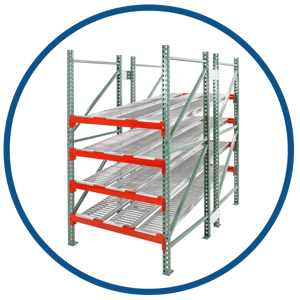
SpanTrack transforms new or existing pallet rack into dynamic, gravity-fed storage so products continuously move toward the pick face.
For distributors, that means more inventory can be positioned within a condensed pick area while products remain visible and accessible. Picking happens from the front while replenishment can occur from the rear, reducing interference between the two activities and supporting FIFO inventory rotation.
Different configurations address different inventory profiles. Dedicated roller lanes work well where carton dimensions and SKU locations are predictable. Wheel beds provide greater left-to-right flexibility where carton sizes vary, or operations need to re-slot frequently.
 Roller Rack Gravity Flow Racks
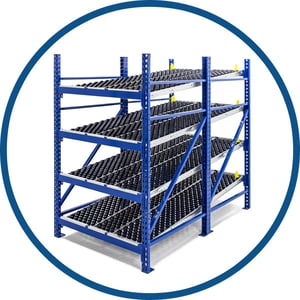
Roller Rack creates standalone carton flow where pallet storage above the pick area isn't required. That can make it especially useful when distributors create dedicated pick lines, work beneath mezzanines, or redesign areas that aren't well suited to traditional pallet rack.
Inventory can be replenished from the back without interrupting picking at the front, while knuckled track configurations can improve product visibility and access. In appropriate configurations, Roller Rack can provide SKU storage up to seven times denser per bay than pallet-position storage, reducing the distance pickers need to travel.
George J. Falter highlights the bigger opportunity: standalone carton flow can become part of an integrated pick line alongside static storage and conveyor, rather than being treated as an isolated piece of equipment.
 SpeedCell High-Density Storage
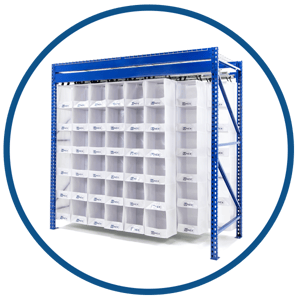
Not every slow-moving SKU needs a dedicated carton flow lane. SpeedCell provides high-density storage for smaller or slower-moving each-pick inventory, allowing more SKUs to be concentrated into a smaller footprint. At Capital Candy, two eight-foot bays accommodated 196 slower-moving items and saved approximately 72 feet of shelf space.
Used alongside carton flow, high-density storage can help distributors reserve their most accessible flow locations for faster movers without pushing slower-moving inventory across long stretches of shelving.
 Gravity Conveyor
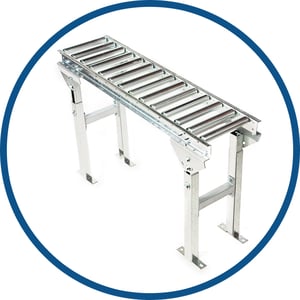
Storage density improves the pick, but picked product still has to move through the operation. A gravity conveyor can connect storage and picking areas to downstream packing, staging, or other material movement processes. Capital Candy incorporated gravity conveyors throughout the operation to keep different types of loads moving through the warehouse.
Thinking about storage, picking, replenishment, and product movement as one system is ultimately more valuable than optimizing any one piece in isolation.
Make Every Pick and Square Foot Count
Wholesale and convenience distributors can't control how frequently suppliers launch new SKUs, how customer demand shifts, or how many different carton sizes arrive at the warehouse.
Capital Candy shows how increasing pick density can accommodate more inventory while reducing steps and labor requirements. George J. Falter demonstrates how a better-designed pick line can reduce walking and reaching while making a large SKU assortment easier to work with. Pine State Trading shows why flexibility matters as much as density when the product mix continually changes.
The common thread is that storage shouldn't simply hold inventory. It should actively support the pick. When products flow toward employees, more SKUs fit within the pick zone, replenishment happens without getting in the way, and storage can adapt as inventory changes; the warehouse starts doing some of the work that would otherwise fall on the picker.
And for distributors trying to handle more SKUs and more orders without continually adding space or labor, carton flow delivers its greatest value: not simply storing more, but making every square foot and every step more productive.
Explore dynamic solutions or contact UNEX to design a picking system around your inventory, facility, and throughput requirements.