---
title: 8 Carton Flow System Mistakes and How to Avoid Them
description: Avoid common carton flow system mistakes to enhance efficiency and optimize warehouse operations. Learn key design principles for better performance.
image: https://blog.unex.com/hubfs/case%20picking%20with%20carton%20flow%20in%20a%20warehouse.jpg
---
[Skip to content](https://blog.unex.com/common-carton-flow-system-mistakes-and-how-to-avoid-them#main-content)
[](https://www.unex.com/)
- [Applications](https://www.unex.com/applications)
- Storage
- [Warehouse Storage](https://www.unex.com/applications/storage/warehouse-storage)
- [Storage for 3PLs](https://www.unex.com/applications/storage/storage-3pls)
- [Retail Storage Solutions](https://www.unex.com/applications/storage/retail-storage)
- [Lineside Storage](https://www.unex.com/applications/packing-assembly/lineside-storage)
- [Beverage Storage](https://www.unex.com/applications/storage/beverage-storage)
- [Keg Storage](https://www.unex.com/applications/storage/keg-storage)
- Picking
- [Order Picking](https://www.unex.com/applications/picking/order-picking)
- [Case Picking](https://www.unex.com/applications/picking/case-picking)
- [Each Picking](https://www.unex.com/applications/picking/each-picking)
- [Picking Carts](https://www.unex.com/applications/picking/picking-carts)
- [Pick Module](https://www.unex.com/applications/picking/pick-module)
- Packing & Assembly
- [Industrial Carts](https://www.unex.com/applications/packing-assembly/industrial-carts)
- [Packing Stations](https://www.unex.com/applications/packing-assembly/packing-station)
- [Industrial Workstations](https://www.unex.com/applications/packing-assembly/industrial-workstations)
- [Manufacturing Supermarkets](https://www.unex.com/applications/packing-assembly/manufacturing-supermarkets)
- [Solutions](https://www.unex.com/solutions)
- [Carton Flow](https://www.unex.com/solutions/carton-flow)
- [SpanTrack Lane](https://www.unex.com/solutions/carton-flow/spantrack-lane)
- [SpanTrack Wheel Bed](https://www.unex.com/solutions/carton-flow/spantrack-wheel-bed)
- [SpanTrack Keg Flow](https://www.unex.com/solutions/carton-flow/spantrack-keg-flow)
- [Shelf Track](https://www.unex.com/solutions/carton-flow/shelf-track)
- [Flow Racks](https://www.unex.com/solutions/flow-racks)
- [FlowCell](https://www.unex.com/solutions/flow-racks/flowcell)
- [Roller Rack](https://www.unex.com/solutions/flow-racks/roller-rack)
- [High-Density Storage](https://www.unex.com/solutions/high-density-storage)
- [SpeedCell](https://www.unex.com/solutions/high-density-storage/speedcell)
- [SpeedCartt](https://www.unex.com/solutions/high-density-storage/speedcartt)
- [Pick Shelves](https://www.unex.com/solutions/high-density-storage/pick-shelves)
- [Conveyors](https://www.unex.com/solutions/conveyors)
- [Gravity Conveyor](https://www.unex.com/solutions/conveyors/gravity-conveyors)
- [Pallet Track](https://www.unex.com/solutions/conveyors/pallet-track)
- [About](https://www.unex.com/about)
- [Resources](https://www.unex.com/resources)
- [Blog](https://blog.unex.com)
- [Press Releases](https://blog.unex.com/press-releases)
- [Guides](https://www.unex.com/resources/guides)
- [Product Brochures](https://www.unex.com/resources/product-brochures)
- [Installation Guides](https://www.unex.com/resources/installation-guides)
- [Case Studies](https://www.unex.com/resources/case-studies)
- [FAQs](https://go.unex.com/faq)
[Contact Us](https://www.unex.com/contact) [Build a Solution](https://www.unex.com/configurator)
- [Applications](https://www.unex.com/applications)
- Storage
- [Warehouse Storage](https://www.unex.com/applications/storage/warehouse-storage)
- [Storage for 3PLs](https://www.unex.com/applications/storage/storage-3pls)
- [Retail Storage Solutions](https://www.unex.com/applications/storage/retail-storage)
- [Lineside Storage](https://www.unex.com/applications/packing-assembly/lineside-storage)
- [Beverage Storage](https://www.unex.com/applications/storage/beverage-storage)
- [Keg Storage](https://www.unex.com/applications/storage/keg-storage)
- Picking
- [Order Picking](https://www.unex.com/applications/picking/order-picking)
- [Case Picking](https://www.unex.com/applications/picking/case-picking)
- [Each Picking](https://www.unex.com/applications/picking/each-picking)
- [Picking Carts](https://www.unex.com/applications/picking/picking-carts)
- [Pick Module](https://www.unex.com/applications/picking/pick-module)
- Packing & Assembly
- [Industrial Carts](https://www.unex.com/applications/packing-assembly/industrial-carts)
- [Packing Stations](https://www.unex.com/applications/packing-assembly/packing-station)
- [Industrial Workstations](https://www.unex.com/applications/packing-assembly/industrial-workstations)
- [Manufacturing Supermarkets](https://www.unex.com/applications/packing-assembly/manufacturing-supermarkets)
- [Solutions](https://www.unex.com/solutions)
- [Carton Flow](https://www.unex.com/solutions/carton-flow)
- [SpanTrack Lane](https://www.unex.com/solutions/carton-flow/spantrack-lane)
- [SpanTrack Wheel Bed](https://www.unex.com/solutions/carton-flow/spantrack-wheel-bed)
- [SpanTrack Keg Flow](https://www.unex.com/solutions/carton-flow/spantrack-keg-flow)
- [Shelf Track](https://www.unex.com/solutions/carton-flow/shelf-track)
- [Flow Racks](https://www.unex.com/solutions/flow-racks)
- [FlowCell](https://www.unex.com/solutions/flow-racks/flowcell)
- [Roller Rack](https://www.unex.com/solutions/flow-racks/roller-rack)
- [High-Density Storage](https://www.unex.com/solutions/high-density-storage)
- [SpeedCell](https://www.unex.com/solutions/high-density-storage/speedcell)
- [SpeedCartt](https://www.unex.com/solutions/high-density-storage/speedcartt)
- [Pick Shelves](https://www.unex.com/solutions/high-density-storage/pick-shelves)
- [Conveyors](https://www.unex.com/solutions/conveyors)
- [Gravity Conveyor](https://www.unex.com/solutions/conveyors/gravity-conveyors)
- [Pallet Track](https://www.unex.com/solutions/conveyors/pallet-track)
- [About](https://www.unex.com/about)
- [Resources](https://www.unex.com/resources)
- [Blog](https://blog.unex.com)
- [Press Releases](https://blog.unex.com/press-releases)
- [Guides](https://www.unex.com/resources/guides)
- [Product Brochures](https://www.unex.com/resources/product-brochures)
- [Installation Guides](https://www.unex.com/resources/installation-guides)
- [Case Studies](https://www.unex.com/resources/case-studies)
- [FAQs](https://go.unex.com/faq)
[Contact Us](https://www.unex.com/contact) [Build a Solution](https://www.unex.com/configurator)
# Common Carton Flow System Mistakes and How to Avoid Them
#### Key Takeaways
- Most carton flow system issues begin during planning, not installation. Product dimensions, carton behavior, SKU variation, picking patterns, and replenishment strategy should all guide the system design.
- The right lane type, roller centers, capacity, and lane width are critical to reliable product flow. Small specification mistakes can lead to hang-ups, wasted space, poor pick presentation, and slower throughput.
- Carton flow should be treated as an ongoing slotting and replenishment strategy, not a one-time rack upgrade. Regular reviews, clear labeling, permanent SKU addresses, and ergonomic pick-face design help the system continue performing as inventory changes.
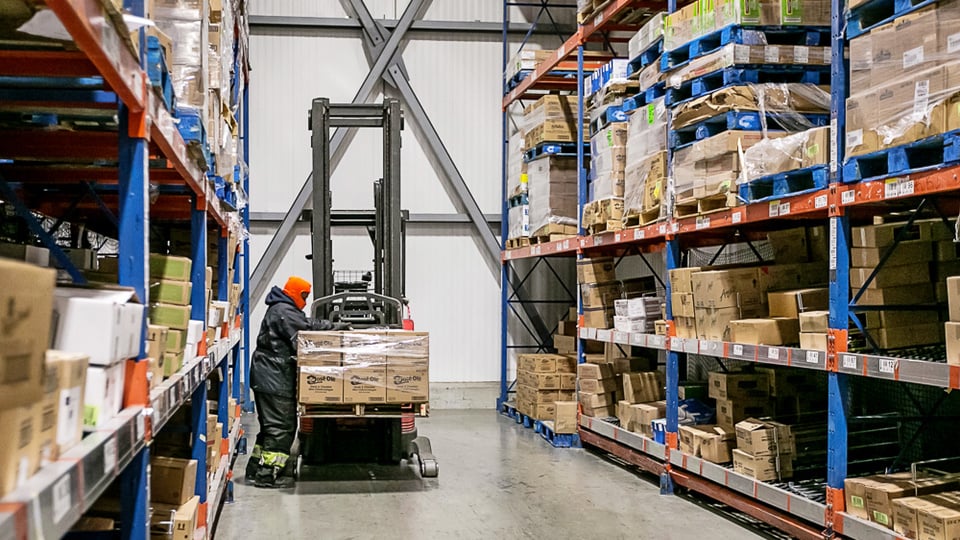
[Carton flow systems](https://www.unex.com/solutions/carton-flow) transform picking. They turn static pallet racks into gravity-fed storage lanes, keeping product at the pick face, improving space utilization, and [supporting first-in, first-out](https://blog.unex.com/creating-fifo-storage-with-carton-flow-rack-systems) (FIFO) inventory rotation. With the right application, carton flow reduces travel time, improves replenishment, and lets you present more SKUs to pickers in less space. However, realizing those benefits depends on more than simply installing carton flow.
Most underperforming [carton flow rack systems](https://blog.unex.com/carton-flow-101-the-advantages-of-a-gravity-flow-rack) fail not because carton flow was the wrong choice, but because their designs are based on assumptions rather than product behavior. Lanes may be too wide, capacities may be unnecessarily heavy, or a [wheel bed](https://www.unex.com/solutions/carton-flow/spantrack-wheel-bed) may be used where a [roller lane](https://www.unex.com/solutions/carton-flow/spantrack-lane) would fit better. [Overlooking roller centers](https://blog.unex.com/what-are-carton-flow-roller-centers-and-why-do-they-matter), which are essential to product movement, also causes issues. Such decisions eventually lead to hang-ups, wasted inches, awkward picks, and slower-than-anticipated throughput.
[Carton flow](https://www.unex.com/solutions/carton-flow) works best when it’s matched closely to the products, picking patterns, and space requirements of the operation. That’s why the better question up front isn’t just, “Should we use carton flow?” but, “What are we flowing, how fast are we picking, and what lane design makes the most sense for today and for future growth?”
## Most Carton Flow Problems Start Before Installation
By the time a [warehouse team](https://www.unex.com/industries/order-fulfillment-warehousing) realizes its [carton flow system](https://blog.unex.com/understanding-carton-flow-racks-types-uses-and-benefits) isn’t delivering the expected gains in efficiency, space utilization, or picking performance, the root issue usually isn’t the carton flow concept itself. In many cases, the real problem started much earlier, during planning and system selection. A [carton flow system](https://www.unex.com/solutions/carton-flow) can only perform as well as the decisions behind it. When those decisions are made without enough attention to product dimensions, SKU variation, picking behavior, replenishment strategy, or future slotting needs, the effects tend to surface later in the form of inconsistent flow, wasted space, operational workarounds, and a system that falls short of expectations.
That’s why this matters up front. To achieve order picking success, an operation first needs to understand its data, profile its SKUs, [select the right-sized storage equipment](https://blog.unex.com/diy-carton-flow-storage-system), assign permanent addresses, label inventory clearly, and align the system with its replenishment and picking methods. In other words, the hardware matters, but the real performance of a [carton flow system](https://blog.unex.com/diy-carton-flow-storage-system) depends on whether it was matched appropriately to the operation in the first place. When that alignment is there, carton flow can support better flow, better space utilization, and better picking performance over time. When it isn’t, even a well-built system can struggle because the design was never fully aligned with how the operation actually works.
That’s what separates a [carton flow installation](https://www.unex.com/resources/installation-guides) that looks good on day one from a [carton flow system](https://www.unex.com/solutions/carton-flow) that continues to perform as SKU mix changes, volumes rise, and labor pressure increases.
#### Get The Definitive Guide to Carton Flow Storage and The Ultimate Order Picking Checklist. Download the guide today!
## 8 Carton Flow System Mistakes to Avoid
The mistakes below are worth understanding because they reveal where [carton flow systems](https://www.unex.com/solutions/carton-flow) most often lose performance before the operation even realizes it. Some affect space utilization while others affect flow consistency, ergonomics, flexibility, or throughput. Together, they help explain why one carton flow system becomes a [long-term advantage](https://blog.unex.com/5-benefits-of-implementing-carton-flow-in-your-warehouse) while another becomes something the team has to work around.
Looking at these mistakes one by one also creates a better framework for decision-making. Knowing where carton flow systems [commonly go wrong](https://blog.unex.com/5-common-flow-rack-implementation-mistakes-that-impede-performance) puts operations in the best possible position to make better design choices from the start, ask smarter questions during planning, and build a system that is better suited for both current needs and future changes.
### Mistake #1: Choosing Carton Flow Before Understanding the Product You’re Actually Flowing
One of the most common mistakes in [carton flow design](https://blog.unex.com/diy-carton-flow-storage-system) is treating all cartons as if they behave identically. Two cartons with similar dimensions can perform very differently depending on the bottom surface, weight distribution, packaging quality, and whether the load is rigid or easily deformed. When [choosing roller centers](https://blog.unex.com/what-are-carton-flow-roller-centers-and-why-do-they-matter), it’s important to remember that humidity, box condition, tote bottoms, and carton weight all influence which track configuration will work best.
This matters because [carton flow](https://blog.unex.com/carton-flow-101-the-advantages-of-a-gravity-flow-rack) isn’t just about making a box fit inside a lane. It’s about making that box start, move, restart, and present reliably at the pick face. If the product itself isn’t understood, everything that follows becomes guesswork.
Start by focusing on the product, not the rack. Examine cartons, cases, and totes for consistency. Identify whether the operation involves standard sizes or wide variations. A strong [carton flow system](https://www.unex.com/solutions/carton-flow) begins with an honest view of what exactly you’re flowing.
### Mistake #2: Picking the Wrong Lane Type for the SKU Mix
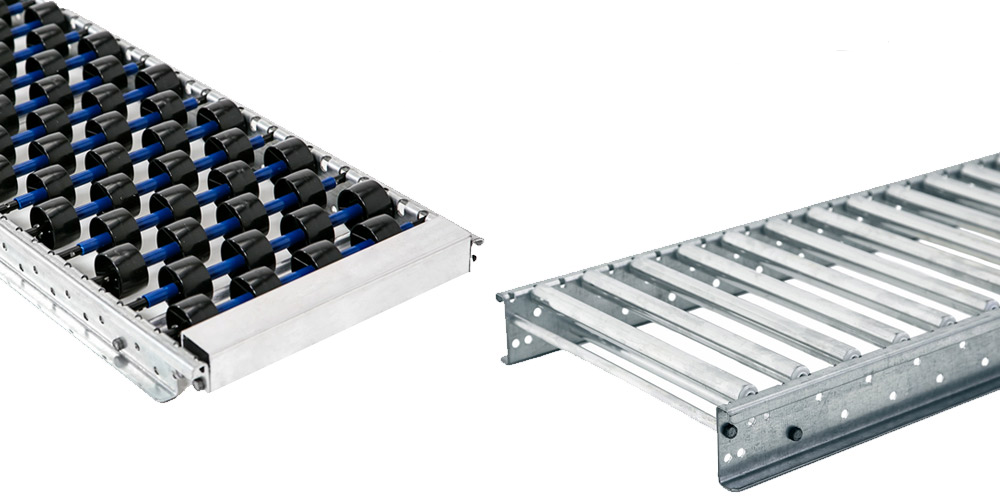
Operations sometimes treat [roller lanes](https://www.unex.com/solutions/carton-flow/spantrack-lane) and [wheel beds](https://www.unex.com/solutions/carton-flow/spantrack-wheel-bed) as if the choice is purely a matter of product preference. In reality, the [two lane types](https://blog.unex.com/choosing-between-carton-flow-rollers-and-wheel-beds) serve different purposes: [roller lanes](https://www.unex.com/solutions/carton-flow/spantrack-lane) provide a dedicated path for each product, delivering strong support and consistent presentation, while [wheel beds](https://www.unex.com/solutions/carton-flow/spantrack-wheel-bed) use a field of wheels to create a more adaptable surface, allowing easier adjustment for varying product widths and more frequent slotting changes. The key distinction is that [roller lanes](https://www.unex.com/solutions/carton-flow/spantrack-lane) are best for standardized, fixed SKUs, and [wheel beds](https://www.unex.com/solutions/carton-flow/spantrack-wheel-bed) are more suitable for dynamic product assortments.
[UNEX SpanTrack Lane](https://www.unex.com/solutions/carton-flow/spantrack-lane), a dedicated [carton flow lane solution](https://www.unex.com/solutions/carton-flow), is designed for applications where strong surface contact, stable product support, and consistent flow are priorities. By creating a fixed path, [dedicated roller lanes](https://www.unex.com/solutions/carton-flow/spantrack-lane) keep specific SKUs in assigned locations, making it ideal for operations with little change in product mix. In contrast, [SpanTrack Wheel Bed](https://www.unex.com/solutions/carton-flow/spantrack-wheel-bed) features a bed of staggered wheels that floods an entire level of pallet rack with flow beds. This allows for more flexibility. [Wheel beds](https://www.unex.com/solutions/carton-flow/spantrack-wheel-bed) are suitable for operations that handle varying product widths or frequently adjust SKU locations, enabling easier reslotting and greater adaptability without changing hardware.
This distinction is critical. [Choosing the right lane type](https://blog.unex.com/choosing-between-carton-flow-rollers-and-wheel-beds) depends on understanding how often SKUs are moved, whether products require robust support, and how much adaptability the operation needs. The mistake is choosing one lane type without considering the SKU environment. Frequent changes make a rigid lane frustrating, while insufficient support in flexible lanes can lead to unreliable flow. [Good design matches lane type](https://blog.unex.com/diy-carton-flow-storage-system) to the job, not just the technology.
### Mistake #3: Getting Roller Centers Wrong
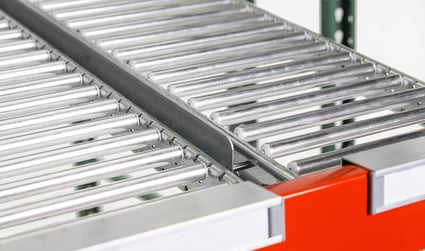[Roller centers](https://blog.unex.com/what-are-carton-flow-roller-centers-and-why-do-they-matter) (the space between rollers or wheels in a carton flow lane) are one of the clearest examples of a specification detail that gets overlooked until it starts causing problems.
The right spacing depends on carton length, as well as factors such as weight, bottom surface, and environmental conditions. UNEX recommends tighter centers for shorter cartons and wider spacing for longer loads.
For [SpanTrack Lane](https://www.unex.com/solutions/carton-flow/spantrack-lane), 1-inch, 2-inch, and 3-inch centers are standard; for [SpanTrack Wheel Bed](https://www.unex.com/solutions/carton-flow/spantrack-wheel-bed), 2-inch and 3-inch centers are standard. That may sound technical, but the operational consequence is simple. If the centers are wrong, the [carton flow system](https://www.unex.com/solutions/carton-flow) loses precision. Products can move too slowly, too quickly, or fail to reach the pick point. Items that flow too fast can cause damage, while items that flow too slowly may never make it to the pick face.
The larger lesson is that [carton flow performance](https://blog.unex.com/carton-flow-101-the-advantages-of-a-gravity-flow-rack) isn’t determined only by whether an operation has rollers or wheels but by how well the track is tuned to the actual product. [Roller centers](https://blog.unex.com/what-are-carton-flow-roller-centers-and-why-do-they-matter) are not a small detail. They are part of the system's logic.
### Mistake #4: Overbuilding or Underbuilding Capacity
Many operations assume they’re being safe when they default to a [heavier-duty carton flow configuration](https://blog.unex.com/advantages-of-heavy-duty-carton-flow). Sometimes that’s true, but sometimes it’s expensive and space-consuming.
Capacity should reflect load weight, unsupported span, carton features, and abuse level. [SpanTrack](https://www.unex.com/solutions/carton-flow/spantrack-lane) offers light-, standard-, and heavy-duty options because not all needs are the same.
There’s also a more strategic reason this matters. In [warehouse design](https://blog.unex.com/selecting-right-carton-flow-system-design-for-your-warehouse), small dimensional decisions compound. A track profile or capacity choice that adds unnecessary space across a single lane may not appear significant. Across dozens or hundreds of bays, though, those inches begin to affect storage density, number of facings, and available pick space. In a [high-throughput operation](https://blog.unex.com/maximizing-efficiency-in-order-picking-reducing-time-increasing-profits), those aren’t minor design choices.
Of course, the opposite mistake is equally costly. Underbuilding capacity can lead to wear issues, unreliable flow, or [product handling problems](https://blog.unex.com/top-7-warehouse-management-challenges-and-how-to-overcome-them) that force workers to manually compensate. The goal isn’t to buy the heaviest track available in an attempt to cover all your bases, but to buy the right track for the work being done.
### Mistake #5: Choosing Lane Width by Guesswork Instead of Product Fit
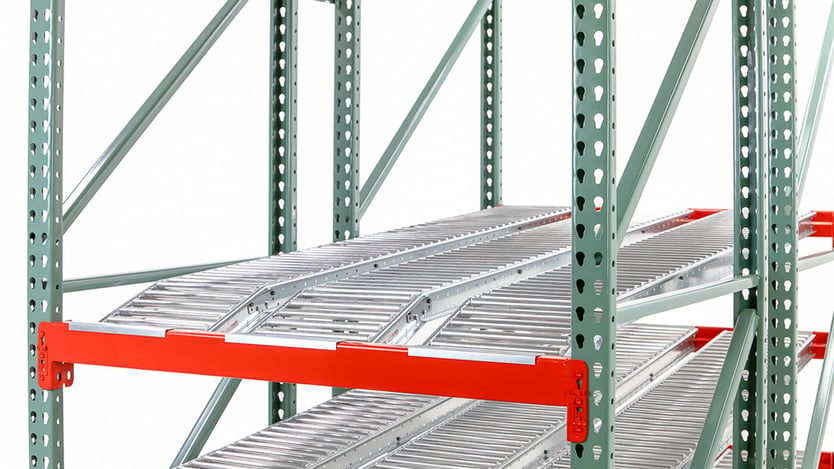
[Lane width](https://blog.unex.com/6-considerations-when-selecting-a-carton-flow-system) is one of the easiest ways to waste space without realizing it. The usual width guidance ties lane width to the maximum carton width. This is critical because the job of a [carton flow lane](https://blog.unex.com/choosing-between-carton-flow-rollers-and-wheel-beds) isn’t just to contain product but also to support it well enough to keep flow reliable while preserving as much density as possible.
When operations oversize lanes “just to be safe,” they often give away usable space across the bay. When they undersize them, they risk unstable flow or poor carton support. Either way, the system is no longer optimized.
The better way to [think about lane width](https://blog.unex.com/6-considerations-when-selecting-a-carton-flow-system) is to treat every inch as productive real estate. Across a single bay, a few inches may not seem meaningful. Across an entire pick zone, those inches determine how many lanes fit, how many SKUs can be presented, and how efficiently the operation uses the rack footprint it already owns.
### Mistake #6: Designing for Today’s Slotting Instead of Tomorrow’s Changes
A [carton flow rack system](https://www.unex.com/solutions/carton-flow) shouldn’t be designed only for the current slotting profile. It should be designed for the level of change the operation expects to manage.
Companies should ask these [practical questions before ordering a system](https://blog.unex.com/6-considerations-when-selecting-a-carton-flow-system): Do product sizes vary? Do you reslot frequently? Do you have seasonal inventory? Do you plan to reconfigure your facility often?
This is where operations often get trapped by short-term thinking. They design around the current assortment, then spend the next year working around the system because the product mix changed faster than expected. The result is a [carton flow system](https://www.unex.com/solutions/carton-flow) that is technically functioning but operationally lagging behind the business.
[Thoughtful system design](https://blog.unex.com/diy-carton-flow-storage-system) leaves room for variation. It anticipates seasonal shifts, new SKUs, and changes in volume. The point is not to overengineer for every possible scenario. The point is to avoid building a system so tightly around today that it becomes a constraint tomorrow.
### Mistake #7: Ignoring Ergonomics at the Pick Face
A c[arton flow system](https://www.unex.com/solutions/carton-flow) can move products seamlessly and still create a poor picking experience. That usually happens when design discussions focus on storage and forget the pick motion itself. That’s where [carton flow modifications](https://blog.unex.com/understanding-carton-flow-racks-types-uses-and-benefits) like knuckled end treatments, pick trays, and end styles come in, improving visibility and accessibility for [each-pick applications](https://www.unex.com/applications/picking/each-picking).
When track style, capacity, pitch, or product fit aren’t matched well to the application, cartons may not present correctly at the pick face. That can create unnecessary reaching, poor visibility, and awkward picks. In [labor-intensive environments](https://blog.unex.com/top-7-warehouse-management-challenges-and-how-to-overcome-them), that distinction matters. The fastest pick isn’t just the one where product flows forward, but the one where the picker can access it quickly, comfortably, and accurately.
### Mistake #8: Assuming Installation Is the End of the Project
Installation is a milestone, not the finish line. After installation, operations need to assign permanent SKU addresses, organize inventory logically, label clearly, [implement FIFO](https://blog.unex.com/creating-fifo-storage-with-carton-flow-rack-systems) where appropriate, optimize pick paths, and establish a replenishment strategy. That’s a useful reminder that even well-designed carton flow racks depend on process discipline.
A [carton flow system](https://www.unex.com/solutions/carton-flow) that was correct on day one can lose effectiveness if fast movers aren’t reviewed, labels fall behind, replenishment practices drift, or workers start bypassing the intended process. That doesn’t mean the storage system failed. It means the operation stopped maintaining the logic that made the system effective in the first place.
The [strongest warehouse teams](https://www.unex.com/industries/order-fulfillment-warehousing) treat carton flow as part of a living slotting and replenishment strategy. They review performance, not just installation quality.
## A Better Way to Evaluate a Carton Flow System Before You Buy
[The right question](https://blog.unex.com/selecting-right-carton-flow-system-design-for-your-warehouse) is not, “Do we need carton flow?” The better question is, “What kind of carton flow system will support our products, our pick methods, and our rate of change?”
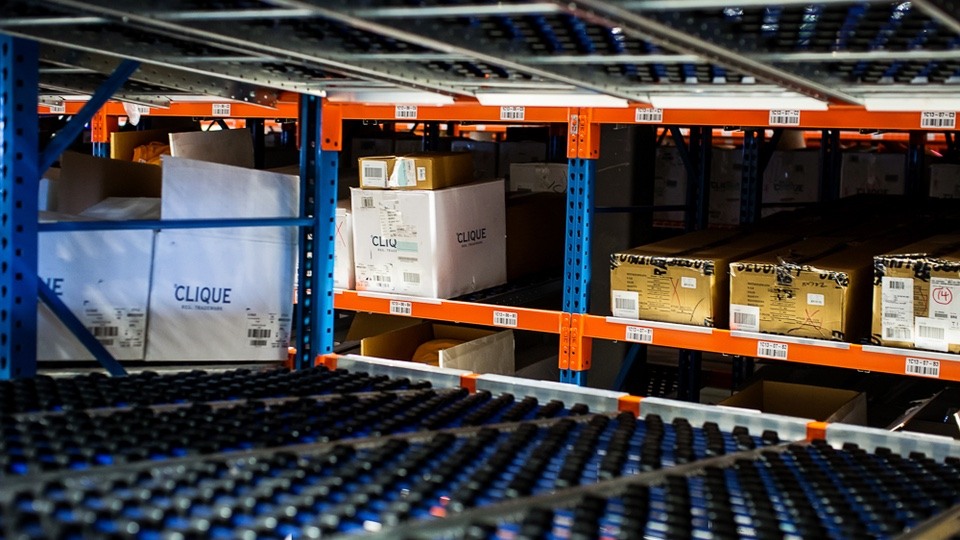
That evaluation should include product dimensions, carton condition, bottom type, load weight, SKU velocity, slotting volatility, pick method, and the level of flexibility the operation needs. [Carton flow](https://www.unex.com/solutions/carton-flow) is most effective when it’s engineered to the real application, not dropped into the rack as a generic upgrade.
For many operations, that mindset shift is the biggest opportunity. The gains don’t come from buying “more carton flow.” They come from specifying carton flow more intelligently.
### UNEX SpanTrack Carton Flow Systems
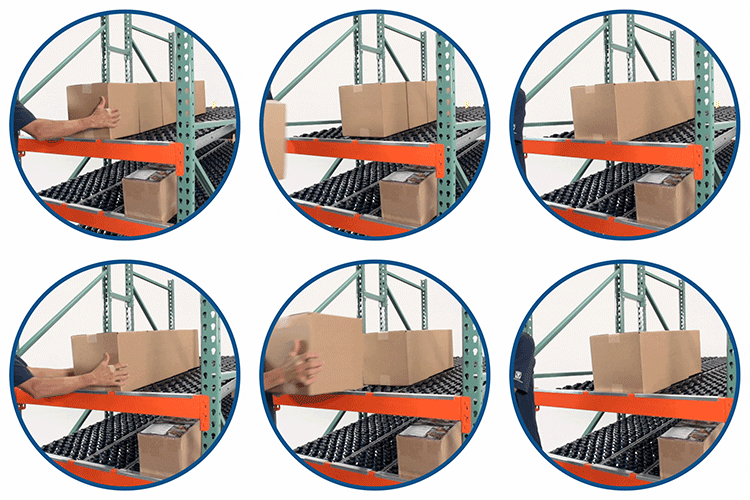For operations that want a [carton flow system](https://www.unex.com/solutions/carton-flow) built around fit, flexibility, and throughput, [UNEX SpanTrack](https://www.unex.com/solutions/carton-flow/spantrack-lane) is a configurable solution rather than a one-size-fits-all track. [SpanTrack carton flow](https://blog.unex.com/solution-spotlight-spantrack-lane-carton-flow-rollers) is a drop-in solution that works with new or existing pallet racks, allowing teams to tune the system to their application.
Key [SpanTrack carton flow](https://www.unex.com/solutions/carton-flow/spantrack-lane) features include:
- [SpanTrack Lane](https://www.unex.com/solutions/carton-flow/spantrack-lane) and [SpanTrack Wheel Bed](https://www.unex.com/solutions/carton-flow/spantrack-wheel-bed) options to support dedicated lanes or more flexible slotting with universal wheel beds
- Light-, standard-, and heavy-duty choices to align capacity with the application
- Multiple lane widths and to-the-inch lengths for a tighter fit to the rack and product
- Knuckled end treatments and [configurable end styles](https://blog.unex.com/spantrack-carton-flow-accessories-and-options) to improve pick accessibility
- Interior notching to help save vertical space
- [Accessories](https://blog.unex.com/spantrack-carton-flow-accessories-and-options) such as infeed guides, guide rails, impact zones, slow-down components, and ramp stops.
What makes SpanTrack valuable isn’t just the number of available features, but the ability to apply them thoughtfully. The right combination of lane type, capacity, dimensions, and accessories can help operations build a [carton flow system](https://www.unex.com/solutions/carton-flow) that’s better matched to its products, more efficient within the rack, and more sustainable as throughput demands change. In that sense, [SpanTrack carton flow racks](https://www.unex.com/solutions/carton-flow/spantrack-lane) support the larger goal of carton flow design: creating a system that performs well in practice, not just on paper.
## Turn Carton Flow Into a Strategic Advantage
The most common [carton flow system](https://www.unex.com/solutions/carton-flow) mistakes are often specification mistakes. They happen when a team assumes instead of profiles, generalizes instead of measures, or buys around the rack instead of designing around the product and the picker.
That’s why the [best carton flow systems](https://blog.unex.com/6-considerations-when-selecting-a-carton-flow-system) do more than move cartons forward. They support the way an operation actually works. When lane type, roller centers, capacity, lane width, ergonomics, and slotting strategy are aligned, carton flow becomes more than a storage upgrade; it becomes a strategic advantage that propels operations from good to great.
[Contact UNEX today](https://www.unex.com/contact) to find the right [carton flow solution](https://www.unex.com/solutions/carton-flow) for your application and start improving space utilization, pick efficiency, and overall throughput.
[](https://cta-redirect.hubspot.com/cta/redirect/4747213/79236e02-843e-4520-aead-2b2a0cdf40fe)
[Carton Flow](https://blog.unex.com/tag/carton-flow) [SpanTrack](https://blog.unex.com/tag/spantrack)
## Related Blogs
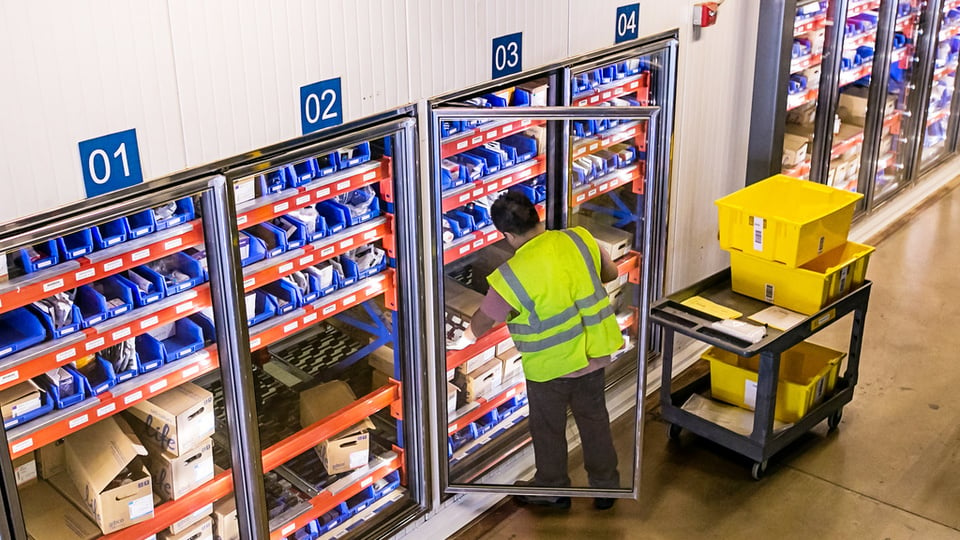
### Why Temperature-Controlled Operations Are Turning to SpanTrack Carton Flow
[Read More](https://blog.unex.com/why-temperature-controlled-operations-are-turning-to-spantrack-carton-flow)
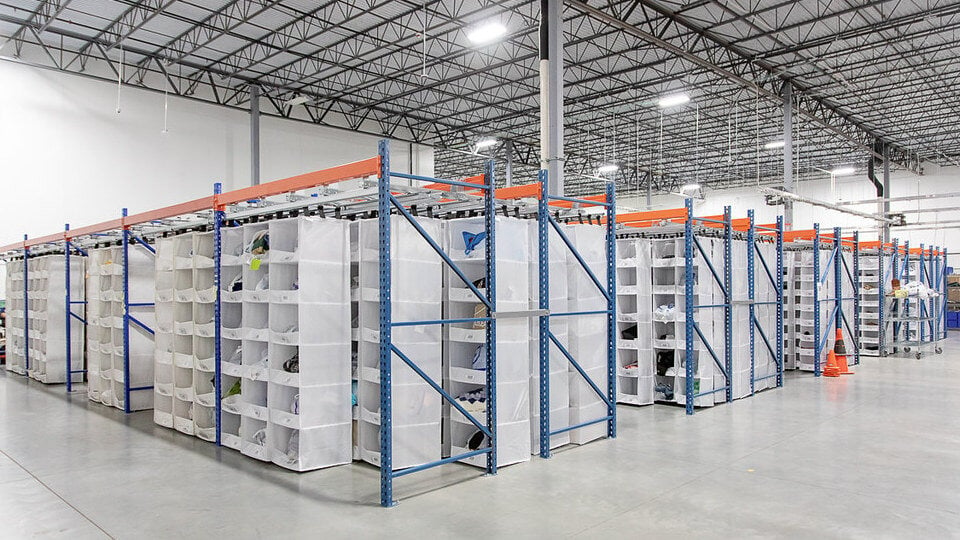
### How Operations Are Increasing SKU Capacity Without Expanding Warehouse Space
[Read More](https://blog.unex.com/how-operations-are-increasing-sku-capacity-without-expanding-warehouse-space)
[](https://blog.unex.com/)
- - [Applications](https://www.unex.com/applications)
- [Storage](https://blog.unex.com/applications#storage)
- [Order Picking](https://blog.unex.com/applications#picking)
- [Packing & Assembly](https://blog.unex.com/applications#packing)
- [Solutions](https://www.unex.com/solutions)
- [Carton Flow](https://www.unex.com/solutions/carton-flow)
- [Flow Racks](https://www.unex.com/solutions/flow-racks)
- [High-Density Storage](https://www.unex.com/solutions/high-density-storage)
- [Conveyors](https://www.unex.com/solutions/conveyors)
- - Industries
- [Manufacturing](https://www.unex.com/industries/manufacturing)
- [Order Fulfillment & Warehousing](https://www.unex.com/industries/order-fulfillment-warehousing)
- [Retail](https://www.unex.com/industries/retail)
- [Logistics](https://www.unex.com/industries/logistics)
- [About](https://www.unex.com/about)
- [Find a Distributor](https://go.unex.com/find-material-handling-distributor)
- [Distributor Portal](https://go.unex.com/distributors)
- [Careers](https://go.unex.com/careers)
- - [Build a Solution](https://www.unex.com/configurator)
- [Contact Us](https://www.unex.com/contact)
- [Resources](https://www.unex.com/resources)
[800-334-8639](tel:8003348639)
691 New Hampshire Ave Lakewood, NJ 08701
[Privacy Policy](https://www.unex.com/legal/privacy-policy)|[Terms of Service](https://www.unex.com/legal/terms-service)
[Sitemap](https://www.unex.com/sitemap)|[Warranty](https://www.unex.com/legal/warranty)
© UNEX Manufacturing. 2026 All Rights Reserved.
```json
{
"@context" : "https://schema.org",
"@type" : "BlogPosting",
"author" : {
"@type" : "Person",
"name" : "UNEX",
"url" : "https://blog.unex.com/author/unex"
},
"dateModified" : "2026-05-12T18:00:36.219Z",
"datePublished" : "2026-05-12T18:00:20.000Z",
"headline" : "8 Carton Flow System Mistakes and How to Avoid Them",
"image" : [ "https://blog.unex.com/hubfs/case%20picking%20with%20carton%20flow%20in%20a%20warehouse.jpg" ],
"mainEntityOfPage" : {
"@id" : "https://blog.unex.com/common-carton-flow-system-mistakes-and-how-to-avoid-them",
"@type" : "WebPage"
},
"publisher" : {
"@type" : "Organization",
"logo" : {
"@type" : "ImageObject",
"url" : "https://blog.unex.com/hubfs/unex_logo_061013_RGB_Medium-1.jpg"
},
"name" : "UNEX Manufacturing Inc"
}
}
```